
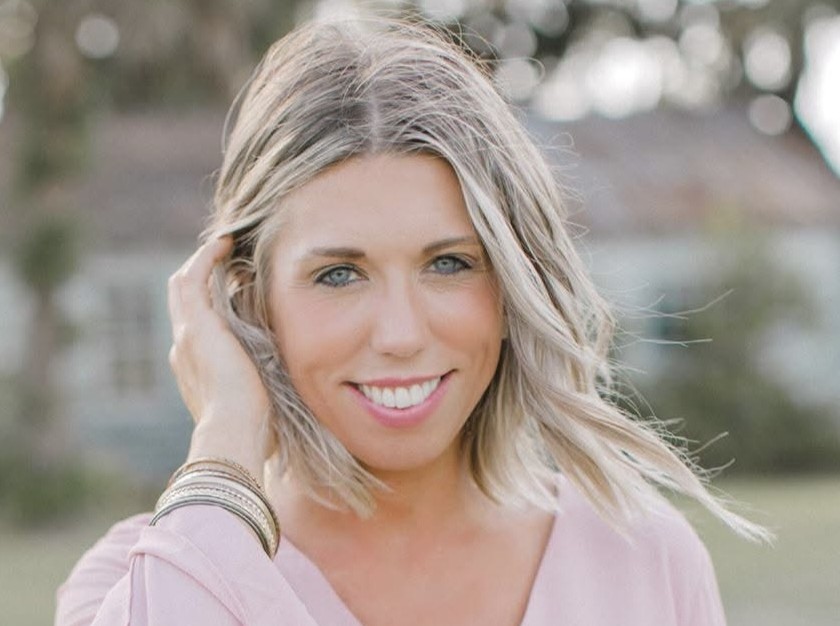
By Amanda Patel
Someone asked me today what it is that I actually want from the City of Beaufort.
The truth. The full truth. All of it. Going all the way back to February 2025 and everything that followed. And honestly, I believe that little girl deserves a public apology too.
Whenever I think back to the open letter released by Beaufort City Council in February 2025, I no longer think first about the wording. I think about the five signatures. Five names placed at the bottom of a document carrying the full weight of institutional certainty during a major public controversy involving trust, children, and an ongoing investigation surrounding two missing juveniles, one of whom was a 12-year-old child who had been missing for three and a half days.
According to a councilman I recently spoke with, our City Council never collectively met prior to signing the open letter because doing so could have created sunshine law concerns, as referenced in an email by our City Manager. And honestly, that’s part of the problem.
A unified public statement was issued, yet there was apparently no discussion, no collective review of timelines, and no opportunity for members to discuss whether they agreed or disagreed with what the letter said before attaching their names to it.
People keep asking why that matters. When elected officials publicly sign a letter defending leadership and processes, that carries weight. It signals confidence. It signals reassurance. It tells the public leadership believed the situation had been appropriately handled.
But history has a way of changing the emotional weight of public documents, especially when the story continues unfolding long after the ink dries.
Recently, the child’s mother shared portions of her victim impact statement with me ahead of sentencing proceedings involving the 16-year-old involved in the family court case. In her statement, the mother describes a vulnerable 12-year-old child who, within days of first contact through social media, was exposed to deeply harmful adult situations, transported across state lines, and returned home traumatized, emotionally fractured, and struggling psychologically.
One sentence in particular has stayed with me: “The child who came home to us was no longer the same little girl who left.”
By the time I read that sentence, I had already spent months reading documents connected to this situation, but that sentence carried the emotional weight of all of it. After reading it myself, I could no longer look at those five signatures the same way, because those signatures now exist beside the reality of what this child endured.
And then came the breach.
The irony, at least from my perspective, is that a family already working through trauma while seeking answers and truth would then become connected to a completely separate breach involving confidential records tied to minors. A situation that publicly placed additional scrutiny and attention around a family already navigating unimaginable circumstances.
Whether the records reached one family or one hundred families does not change the fact that confidential records involving minors were reportedly released outside of where they were supposed to go, including what WSAV-TV reporter Danielle Cobb previously described as an “uncut interview” involving another 12-year-old girl.
Children do not lose their right to privacy simply because a breach may have been “limited.” Parents deserve the opportunity to know if their child’s information was involved.
People keep asking where the value is in that. The value is simple: families deserve informed choice, awareness, and the ability to protect their children if confidential information connected to them was exposed.
If we have systems in place that are not adequately protecting private and sensitive information, then the public deserves to know that too, and we deserve to know why. This is not just about paperwork.
These are real people. Real families. Real children.
How would you feel if your own medical records, counseling records, or deeply personal information were exposed without your consent or knowledge? Would you want to know? Would you expect accountability? Would you expect answers?
Of course you would.
Privacy matters even if the audience was “small.” And when minors are involved, the responsibility to protect that information should be even higher. When statistics show that at least one in four girls and one in 20 boys experience child sexual abuse, protecting confidentiality, dignity, and trust surrounding minors should never be treated as trivial.
And what makes this even more heartbreaking is that the person managing our city is on record, quoted by Councilman Josh Scallate, as saying he “doesn’t spend time or effort chasing trivial matters,” a characterization the City Manager later disputed as lacking context.
Regardless of intent, when concerns involve confidential records tied to minors, families are going to expect urgency, clarity, and seriousness from leadership.
Children’s privacy is not trivial. Public trust is not trivial. And leadership during moments involving children and trauma is not trivial.
These are different times. Communities do not quietly move past situations involving children, trauma, and unanswered questions simply because official statements were issued months earlier. People remember how leadership responds when it matters most.
Years from now, long after meetings end and officials move on, those signatures will still exist as part of Beaufort’s history. And one day, that little girl may read them for herself.
That is the weight of public leadership.
Those five signatures are not trivial.
Amanda Patel is a mom of two, a wife, and a proud rescue owner to Lucky. She is a passionate educator with a master’s degree in school counseling, a master’s degree in leadership, and is currently pursuing a doctorate in public policy. She is always looking for ways to grow and serve her community, with the hope that her children will one day return after college and call it home.