
By Dr. Cory A. Messerschmidt
Beaufort Memorial Orthopedic Specialist
Except for your two big toes, every toe has three joints. If the first or proximal interphalangeal joint becomes stuck in a bent position, it’s called “hammer toe,” and the abnormal appearance is only the start of the problem.
One of the initial symptoms of hammer toe is pain with pressure, which makes it difficult to wear footwear. If you notice any symptoms with your feet, contact your healthcare provider.
Leave the problem untreated, and you may wind up with deformity that requires surgery to correct.
Most cases of hammer toe are actually caused by your shoes. When you wear shoes that are short, tight or narrow, one or more toes may wind up in a bent position.
This bending can tighten and shorten toe muscles and tendons, resulting in hammer toe. The condition is most common in the second toe, though other toes and even all toes can be affected.
Risk Factors
Certain factors increase your risk. These include:
- Arthritis — Hammer toe is not a form of arthritis, but arthritis can affect tendons and joints in and around the toes, increasing your risk.
- Genetics — You may be born with a bent toe. If so, this is known as a congenital defect.
- Heels — Regularly wearing high heels can put pressure on your toes, which can lead to hammer toes.
- Outgrown shoes — Children who continue to wear shoes that no longer fit can develop this common cause of foot pain.
Symptoms
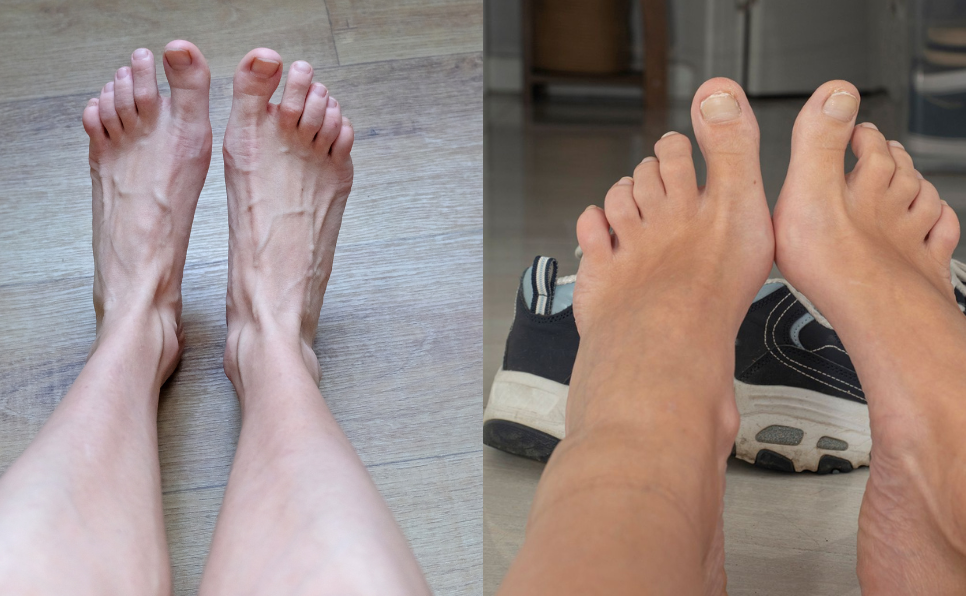
The most obvious symptom of a hammer toe is visual. Affected toes develop an abnormal shape. As you continue to place pressure on the toe, it will bend over and start resembling a claw.
Other symptoms include:
- Corns on top of the affected foot
- Limited motion of the joint
- Pain in the toe joint and base of the affected toe
- Redness and swelling around the toe joint
- Walking problems
Early on, the affected toe can be moved manually. This is the best time for diagnosis and treatment. Left untreated, these flexible hammer toes may stiffen, leaving you with rigid hammer toes. Once the joint stiffens, you may require surgery to find relief.
Diagnosing a case of hammer toe starts with a physical examination. While examining your foot, your healthcare provider will attempt to move the affected toes to determine if the joint is rigid or flexible.
This information can mean the difference between treating the problem with at-home exercises or surgery.
In some cases, your provider may prescribe an X-ray imaging exam. If you have diabetes or another health condition affecting your feet, additional testing can help determine whether that condition is contributing to your foot issue.
Treatment
Treatment for hammer toes depends on the type and severity of the problem. Based on your needs, you may only need conservative treatment. If your toe has become rigid or your symptoms are severe, surgical intervention may be necessary.
Many cases of hammer toe can be corrected with conservative treatment approaches. These include the following:
- Medication — Over-the-counter or prescription anti-inflammatory drugs reduce inflammation and pain. Cortisone injections can also help reduce swelling and redness.
- New shoes — Your shoes should be half an inch longer than your feet. When shopping, look for shoes with deep toe boxes that give your longest toe plenty of room to wiggle. Instead of wearing shoes, you may find relief with sandals. Just make sure they don’t press on sensitive areas on your foot.
- Physical therapy — Performing specific exercises can strengthen and stretch the muscles in your toes, helping reduce pain and other symptoms.
- Shoe inserts — A podiatrist can create custom shoe inserts for you. Wearing these inside your shoes can help reduce symptoms and maintain foot function.
If your condition progresses and continues despite conservative treatment, you may need surgery. We generally save surgery for the most severe cases, but when it is necessary, it’s usually very effective.
Fellowship-trained in sports medicine, Cory A. Messerschmidt, M.D., FAAOS, is a board-certified orthopedic surgeon with Beaufort Memorial Orthopedic Specialists who sees patients at the practice in Port Royal and Okatie.