

Hopefuls differ on spending, housing, growth while finding common ground on Waterfront Park
By Delayna Earley
The Island News
Four candidates seeking two seats on Beaufort City Council agree that growth must not outpace the city’s infrastructure and that repairing the Henry C. Chambers Waterfront Park should be among Beaufort’s highest priorities, but they differ on city spending, housing and how Beaufort should prepare for continued development.
Incumbent Josh Scallate and challengers Thad Lane, Jared Madison and Grady Woods are competing for two at-large seats on the five-member council in the Nov. 3 election. Beaufort City Council races are nonpartisan, meaning candidates do not run under a political party affiliation.
The Island News sent the same 10 questions to all four candidates, asking about growth and development, transparency, the Henry C. Chambers Waterfront Park, short-term rentals, city spending, infrastructure, housing, economic development and the role of City Council. All four candidates responded.
Their responses were used to compare their positions on some of the major issues facing the city. The candidates’ complete responses are included below.
Growth must keep pace with infrastructure
All four candidates said Beaufort must account for the effect continued growth will have on roads, drainage and other infrastructure.
Scallate said development should not be allowed to outpace infrastructure and pointed to changes to the city’s development code during his current term, including more comprehensive traffic impact analysis requirements and minimum tree-canopy standards.
“Economic development and responsible growth are not competing goals,” Scallate said. “Investing in roads, drainage, our tree canopy, neighborhoods and overall quality of life is also an investment in our economy.”
He said future growth should be expected to contribute fairly toward the impacts it creates.
Woods said new development or infill that could affect existing neighborhoods should receive a high level of scrutiny, particularly when zoning changes are involved. He said uses should be compatible with surrounding neighborhoods, buffers should be enforced and infrastructure should be capable of supporting proposed development.
Madison described “unmeasured growth” rather than growth itself as the problem.
“The goal is not to stop development,” Madison said. “The goal is to ensure growth strengthens the character of Beaufort instead of gradually replacing it.”
Madison supports infrastructure-concurrency standards that would consider whether roads, utilities and public services can support development before it is approved. He also proposed exploring additional protections for mature trees, wetlands, marshes, flood-sensitive areas, historic resources and culturally important landscapes.
Lane said Beaufort will continue to grow but should ensure established neighborhoods, particularly those that contribute to the city’s character, are protected. He said traffic has been the primary change residents have identified as he has visited neighborhoods throughout Beaufort.
Waterfront Park rises to the top
The candidates were also largely united in placing the Henry C. Chambers Waterfront Park near the top of Beaufort’s capital priorities.
The park’s promenade requires major repairs, with replacement costs estimated at approximately $66 million.
Scallate said the park should rank among Beaufort’s highest capital priorities but said city property taxpayers should not be expected to carry the entire cost.
The city’s adopted fiscal year 2027 budget includes $925,000 for engineering associated with the Waterfront Park relieving platform, Scallate said, while the city is also positioning the project to compete for outside funding.
“The approach should be a meaningful local commitment paired with an aggressive pursuit of state, federal and other funding,” Scallate said.
Woods called the Waterfront Park the city’s “number one priority” and said Beaufort should avoid taking on new discretionary projects until the park design is complete, funding is secured and a completion date has been established.
He suggested pursuing federal and state funding, hospitality and accommodations tax revenue, long-term city debt, private contributions and assistance from Beaufort County and the county’s legislative delegation.
Madison also ranked the park as Beaufort’s highest capital priority, although he said it should remain subordinate to immediate life-safety and essential infrastructure needs.
He proposed a combination of state and federal grants, hospitality and accommodations tax revenue, available capital funds and potentially tourism-supported revenue bonds.
“Protecting the Waterfront Park and protecting our taxpayers/community members are not competing responsibilities,” Madison said. “Council must therefore be capable of accomplishing both.”
Lane said the Waterfront Park is an asset to residents, businesses and visitors and pointed to the combination of state, local and private money used when the park was originally built.
“We will do this again for the reconstruction and rebuilding of the park,” Lane said.
Different approaches to city spending
The candidates showed greater differences when discussing Beaufort’s approximately $70 million consolidated budget and where the city should focus its money.
Scallate noted that the $70.174 million budget includes $24.447 million in capital projects, with approximately $19.126 million coming from grants, rather than representing $70 million in recurring operating revenue.
He identified fiscal discipline and core services, Waterfront Park and other critical infrastructure, particularly drainage, and ensuring infrastructure keeps pace with growth as priorities.
“We spend too much when discretionary wants move ahead of adopted priorities, and too little when aging infrastructure is treated as what gets funded with whatever is left,” Scallate said.
Woods questioned the growth of the city’s budget and said fiscal responsibility and accountability should be a top priority. He said the better question is where the city can find opportunities to operate more efficiently over the next four years and said taxpayers should expect their money to be spent wisely with a quantifiable return on investment.
Lane also questioned the city’s spending growth. He said that while the property tax rate has not increased, higher property values have resulted in larger tax bills for some property owners.
Lane identified infrastructure, parks and debt as his three spending priorities.
Madison said his priorities would be infrastructure and resiliency, public safety and emergency-service capacity, and housing.
He said Beaufort should spend less on projects that cannot be clearly tied to essential services or measurable public benefit, citing unnecessary property acquisitions and duplicative consulting work among areas he would scrutinize.
“Before asking taxpayers for more money, City Council should be able to explain what every major expenditure accomplishes, how success will be measured, and why said investment takes priority over alternatives,” Madison said.
Housing approaches differ
Housing costs and the ability of teachers, first responders, hospitality employees and other workers to live in Beaufort also produced some of the clearest differences in approach.
Scallate said city government has a role in housing but that the approach should be “targeted and realistic.”
He pointed to Beaufort’s participation in regional housing efforts and $150,000 included in the fiscal year 2027 budget for the Housing Repair Assistance Program through the Beaufort-Jasper Housing Trust.
“I do not believe the next step should be turning the City into a housing developer or continually creating new subsidy programs,” Scallate said.
Woods said Beaufort should remove unnecessary barriers, encourage appropriate private investment and use its limited resources strategically. He supports partnerships with private developers, nonprofits, the Beaufort Housing Authority and Beaufort-Jasper Housing Trust, along with coordination among local governments, employers and transportation providers.
Lane pointed to work already underway through the Beaufort-Jasper Housing Trust, including developer funding, home repairs and homebuyer assistance.
Madison proposed a more expansive approach, describing housing as economic infrastructure and calling for a permanent Beaufort Housing Trust Fund supported by a dedicated source of recurring revenue.
He said the city should explore housing rehabilitation, first-time homebuyer assistance and gap financing while allowing appropriate “missing-middle” housing such as duplexes, triplexes and cottage developments.
“The goal should be that the people who teach here, protect us, care for us, serve our visitors and keep our economy running can actually afford to build a life here,” Madison said.
Candidates agree on transparency
Despite differences elsewhere, all four candidates said executive sessions should be limited to circumstances permitted by state law and that city business should otherwise be conducted publicly.
Scallate said the executive sessions he has attended during his current term have fallen within categories permitted under state law, but said that does not mean executive session should become the default.
“I favor conducting as much business as legally possible in public,” Scallate said, adding that the city has “much room to improve.”
Woods said council should follow the categories permitted under the S.C. Freedom of Information Act “without exception” and provide residents all information legally allowed.
Madison also said executive session should be “the exception, not the default.”
He said closed sessions should never be used simply because an issue is controversial or politically uncomfortable and that council should clearly identify the lawful reason for entering executive session.
“Residents deserve everything the law allows government to share,” Madison said.
Lane said residents should have access to information about city business except in circumstances where confidentiality is legally required, including certain personnel, contractual, attorney-client, security and investigative matters.
Roads require cooperation beyond city limits
All four candidates acknowledged that Beaufort’s ability to address traffic and road conditions is complicated by the fact that many major roads within the city are controlled by the S.C. Department of Transportation.
Scallate said municipalities and SCDOT need to communicate more effectively and pointed to Act 177, which he said will give municipalities clearer notice, consent and plan-review authority for certain SCDOT projects beginning July 1, 2027.
He also said Beaufort should consider which state-owned roads could make sense for local ownership in the future and continue improving pedestrian and bicycle connectivity.
Woods called for a long-range pedestrian and bicycle plan, continued drainage work and stronger engagement with regional transportation officials. He also suggested studying a Beaufort-Port Royal public transportation loop.
Madison proposed creating an annual public infrastructure priority list identifying intersections, corridors, drainage projects, pedestrian improvements and road conditions requiring attention. Council could then consistently take that list to SCDOT, Beaufort County and regional transportation officials while publicly tracking progress.
Lane said he would work directly with county and state officials on infrastructure and communicate progress to Beaufort residents.
Experience versus a different approach
Asked what distinguishes them from the other candidates, Scallate and Woods emphasized their government experience, while Lane pointed to his business background and Madison to his civic research and community involvement.
Scallate said his four years on City Council give him experience with projects that will continue into the next term, including Waterfront Park repairs, drainage work, development-code changes and the city’s capital priorities.
That continuity is particularly important, he said, as Councilman Mike McFee leaves the body after 18 years.
“I know where these projects stand, how we got here, what has already been tried and where the City’s resources are committed,” Scallate said.
Woods pointed to his 18 years as an elected official in Ridgeland and more than three decades as an architect. He said his experience has given him a practical approach to problem solving and an ability to work with people who disagree with him.
Lane said his years in business management taught him how to manage employees, work within tight budgets, make difficult decisions under pressure and find common ground.
Madison said his path to running for office began not with an ambition to become an elected official, but with his experience as a resident and hospitality worker trying to address problems affecting people he worked alongside.
He pointed to his research into housing, infrastructure, city finances and short-term rentals and said he has already spent much of the past year doing the work he would continue if elected.
“I am not asking voters to believe that I will listen to them and do the work after I am elected,” Madison said. “I have been doing the work and listening for the best part of the past year without a title.”
The complete questionnaires from all four candidates, including their responses on short-term rentals, economic development and the relationship between council members and city staff, are published online.
Beaufort County Board of Education candidate Q&A
The Island News asked all four candidates seeking Beaufort City Council seats the same 10 questions ahead of the Nov. 3 General Election. Their answers appear below, organized alphabetically.
Beaufort City Council candidates

Thad Eugene Lane, 58, has lived in Beaufort for 35 years after being raised in Yemassee. He is retired and works part time at Madison’s Restaurant in Port Royal. Lane earned bachelor’s degrees in political science and business administration and a minor in computer science from Presbyterian College. He worked in restaurant management beginning in 1991, including 10 years as general manager of Applebee’s and three years as general manager of the Foolish Frog. He has volunteered with organizations including Second Helpings and Leadership Beaufort and served previously on the Heroes on Horseback and Military Enhancement boards. This is his first run for elected office.
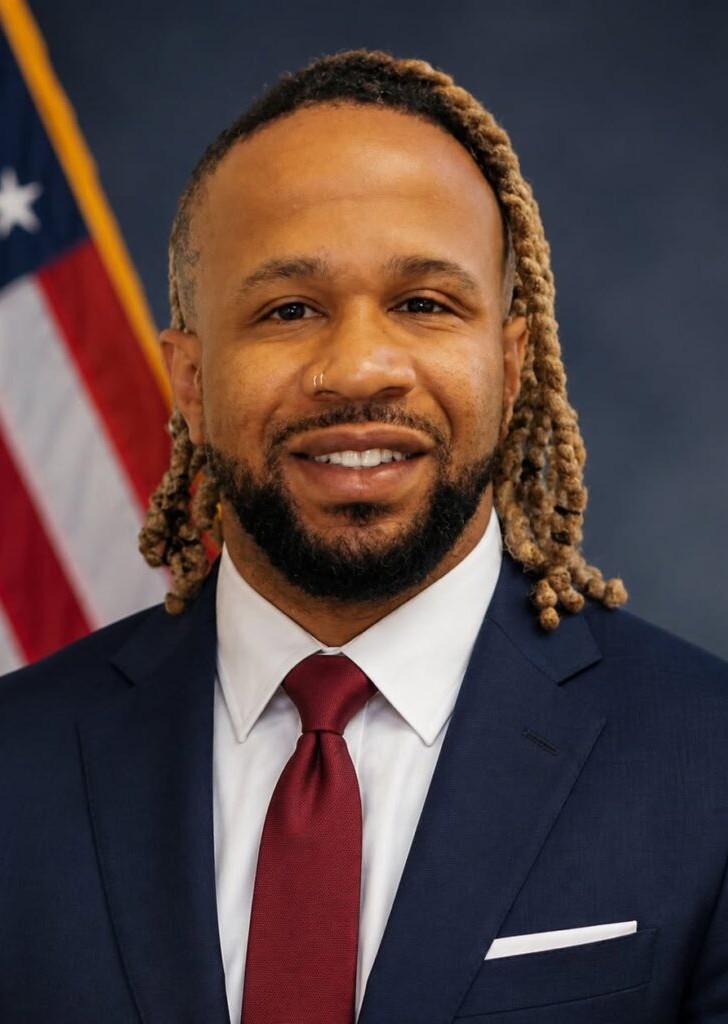
Jared Madison, 38, has lived in the Beaufort area for about 32 years and in Mossy Oaks for approximately four years. He is the founder of Nexus Engineering LLC, a civic research and technology company focused on urban systems, public policy and solutions for governments and communities. He also works at Saltus River Grill, writes for Lowcountry Weekly and serves on the Downtown Advisory Board and the board of the Pat Conroy Literary Center. Madison holds an associate degree in math and science from the Technical College of the Lowcountry and a HarvardX certificate in government.
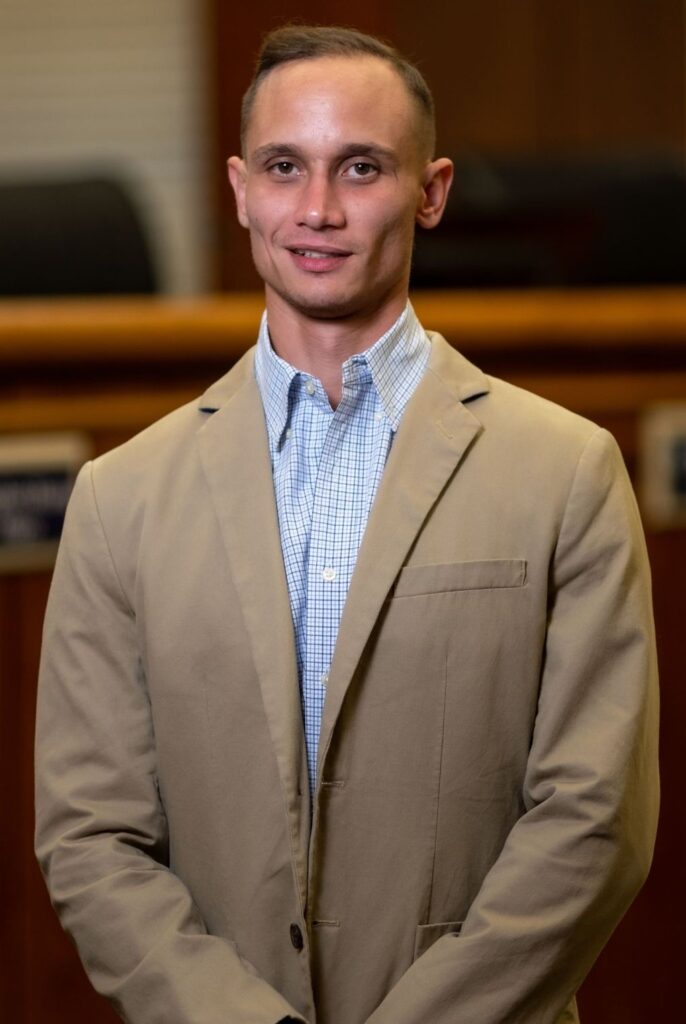
Josh Scallate, 35, is a lifelong Beaufort resident and lives in Mossy Oaks with his wife and two children. He graduated from Beaufort High School in 2009, the South Carolina Fire Academy in 2012 and completed EMT certification in 2013. He is a real estate agent with NorthGroup Realty and has served on Beaufort City Council for four years. He also has 13 years of experience with the Lady’s Island-St. Helena Fire District. Scallate has volunteered with organizations including HELP of Beaufort, CAPA and Second Helpings and served on the Waterfront Advisory Committee and other boards and committees.

Grady Woods, 64, has lived in Beaufort for four years and owned property in the city since 2021. He is a licensed architect and principal and owner of Woods Dendy Architects, with offices in Beaufort and Asheville, North Carolina. Woods has 34 years of experience as a licensed architect and more than 40 years in the profession. He holds a master’s degree and bachelor’s degree in architecture from the Savannah College of Art and Design and has completed Municipal Association of South Carolina training in municipal government, budgeting, economic development, FOIA and other areas. He served 18 years on Ridgeland Town Council, including one term as mayor pro tem, and has served on the Beaufort Historic District Review Board and County Transportation Advisory Committee.
Candidate questionnaire responses
The following responses were submitted to The Island News by candidates seeking seats on Beaufort City Council. Responses have been edited only for grammar, spelling and Associated Press style where necessary. The substance and intent of each candidate’s answers have been preserved.
1. Beaufort continues to experience development pressure while residents have raised concerns about traffic, infrastructure and changes to established neighborhoods. How should the city balance continued growth and economic development with protecting Beaufort’s existing neighborhoods, character and quality of life?
Lane: We all know that Beaufort will continue to grow. I would like to make sure that the established neighborhoods, especially the ones that give Beaufort its charm and quaintness, draw the tourists and new people to this beautiful town that we call home.
I have visited the neighborhoods in the city of Beaufort. The residents are aware of the growth and the development of new neighborhoods, but overall there have been no character changes to each of the existing neighborhoods rather than traffic.
Madison: Growth is not the underlying problem, unmeasured growth is. Beaufort can and should grow, as growth is a natural characteristic of existence, but growth should be happening with us, not to us.
New development can certainly facilitate the addition of housing, expand the tax base and create economic opportunity, but every major project should also be measured against whether or not our roads, utilities and public services can sustain said development.
Cautious considerations should be assumed in regard to affordability with respect to our local workforce and if they can afford to live here in the coming years. The people who grew up here, saying “yes ma’am” and “no sir.” The people who wave to strangers, hold the door open for you, stop to help someone on the side of the road, or help someone unload the groceries without expecting anything in return because “that’s how my momma raised me” are at risk of extinction.
Further, the preservation of our trees, marshes, historic landscapes and neighborhoods must be accounted for in each stage of the implementation process of any project.
It is my belief that major developments should be subject to infrastructure concurrency standards or APF standards, an urban planning and growth management policy that prohibits new property developments from being approved unless the necessary public infrastructure is already built or guaranteed to keep pace with growth. Running concordantly, I also support exploring a Cultural & Environmental Protection Overlay that would institute legally sustainable protective measures for mature tree canopy, wetlands, marshes, flood-sensitive areas, historic resources and culturally important landscapes.
We must also begin to treat workforce housing like infrastructure. Our teachers, nurses, first responders, hospitality industry workers and young families are essential to the efficient functioning capabilities of our city. If growth pushes this demographic out of Beaufort, then we create more traffic, labor shortages and displacement while simultaneously losing the community we are trying to grow.
The goal is not to stop development. The goal is to ensure growth strengthens the character of Beaufort instead of gradually replacing it.
Scallate: Beaufort should be focused on ensuring that development does not outpace infrastructure. During this term, we strengthened the Development Code, including more comprehensive Traffic Impact Analysis requirements and minimum tree-canopy standards of 25% for most residential development and 30% for commercial development. Economic development and responsible growth are not competing goals.
Investing in roads, drainage, our tree canopy, neighborhoods and overall quality of life is also an investment in our economy. Beaufort has significant infrastructure needs, and future growth should be expected to account for and contribute fairly toward the impacts it creates.
Woods: New development or infill development that may impact existing neighborhoods should be required to meet the highest degree of scrutiny, specifically zoning changes. Uses must be compatible, mass and scale must be comparable, and architectural style and use of materials should be complementary. Buffers should be enforced. Infrastructure must be capable of supporting proposed development, and traffic impact, if any, should be studied to ensure that convenience and safety are not compromised.
2. City Council has faced criticism over its frequent use of executive sessions and how much information is provided to the public about matters discussed behind closed doors. Under what circumstances do you believe Council should conduct business in executive session, and what should the city do to ensure residents receive as much information as legally possible about decisions involving public business?
Lane: I personally believe that all citizens of the City of Beaufort should have access to all of the information that goes on in the official meetings. While executive meetings do not always need to take place in a public forum, the information that affects the people of the City of Beaufort should be public, except, of course, meetings that have a legal reason to stay private, such as those regarding employment issues, contract negotiations, attorney-client matters, security matters, criminal misconduct investigations and other legal issues.
Madison: Executive session should be the exception, not the default.
The specifics under South Carolina law of permissibility of executive session correlate to legitimate circumstances, whereas Council must meet privately unambiguously concerning personnel matters, contract or property negotiations, privileged legal advice, security concerns and investigations.
With the legal emphasis in place, one must consequently acknowledge that executive session therefore must never be employed merely because a subject matter is controversial, politically uncomfortable or difficult to discuss publicly.
The birth of mistrust is conceived through the means of selective disclosure. The boundary lines of transparency in this regard should not end at “we discussed a legal matter.” Before Council enters into executive session, there must be a clearly identifiable, specific, lawful purpose outlined without compromising protected information.
All subsequent decisions or votes in this regard must occur in public. When open session is reconvened, residents should receive a straightforward explanation of what was decided, why it matters, as well as any financial or policy impact that may be disclosed. Moreover, any related documents or additional information should be released upon cessation of sunset provisions regarding protected information.
Residents deserve everything the law allows government to share. A legal concession to transparency should never become a habit.
Scallate: Having been present for the executive sessions during my term, the stated purposes have fallen within the categories state law allows for executive session. That does not mean executive session should become the default. South Carolina law requires a specific purpose to be stated publicly before Council enters executive session. I favor conducting as much business as legally possible in public.
Public discussion shows who came prepared and creates a record of how decisions evolved rather than leaving us to rely on memories of conversations we cannot later discuss, which has posed challenges.
The most effective way to reduce executive sessions is to reduce the issues requiring them, including proactively resolving litigation when appropriate and preventing legal costs from becoming a recurring burden on taxpayers. Admittedly, we have much room to improve here.
Woods: The Municipal Association of South Carolina guidance and Freedom of Information Act limits executive sessions to these five categories.
Council must follow these guidelines without exception and provide citizens all information as legally allowed. If the matter is unclear, then they must confer with an attorney or seek guidance from MASC.
a. Personnel matters
b. Contractual, property or legal matters
c. Security matters
d. Criminal investigation matters
e. Economic development matters
3. The Henry C. Chambers Waterfront Park promenade needs major repairs, with replacement costs estimated at approximately $66 million. How should the city pay for this project, and where should it rank among Beaufort’s other infrastructure and capital needs?
Lane: The Henry Chambers Waterfront Park is an asset to every family and business that is in the Beaufort city, as well as the visitors that come here to visit. I was here when it was first built. Funds from state, local and private contributions were used in the development of the park. We will do this again for the reconstruction and rebuilding of the park. I will make sure that as the construction begins, the companies that do this will be held accountable to the time frame we are given.
Madison: The Henry C. Chambers Waterfront Park should most certainly be considered a high-priority capital need. However, a project of this magnitude should not be approached with a blank-check mentality.
The Waterfront Park is not only a vital part of Beaufort’s tourism economy, it also acts as a major public asset. Subsequently, the structural condition of the promenade makes this an infrastructure and public safety concern rather than simply an aesthetic improvement.
I would pursue a layered funding strategic approach which would minimize the burden on the residents of Beaufort. The key components of this multifaceted methodology are as follows:
- The aggressive pursuit of both state and federal infrastructure and resiliency grants.
- The utilization of eligible hospitality and accommodations tax revenues.
- The identification of available capital project funds.
- The evaluation of revenue bond financing supported by emoluments associated with tourism rather than turning to higher property taxes.
Furthermore, Beaufort has previously utilized Parks & Tourism revenue bonds backed by hospitality and accommodations revenues for major park improvements at Southside Park, therefore providing an existing financial model worth examining further.
In the same breath, we should not allow a single project to consume the City’s capital capacity while we disregard the expense of drainage, stormwater resilience, roads, public safety, neighborhood infrastructure or other viable needs of the community.
Hence, with clearly defined costs, funding sources, timelines and contingencies in mind, the project should be phased where fiscally and structurally feasible before pledges are made.
I would therefore rank the Waterfront Park as Beaufort’s highest capital priority. Nevertheless, this project still remains subordinate to the everyday immediate life-safety and essential infrastructure needs of the city. Protecting the Waterfront Park and protecting our taxpayers and community members are not competing responsibilities. Council must therefore be capable of accomplishing both.
Scallate: The Waterfront Park should rank among the City’s highest capital priorities. That requires us to distinguish true priorities from wants and nice-to-haves and commit our existing resources accordingly. The adopted FY27 budget already includes $925,000 for Waterfront Park relieving-platform engineering, and our design procurement calls for a multidisciplinary team that includes engineering, permitting and grant-writing expertise to position the project for outside funding.
The approach should be a meaningful local commitment paired with an aggressive pursuit of state, federal and other funding, not an expectation that Beaufort property taxpayers carry the entire cost. Showing our partners that we are financially committed to getting the park reopened makes that outside partnership more credible.
Woods: The existing drainage projects currently under construction downtown are scheduled to be completed by the end of 2026. With these projects nearing completion, the City should not take on any new discretionary projects until the Waterfront Park repairs and improvement design has been completed, all required funding has been secured and a completion date established.
However, if the city is faced with a project that is critical to the safety and quiet enjoyment of a particular area within the municipal boundary, the City will be required to act accordingly. Although the Waterfront Park is the number one priority and one of the City’s most recognizable civic assets, it is not the only issue the city will face over the next four years.
Funding must come from as many sources as necessary to complete the project, including the following:
- Federal and state grants and loans
- Possibly hire a lobbyist to help secure funding
- Beaufort County and City of Beaufort hospitality and accommodations tax revenues
- City of Beaufort long-term debt
- Private sources such as large benefactors that may be interested in legacy naming
- Community involvement. I’ll be the first to buy a “brick”….
- Beaufort County Legislative Delegation must play a key role to ensure that the Waterfront Park is also one of their biggest priorities.
4. Beaufort has adopted new restrictions and fees for short-term rentals as the number of STRs has grown substantially in recent years. Do you believe the city has struck the right balance between property rights, tourism, neighborhood concerns and the availability of long-term housing? If not, what would you change?
Lane: There is a balance between long-term rental and short-term rental. We need to adjust as needed but limit the amount of STRs as the community grows in order to establish affordable housing for the people that live here.
Madison: It is my belief that Beaufort has moved closer to the right balance in regard to short-term rentals. However, the effectiveness of the new restrictions must be judged by their results at the neighborhood level.
I am a supporter of property rights. As well, I recognize that short-term rentals provide legitimate income for some property owners and contribute to Beaufort’s tourism economy. But property rights do not exist in a vacuum. Council members have a responsibility to consider neighborhood stability, public safety, housing availability and the cumulative effect that concentrated commercial dwelling units can have on residential areas.
Personally, I have attempted to approach this issue through research and direct community input. In an April 2026 survey I conducted in Mossy Oaks, 46.2% of respondents supported STRs, 26.9% opposed them, and 26.9% said they were unaffected or did not care.
These particular findings are not a mandate to eliminate STRs, nor is it a testimonial for unrestricted expansion. The more revealing finding came from comments by residents: The greatest concern was concentration. Residents who experienced isolated STRs that were well-managed often reported fewer problems, while residents in heavily concentrated areas described frequent disturbances, police calls, trespassing, noise, underage drinking and declining neighborhood stability.
The Mossy Oaks findings should not be assumed as an accurate representation of every Beaufort neighborhood. Community sentiment appears to vary significantly depending on the physical character and existing pressures of each area.
In my conversations and meetings involving residents of Beaufort’s Historic District and The Point, opposition to short-term rentals appeared considerably stronger than what was reflected in the Mossy Oaks survey.
The difference in perspective is understandable. The Historic District and The Point contain narrower streets, limited parking, closely spaced homes, historic residential fabric, and neighborhoods where additional vehicle traffic, guest turnover, late-night activity and noise can have a more adverse effect.
My broader research has also identified more than 200 STRs in Beaufort. The issue is treated as one of both housing allocation and tourism combined. In a city with geographical constraints, the conversion of residential units into transient lodging reduces the inventory to long-term residents, young professionals and the workforce. This pressure matters substantially in a community where many employees face seasonal fluctuations in income while housing costs continue to rise.
As I move forward in correlation to STRs, my focus would be on density, spacing, enforcement and measurable housing outcomes rather than a blanket prohibition. A tracking methodology would be beneficial in this sense to track STR concentration by neighborhood and street, complaints and police calls, enforcement outcomes, long-term housing availability and properties returning to residential use.
A more viable solution than simply banning STRs corresponds to my Mossy Oaks research and its suggestion that spacing rules and protections against street-level saturation may have greater community support.
I would also explore modes of pursuing incentives for owners who return properties to the long-term housing market and explore legally permissible methods that facilitate STR and tourism-related revenue to support workforce housing and a Beaufort-specific Housing Trust. It is my belief that tourism should strengthen Beaufort without gradually displacing the people who live here, work here and grew up here.
The question is not whether STRs should exist. The question is whether or not they remain limited, well-managed and compatible with the residential character of our neighborhoods and community.
Scallate: I believe the ordinance we recently adopted strikes a reasonable balance. It lowered the allowable concentration of short-term rentals, established a 3% cap within the National Historic Landmark District and a 4% cap in other neighborhoods, limited properties to one STR per parcel, and added spacing and stronger enforcement requirements. Those changes reflect many of the concerns we heard from residents while still recognizing property rights and the role tourism plays in our economy.
One area I would be willing to revisit is owner-occupied properties. If the owner lives on the property as their primary residence, I do not believe that STR should necessarily count against the neighborhood cap. Many of the concerns associated with investor-owned or absentee short-term rentals are substantially reduced when the owner is living on-site and accountable for what occurs there.
Ultimately, balance requires compromise. I believe we now have a much clearer framework in place, and my preference is to give it time to work, enforce it consistently and focus Council’s attention on other pressing priorities.
Woods: Yes, I agree that the new short-term rental (STR) restrictions the city recently adopted appear to have struck the right balance. However, I would not hesitate to address this issue in the future if changes need to be made.
5. The city’s current budget is approximately $70 million and includes significant spending on infrastructure and public safety without an increase in the property tax rate. What should the city’s top three spending priorities be over the next four years, and are there areas where you believe Beaufort is spending too much or too little?
Lane: The fact that there is no change in the property tax rate is misleading. The tax rate has not changed, but the appraisal value of each property has increased threefold from the original amounts over the years, causing a huge increase in taxes. My properties had increased triple the amount from the original purchase.
Also, the budget for the city of Beaufort in the 2020-21 budget was $22.9 million compared to the $70 million budget in 2026. That is a huge increase in just five years. The top three spending priorities should be on infrastructure, parks and any debt.
Madison: Over the course of the next four years, my first priority would be core infrastructure and resiliency. Beaufort’s current growth should equate to considerable examination. Growth must be looked at through the guise of roads, stormwater systems, waterfront infrastructure, drainage, emergency access and other public systems and their ability to keep pace with said growth.
In this regard, preventative maintenance is more cost efficient than reactive crisis management. Projects such as the Waterfront Park should be facilitated through an aggressive grant-seeking methodology, responsible capital planning and outside funding sources well before considering placing additional burdens on property owners.
My second priority would be public safety and emergency service capability and capacity. The Beaufort-Port Royal Fire Department’s call volume has grown dramatically over the last decade, from 1,768 calls in 2015 to 6,050 calls in 2025, an increase of approximately 242%, while development continues to add population and additional buildings.
I believe police, fire and emergency services should be staffed accordingly to demand. Our first responders must also have the equipment and facilities necessary to meet quantifiable service standards as the city grows. Tax policy should not be separated from the level of service residents require.
Third, I would invest more intently and deliberately in housing as it correlates to retaining the people who make Beaufort function. I would create and strengthen a Beaufort-specific housing trust. I would pursue outside housing dollars that support infrastructure that facilitates workforce housing. Finally, I would invest in programs that would give younger residents a reason to build their futures here.
Where can Beaufort spend less? On projects that are not clearly tied to essential services or quantifiable public benefit. This includes unnecessary property acquisitions, duplicative consulting work and expenditures that continue to move forward without measurably demonstrating their long-term return on investment to residents. I have previously gone on record questioning Downtown Operations’ approximate $1 million budget as well as the $1 million acquisition of land for an additional parking lot at City Hall, all while other infrastructure needs remain unresolved.
When researching the patterns of municipal governance in regard to the City of Beaufort, a clear pattern emerges: We spend too little on preventative infrastructure maintenance, coastal resilience, housing solutions and long-range service capacity planning. As such, we have become reactive, only solving problems once they’ve become too big to ignore.
Ultimately, my standard is simple: Before asking taxpayers for more money, City Council should be able to explain what every major expenditure accomplishes, how success will be measured and why said investment takes priority over alternatives.
Scallate: One important clarification is that the City’s $70.174 million consolidated budget is not $70 million of recurring operating revenue. It includes $24.447 million in capital projects, with approximately $19.126 million coming from grants.
Over the next four years, my priorities are fiscal discipline and protection of core services; advancing the Waterfront Park and other critical infrastructure, particularly drainage; and ensuring growth occurs concurrently with the infrastructure needed to support it. South Carolina’s pending S.227 would expressly authorize local concurrency programs tied to transportation, water, wastewater, stormwater and public safety capacity, and it remains in the Senate.
We spend too much when discretionary wants move ahead of adopted priorities, and too little when aging infrastructure is treated as what gets funded with whatever is left.
Woods: The City budget, exclusive of capital projects for FY27, has grown approximately 40% since 2023. It is my opinion that this is unsustainable. The question to candidates should be, “Where can the city find opportunities to operate more efficiently over the next four years?”
Fiscal responsibility and accountability must be the top priority. We citizens should demand that our tax dollars be spent wisely and that, as with any credible fiscal strategy, we must expect a quantifiable return on our investments.
6. Traffic congestion and aging infrastructure remain persistent concerns, while many roads within Beaufort are controlled by SCDOT rather than the city. What can City Council realistically do to address traffic, pedestrian and bicycle safety, drainage and road conditions, and how should the city work with state and county governments on infrastructure it does not control?
Lane: As your City Council representative, I will work directly with the county and state officials to ensure that all of the city’s needs are met. And I will constantly communicate my progress on moving forward, making sure that these improvements take place with my fellow Beaufort citizens. Being involved with state and county representatives, I will be a strong representative of you.
Madison: Many of Beaufort’s most important roads are controlled by SCDOT. This means Council cannot simply vote to repave a state road, change an intersection or install a traffic light. However, this does not underscore a place of powerlessness on the City’s behalf. Council can still guide Beaufort’s growth, invest in infrastructure it does control, collect the data necessary to demonstrate the problem and become a stronger advocate with SCDOT, Beaufort County and the Lowcountry Area Transportation Study, the metropolitan organization for the urbanized areas of Beaufort and Jasper counties.
My first priority would be infrastructure concurrency. Before approving any new development, we must evaluate whether the surrounding road network, drainage systems, pedestrian facilities, emergency access and other infrastructure can efficiently absorb the additional stress.
As development creates additional infrastructure needs, developers should be required to contribute proportionately to necessary improvements where legally permissible. Growth should therefore help pay for the capacity said growth requires.
Second, I would make pedestrian and bicycle safety a transportation priority, not a reactive measure. This means identifying dangerous crossings and missing sidewalk connections, improving lighting and ADA accessibility, connecting neighborhoods to resources such as the Spanish Moss Trail, as well as pursuing traffic-calming measures where appropriate.
South Carolina Department of Revenue’s Alternatives Program specifically provides competitive funding for bicycle and pedestrian projects. This program thus ultimately gives Beaufort another opportunity to leverage outside dollars rather than relying entirely on local taxpayers.
We must also treat drainage as transportation infrastructure. Road safety as well as emergency access is adversely affected by repeated flooding, inadequate stormwater capacity and deteriorating drainage systems.
Beaufort should maintain a data-driven inventory of recurring problem areas while addressing the systems it owns and bring documented priorities to the agencies responsible. I would like to see more methodical intergovernmental strategy in correlation to roads Beaufort does not control.
As mentioned previously, Beaufort is part of the Lowcountry Area Transportation Study. This process matters because major transportation projects compete for placement, prioritization and funding through regional and state transportation programs.
To that degree, I would support establishing an annual Beaufort infrastructure priority list developed publicly by Council. The priority list would identify the intersections, corridors, drainage projects, pedestrian improvements and road conditions believed to require action. Council should then consistently advance this list with SCDOT, Beaufort County and LATS to pursue available state and federal funding. Council should also publicly track what has been requested, funded, delayed or rejected.
Lastly, we must relinquish our psychological disposition toward reactivity. We cannot solve a congestion problem only after it appears. Every major land-use decision is also an infrastructure decision. If our transportation network cannot support the growth we are experiencing and approving, it must become part of the development conversation before the buildings go up, not after residents are sitting in traffic.
Scallate: Municipalities and SCDOT need to communicate much more effectively. Act 177, signed this year, will give municipalities clearer notice, consent and plan-review authority for SCDOT projects within municipal boundaries when those provisions take effect July 1, 2027.
Beaufort should establish a clear local process before then so notices are immediately routed for staff review, plans are evaluated, Council is informed and affected residents hear about projects before construction begins. We should also identify state-owned roads that strategically make sense for local ownership someday. That does not mean taking them over tomorrow; it gives us a long-term roadmap for gaining greater local control where appropriate.
We should also improve the safety and connectivity of our existing multimodal network so walking and bicycling become practical transportation choices, not simply recreational amenities.
Woods: The City Council must properly maintain the streets not controlled by Beaufort County or SCDOT. The City should complete all current drainage projects and continue planning on other required projects. The recent completion of the walking/bike path from Ribaut Road connecting the Spanish Moss Trail was a big step in providing a link for more people to safely access the SMT from the downtown area. The City needs to develop a long-range plan for pedestrian and bicycling throughout all neighborhoods in the city.
Council members must be an advocate for safer and better road conditions within the municipal limits and throughout Beaufort County.
Council needs to be very engaged with the Lowcountry Council of Governments and have a plan of specific projects that are supported by engineering studies, cost estimates and community support.
Public safety must always be paramount.
Study the possibility of increasing public transportation by developing a Beaufort/Port Royal loop service.
Council, along with the citizens of Beaufort, must engage in the five-year comprehensive plan update and in particular these 10 statutory elements. The plan update is now underway, so please get involved.
- Population
- Economic development
- Natural resources
- Cultural and historic resources
- Community facilities
- Housing
- Land use
- Transportation
- Priority public investment
- Resiliency and flooding
All of these elements have an impact on our roads and quality of life in Beaufort.
7. Housing costs can make it difficult for teachers, first responders, hospitality workers and other members of Beaufort’s workforce to live in the community they serve. What role, if any, should city government play in increasing the availability of affordable and workforce housing?
Lane: Historic steps are being taken right now to remedy this problem with the help of Beaufort-Jasper Housing Trust, founded in 2023 to create, preserve and advocate for affordable housing across Beaufort and Jasper counties. The core specialty services are a housing directory, developer funding, home repairs and homebuyer assistance.
Madison: Perhaps my favorite policy aspect to discuss.
Beaufort’s housing predicament is one of the best examples of why I believe government must think in systems. I consider housing to be an important aspect of economic infrastructure. I have gone on record multiple times to share my concerns about where we are heading as a community in this light.
If the teachers, firefighters, police officers, nurses, hospitality industry workers and young families who sustain Beaufort cannot afford to live here, who takes their place? Eventually this possible exodus will adversely affect, if not already, workforce retention, traffic, local businesses, public services and ultimately the long-term character of our city. Beaufort may very well be unrecognizable in the coming years.
The numbers clearly illustrate the problem. Food preparation and hospitality industry occupations represent 15.8% of employment in our two-county metropolitan area, approximately twice the national average. However, the average worker in this occupational group earns approximately $33,460 annually. Using the traditional 30% housing affordability benchmark, at $1,800/month, a recently advertised “more affordable” rent price, that would equate to 64.6% of that worker’s gross income. Households spending more than 50% of gross income on housing are considered severely cost-burdened.
Source: Pointe Grand Beaufort opened in January 2026. Local coverage described it as “workforce housing” and “attainable housing.” Rental listings showed Pointe Grand units around $1,699 to $1,809 per month for a two-bedroom apartment before the $199/month Essential Services Package. The $1,649/month unit is essentially $1,848 before utilities.
This same affordability pressure extends to teachers and first responders, as well as the baseline affordability measure at $1,800/month in rent correlates to cost-burdened households across these related occupations.
I believe city government has a role. However, the City of Beaufort does not need to become a housing developer. Instead, we should build the financial and regulatory infrastructure that makes attainable housing possible.
My proposal is to establish a permanent Beaufort Housing Trust Fund with dedicated revenue rather than relying exclusively on yearly requisitions or occasional grants. The “Beaufort Model” available on my website, letsgojared.com, proposes examining recurring sources of revenue, particularly parking revenue. Additional avenues of consideration include tourism-related revenue, appropriate development contributions and public-private partnerships.
For example, if the City dedicated $300,000 annually from eligible parking revenues to the Beaufort Housing Trust rather than allowing those dollars to disappear into general operations, that revenue would create $1.5 million in locally controlled funds over five years. Under HUD’s Home Investment Partnership Program, participating jurisdictions generally must provide 25 cents in eligible nonfederal match for every $1 of HOME funding spent. If Beaufort’s $1.5 million qualified as HOME match, it could theoretically support as much as $6 million in HOME funding, which would create a combined $7.5 million in housing investment. This funding could be used for eligible activities such as dilapidated housing rehabilitation, homebuyer assistance, acquisition and development of affordable housing.
I would use this funding not only to subsidize new apartments but to preserve and restore housing already in place. Beaufort has vacant, aging and deteriorated properties that could be acquired or rehabilitated and thus returned to productive use. Trust fund dollars have the ability to support housing rehabilitation, first-time buyer assistance, closing costs, owner-occupied repairs and gap financing for workforce housing.
I would also introduce a homeownership pipeline modeled after proven counseling-based programs like the Neighborhood Assistance Corporation of America (NACA). NACA connects working residents with financial counseling services, credit and savings preparation, mortgage readiness, down payment assistance and eventually homeownership. My goal is not simply to create more renters. My goal is to create more Beaufort homeowners and opportunities for first-generation wealth.
At the same time, zoning should allow appropriate missing-middle housing, such as duplexes, triplexes, cottage developments and other scalable options that add supply without requiring another massive apartment complex.
Perhaps most importantly, affordability policy must include anti-displacement measures. It means little if we create new housing opportunities while simultaneously pushing longtime residents out.
Repair assistance, preservation programs, tax-stabilization strategies, where legally permissible, title assistance and protection of legacy ownership should be considered together with new housing production.
The goal should be that the people who teach here, protect us, care for us, serve our visitors and keep our economy running can actually afford to build a life here.
Scallate: City government has a role in housing, but it should be targeted and realistic. Beaufort already participates in the regional housing effort and the adopted FY27 budget provides $150,000 for the Housing Repair Assistance Program through the Beaufort-Jasper Housing Trust, where local dollars can be leveraged with other funding.
We should make those tools work, measure their results and continue using land-use policy to allow appropriate housing opportunities. I do not believe the next step should be turning the City into a housing developer or continually creating new subsidy programs. Our primary responsibility is providing the infrastructure, public safety and municipal services that make neighborhoods sustainable in the first place.
Woods: The city should remove all unnecessary barriers, encourage appropriate private investment and use limited resources strategically. In addition, the city should partner with private developers, nonprofits, Beaufort Housing Authority and Beaufort-Jasper Housing Trust.
The efforts should be coordinated with Beaufort County, Town of Port Royal, major employers and transportation providers to enable teachers, first responders, hospitality employees, health care workers, young families and first-time homeowners to live closer to the community they serve.
8. The city’s investment in the Beaufort Commerce Park and its relationship with economic-development organizations have generated debate over public spending, land sales and what taxpayers should receive in return. What should Beaufort’s economic-development strategy be, and how should Council measure whether public investments in economic development are successful?
Lane: The Beaufort Commerce Park needs to be a part of the concentration. It would be the area for new corporate businesses recruited to help with employment opportunities and tax contributions.
Some of the new taxes should be spent on renovating existing properties or selling existing properties. An example would be The Arsenal. If we are to use the Arsenal as a visitors center and museum, it definitely needs to be renovated or sold. For this building to be the museum and visitor center is not a great representation of Beaufort. I was there about six months ago and it was dark and drab and badly needed repairs.
Another economic opportunity is the USC Beaufort Marine Biology program in Beaufort County, which is described as a “living laboratory.” This program attracts marine-technology business clusters and creates jobs for the students so that they can stay in the area and find great job opportunities.
Madison: I support economic development, but public investment should require public return. My financial oversight standard is simple: Before taxpayer dollars, incentives or publicly owned land are committed, Council should be required to answer the following three questions:
- What are we trying to accomplish?
- How will we measure success?
- What are taxpayers receiving in return?
This standard should also apply directly to the Beaufort Commerce Park. The City itself states that the Commerce Park property is sold subject to Council approval based upon price and economic impact. Recent proposals have illustrated why this matters.
Projects have involved public land together with commitments from private investment and job creation which include a proposed $38 million investment correlating to 100 jobs and another $3.3 million project involving seven jobs.
Before approving a land sale or incentive, I would like to see a public-facing analysis showing the following:
- The value of the land
- Public infrastructure or subsidies involved
- Projected private investment
- Number and quality of jobs
- Wages
- Tax-base growth
- Long-term cost to the city
Where permissible, development agreements should also include enforceable performance benchmarks and reversionary clauses when promised outcomes are not delivered. This accountability framework is consistent with the approach I have already proposed for publicly supported economic development.
Success needs to be measured annually. We must quantify and track, while transparently furnishing data pertaining to private dollars leveraged per public dollar, jobs created and retained, wages, new taxable value, business occupancy and whether or not the investment diversifies Beaufort’s economy.
My position is pro-performance, not anti-development. Every dollar needs a job, and every major public investment should be able to easily prove what Beaufort received in return.
Scallate: Our economic-development strategy should place greater emphasis on helping existing Beaufort businesses remain successful and expand, while being more selective about where public dollars are used to recruit new businesses. That is consistent with our strategic plan, which calls for supporting existing businesses, targeted recruitment and investments in infrastructure and quality of life.
We should also protect the infrastructure and relationships necessary to retain our military installations while continuing to develop technology and cybersecurity as another leg of Beaufort’s economy.
Public economic-development investments should be judged by measurable results: jobs, private investment, business retention, growth in the tax base and a demonstrable return for taxpayers.
Woods: The council should build on the strengths of our local economy, including tourism, hospitality, military, health care, higher education and our historic downtown. In addition, they must look at ways to make our local economy more diverse and attractive for new businesses which would bring quality, stable and high-paying jobs to Beaufort.
The council must set the expectation that the city is open for business and make it easier for new companies to utilize our resources by providing predictable development standards, timely permitting and having the infrastructure necessary to support a successful economy.
Council must require measurable results whenever public funding is provided or tax incentives offered. If results aren’t proven within a reasonable timeframe, then Council must take corrective action to revise, reverse or redirect taxpayer resources to a more productive effort.
9. Beaufort operates under a council-manager form of government. What do you believe is the proper role of an individual council member in relation to the city manager and city staff, and when, if ever, should a council member become involved in day-to-day city operation?
Lane: To be successful, it requires management of the city manager and staff by the City Council. The City Council needs to set policies, allocate resources and measure results. Communication and follow-up are major components from the City Council. I will do all of these as your City Councilman.
Madison: In our current council-manager system, I believe an individual council member’s role is to set policy, represent the people, ask questions, establish priorities and hold administration accountable. The city manager’s role is to carry out said policies and manage day-to-day operations and staff. This procedural operating modality is built into Beaufort’s form of government.
In such, this does not mean Council members should become disconnected from the people doing the work. One of the biggest things I’ve learned while canvassing is that relationships are important. If elected, I plan on continually meeting with residents throughout the entirety of my tenure. This also means that I plan on maintaining productive relationships with City staff by means of asking questions, learning from their experience and wisdom, as well as empathetically understanding the challenges they face, where those conversations are permissible and appropriate.
Beaufort Council’s procedures clearly outline the administrative framework as it pertains to council members’ interaction with staff:
- Council members may make inquiries, but they may not direct subordinate staff.
- Council members may not interfere with personnel and administrative decisions.
- Matters in this context generally flow through the city manager or the manager’s designee.
Consequently, I would not involve myself in day-to-day operations by attempting to supervise employees or instruct department heads how to perform their duties.
My involvement should come when residents identify a recurring problem, when Council needs information to make policy, or when the results of decisions made by administration or staff do not align with parameters set forth by Council in the institutionalization phase. At which point, my responsibility is to bring the issue forward, asking the right questions, speak on behalf of the public’s concern and work through the proper chain of authority to address it.
Good government depends on clear roles. But clear roles should never become walls. When residents, Council members, the City Manager and staff understand one another and share a common goal, stronger relationships are built. When stronger relationships are at the crux of problem-solving, solutions become a naturally occurring byproduct.
Scallate: An individual Council member’s role is to develop policy, ask questions, set priorities and hold the City Manager accountable for carrying out the collective direction of Council. It is not to run individual departments or direct employees.
Beaufort’s council-manager structure specifically places responsibility for day-to-day operations and management of City staff with the City Manager. Council members should certainly raise constituent concerns, identify problems and demand results, but those issues should be worked through the City Manager rather than creating five different chains of command.
Woods: Council establishes goals, objectives and policy, and provides oversight and gives directives and direction to the city administrator to ensure execution is consistent and in line with stated objectives. Council is not required to be passive and should ask difficult questions and expect detailed responses.
Council should never become involved in day-to-day city operations. If Council reaches a point where they determine direct input in daily operations was required, then immediate steps must be taken to address the issue with the city administrator.
10. What distinguishes you from the other candidates seeking a seat on Beaufort City Council, and why should voters choose you?
Lane: I served 18 years as an elected official, and from this time on council I gained critical experience and I’m guided by a practical approach to problem-solving. I have the ability to work “across the aisle” to gain support and to better understand all sides of the issues.
I have been a registered architect for 34 years, including 40-plus years in the design and construction industry, having completed numerous complex projects. My firm is currently working on projects of varying scope in four states in the Southeast.
I welcome the opportunity to serve the citizens of Beaufort if I’m given the opportunity. Thank you.
Madison: What distinguishes me most is how I got here. I never began with an ambition to hold public office. This journey started for me as a resident and worker downtown in the hospitality industry trying to solve a problem that directly affected the people I worked beside.
My experience with employee parking pushed me into other avenues of civic engagement. I eventually found myself at unrelated City Council meetings, work sessions and neighborhood meetings. I conducted multiple independent research studies, and I searched public records. Eventually, much larger questions about housing, infrastructure, financial oversight, development and how residents interact with government became my focus.
Since then, I have attempted to do something I believe public officials should do more often, research an issue before forming the conclusion.
I have surveyed residents, spoken door to door, developed policy papers, studied City budgets and land-use decisions. I have done research on housing and short-term rentals. I have developed multiple proposals, from the City Connect phone app to an outlined employee parking pilot program, as well as the Beaufort Housing Trust.
I am not asking voters to believe that I will listen to them and do the work after I am elected. I have been doing the work and listening for the best part of the past year without a title, my only motive being betterment for the members of my community that I believe are family.
Also, I am not running to become another predictable vote. I value independent thought, research, innovative thinking and collaboration with people who may disagree with me. Thus, my responsibility is to study the issue, listen to the people affected, follow the evidence, bring solutions forward and make the decision I believe best serves Beaufort.
Voters should choose me if they want someone who will bring curiosity, preparation, solutions, compassion, level-headedness, calmness, integrity, transparency and the willingness to admit fault and learn from it.
I am not asking Beaufort to elect one vote. I am asking my community to give me a seat at the table so I can do with that vote what I have spent the last year trying to do without one.
Scallate: What distinguishes me is four years of current experience on Council and the continuity that comes with it. I was first elected in 2022, and during this term I have been directly involved in the decisions surrounding the Waterfront Park, major drainage projects, development-code changes and the City’s budgets and capital priorities.
That continuity is particularly relevant as Mike McFee leaves Council after 18 years of service. I know where these projects stand, how we got here, what has already been tried and where the City’s resources are committed. My focus for another term would be using that experience to move the work already underway from planning and discussion to responsible completion.
Woods: My experience in the business sector gives me an exceptional background that will be beneficial as a member of Beaufort City Council.
Managing people: My experience will be an asset when it comes to working with others and establishing common ground. When issues arise, I will ensure to deal with issues in private rather than make an attempt to chastise the people with issues in front of the City Council meetings in order to make myself look better.
Managing a budget: My experience working with an extremely tight budget in relation to cost, labor and waste makes me a great councilman that will cut wasteful expenditures.
Working under pressure and accountability: The experience that I have in working under pressure is a huge asset. I can take the pressure and the heat when it comes to making hard decisions and making cuts that are not in the interest of the people that live here.
Communication: My communication skills are extremely beneficial when it comes to the people that call Beaufort home. I will never shy away from the businesses or the residents when it comes to any type of conflict, especially downtown parking and the Waterfront Park.
Delayna Earley, who joined The Island News in 2022, formerly worked as a photojournalist for The Island Packet/The Beaufort Gazette, as well as newspapers in Indiana and Virginia. She can be reached at delayna.theislandnews@gmail.com.