
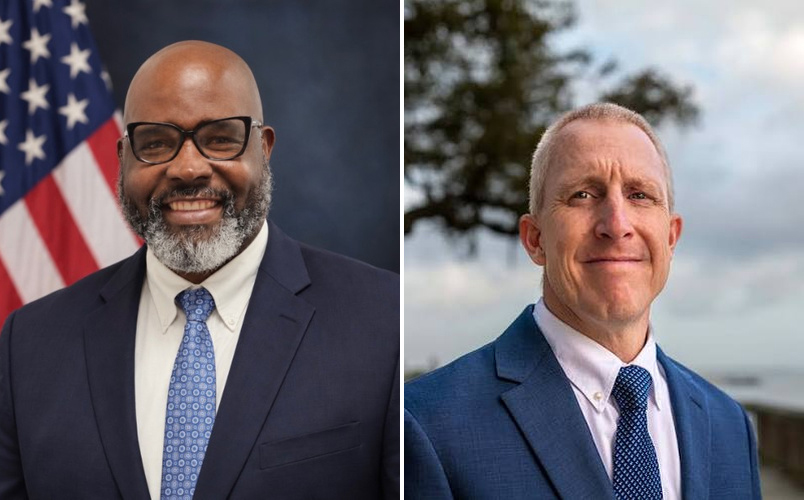
Candidates differ on immigration enforcement, the agency’s next chapter while finding common ground on violent crime, transparency, community trust
By Delayna Earley
The Island News
Beaufort County voters will choose a new sheriff in November for the first time in nearly three decades, and the two candidates seeking the job are offering different approaches to what should come next for the Beaufort County Sheriff’s Office.
Republican Doug Seifert and Democrat Alphonso Small Jr. responded to a questionnaire from The Island News addressing violent crime, staffing, immigration enforcement, surveillance technology, community trust, spending and transparency.
Their responses reveal some significant policy differences, particularly over federal immigration enforcement, but also areas where their proposed approaches are similar.
Violent crime and prevention
Both candidates said the Sheriff’s Office needs to do more to identify potential violence before it happens.
Seifert identified growth and traffic, violent crime and staffing as the county’s three most significant public safety challenges. He proposed regularly analyzing repeat locations, violent offenders, illegal firearms and recurring disputes to identify patterns that could warrant intervention.
Small identified violent crime and unresolved cases, keeping resources aligned with population growth, and building community trust as his top concerns. He said he would strengthen intelligence gathering and information sharing while focusing enforcement on violent offenders and illegally possessed firearms.
Following major incidents such as the October 2025 mass shooting at Willie’s Bar and Grill on St. Helena Island and the July 4 shooting at Coligny Beach, both candidates said they would conduct after-action reviews and improve the way information about threats and recurring conflicts is shared.
Seifert proposed a regular violence-review process involving patrol, investigators, crime analysts and partner agencies. Small similarly called for stronger information sharing among deputies, investigators, municipal departments, SLED, federal agencies and community organizations.
A divide over 287(g)
One of the clearest differences between the candidates is the Sheriff’s Office’s participation in U.S. Immigration and Customs Enforcement’s 287(g) program.
Seifert said he supports continuing the agreement, subject to a review of its training, costs, oversight and results.
He said federal immigration enforcement should remain primarily a federal responsibility and cautioned that participation should not interfere with local policing or result in witnesses or victims being treated differently because of their perceived immigration status.
Small said he would end the agency’s voluntary participation in the current 287(g) Task Force Model “to the fullest extent permitted by law.”
Small said BCSO should continue cooperating with federal agencies on criminal warrants, violent offenders, human trafficking, drug trafficking and other criminal investigations, but argued local deputies should not voluntarily take on broader federal immigration enforcement duties.
Technology, privacy, transparency
The candidates were closer in their approaches to automated license plate readers.
Both support continuing to use the technology for legitimate investigations while requiring documented reasons for searches, audits of how the systems are used and limits on how long information is retained.
Seifert said searches should be logged and access restricted based on an employee’s role, while Small said every search should create an audit record and supervisors should regularly review use of the system. Both said the public should receive more information about policies governing the technology.
They also offered similar views on transparency following shootings, deaths, uses of force and other major incidents.
Seifert said the public should receive verified information quickly, including an explanation of what cannot yet be released and why. Small said “silence should not be the default,” calling for initial factual statements, continuing updates and explanations when information must legally remain confidential.
Community trust and Heritage Days
Both candidates also said cultural and community events should be evaluated using consistent, written standards.
Seifert said Heritage Days at Penn Center should receive the same advance planning and professional communication as major events elsewhere in Beaufort County. He also proposed a Community Engagement Team and said he would examine the need for a St. Helena-area substation or another way to increase BCSO’s presence north of the Broad River.
Small proposed assigning BCSO liaisons to major recurring events and establishing written criteria based on attendance, traffic, security, emergency access and staffing. He also said senior leadership should maintain relationships with communities throughout the year, rather than appearing only during emergencies.
What comes next
The candidates’ backgrounds help frame perhaps their biggest difference in how they would approach taking over the agency.
Seifert said his 20 years inside BCSO give him an understanding of the employees, systems and partnerships the next sheriff will inherit. He said he would preserve the agency’s accreditation, forensic laboratory, victim advocacy, emergency management capabilities and interagency partnerships while reviewing staffing, workload, technology and policies during his first 100 days.
Small described his experience across several law enforcement agencies as providing an outside perspective. He said his first 100 days would include a comprehensive review of staffing, overtime, command structure, finances, contracts, equipment, training and policies, along with the creation of a Citizens Advisory Committee and regular community meetings.
The Nov. 3 election will determine who succeeds Sheriff P.J. Tanner, who announced earlier this year that he would not seek another term after serving as sheriff since 1999.
Complete responses from both candidates are below.
Beaufort County Sheriff candidates
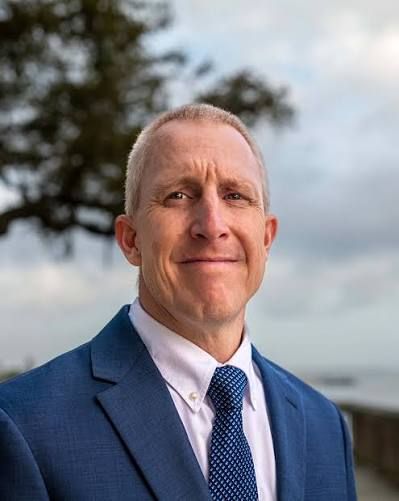
Doug Seifert, 53, is the Republican candidate for sheriff. A former lieutenant with the Sheriff’s Office, he lives on Hilton Head Island and has been a county resident for more than 20 years. During his 20-year career with the agency, he gained experience in investigations, supervision, major case management and emergency management. He earned a bachelor’s degree in business administration with a concentration in finance from the College of Mount St. Joseph. He and his wife, Shelly, have two adult sons.
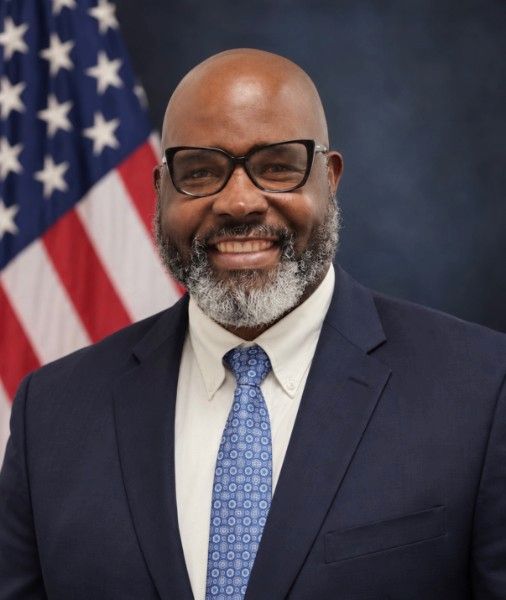
Alphonso Small Jr., 53, is the Democratic candidate for Beaufort County sheriff. A Bluffton resident since 2009, he represents District 6 on the Beaufort County school board and owns a trucking services business. He has more than 13 years of law enforcement experience in corrections, patrol, school-based policing and supervisory roles with state and local agencies. He earned a bachelor’s degree in criminal justice and sociology from Claflin University. He and his wife, April, have five children and eight grandchildren.
Beaufort County sheriff candidate Q&A
The Island News asked the two candidates for Beaufort County sheriff the same 10 questions ahead of the Nov. 3 general election. The questionnaire covered violent crime, staffing and retention, immigration enforcement, surveillance technology, community trust, transparency, Heritage Days and the future direction of the Beaufort County Sheriff’s Office.
The candidates’ complete responses appear below. Responses have been edited only for spelling, punctuation, grammar and Associated Press style where necessary. The substance and intent of each candidate’s answers have been preserved.
1. What do you believe are the three most significant public safety challenges currently facing Beaufort County, and what would you do as sheriff to address them?
Seifert: The three most significant challenges are growth and traffic place on emergency response and everyday public safety; violent crime that can develop from identifiable patterns and escalating conflicts; and recruiting and retaining enough qualified personnel for a growing county.
First, Beaufort County’s growth has intensified congestion, crashes and pressure on response. I have previously proposed dedicating road deputies to solely focus on traffic enforcement and roadway incidents so other patrol deputies can remain available for calls, crime prevention and serious emergencies. I would use crash, citation, warning and call data to deploy those resources where they are most needed and coordinate with municipal departments, the county and the state on recurring problem areas. The Sheriff’s Office cannot build roads, but it can document public-safety effects, enforce the law and give elected leaders reliable information about where infrastructure is affecting emergency service.
Second, public safety depends on qualified people. I would evaluate staffing by workload and service outcomes, not by a single headcount. That means examining calls for service, response times by geography and time of day, investigative caseloads, vacancies, turnover, overtime, leave usage, specialty assignments and how much time patrol deputies have for proactive work. I would continue advocating for competitive compensation while strengthening supervision, training, equipment, career development and communication inside the agency.
Third, I want the Sheriff’s Office to become more deliberate about recognizing patterns before a crisis occurs. A disturbance, weapons complaint, repeated call at the same location or conflict between individuals may look isolated when viewed one report at a time. When the law allows, those pieces of information should be reviewed together. I would require regular analysis of repeat locations, violent offenders, illegal firearms, recurring disputes and other indicators that may justify a lawful intervention, directed patrol, code-enforcement referral, investigative follow-up or work with a partner agency. The purpose is to give deputies and investigators a fuller picture and move the agency from reacting to individual incidents toward preventing the next one.
Small: I believe the three most significant public safety challenges facing Beaufort County are violent crime and unresolved cases, keeping our law enforcement resources aligned with a growing county, and strengthening trust and communication between the Sheriff’s Office and the communities it serves.
First, we have to do more than respond after violence occurs. Recent incidents at Willie’s Bar and Grill and Coligny Beach demonstrated the devastating consequences when conflicts escalate into gunfire. I would strengthen intelligence gathering, information sharing, and criminal investigations. I would focus enforcement efforts on violent offenders and illegally possessed firearms, while systematically reviewing unresolved serious cases so victims and their families are not forgotten.
Second, Beaufort County is growing, and our public safety resources must grow intelligently with it. Staffing should be determined by calls for service, response times, overtime, caseloads, geographic coverage, crime trends, and actual workload. Simply looking at a countywide personnel number does not tell us whether deputies are where they are most needed.
Third, public safety depends on trust. Residents must feel comfortable reporting crimes, providing information, and working with deputies. I would establish regular community meetings and create a representative Citizens Advisory Committee. I would also strengthen partnerships with schools, churches, nonprofits, businesses, neighborhood organizations, and community leaders.
We also need to invest in prevention, particularly with our young people. Mentorship, positive activities, early intervention, and strong relationships between law enforcement and young residents can help prevent involvement in violence and the criminal justice system.
Effective public safety requires enforcement when enforcement is necessary, prevention whenever prevention is possible, and a Sheriff’s Office that communicates with the people it serves.
2. The Sheriff’s Office has received additional county funding in recent years to improve salaries and recruit and retain deputies. What does the agency need to do to recruit and retain qualified law enforcement officers, and how would you determine whether current staffing levels are adequate for a growing county?
Seifert: Competitive pay is necessary, but people usually decide whether to build a career at an agency based on more than the starting salary. Deputies must have capable supervisors, useful training, reliable equipment, reasonable workloads, opportunities to advance and confidence that leadership will listen when a policy or practice is not working.
I spent twenty years in the Beaufort County Sheriff’s Office and advanced through every supervisory rank from PFC to lieutenant. That experience taught me that morale is created in daily decisions: whether supervisors communicate clearly, whether good work is recognized, whether employees receive meaningful feedback, whether training prepares them for the situations they face and whether the agency supports them after difficult calls. I would review exit interviews, conduct structured stay interviews, strengthen mentoring for new hires and supervisors, and publish clear career-development paths for sworn and civilian employees.
Small: Competitive compensation matters but recruiting and retaining good deputies requires more than salary. Deputies need effective leadership, modern equipment, quality training, opportunities for advancement, reasonable workloads, and a workplace where they feel respected and supported.
I would review recruitment policies to identify unnecessary administrative barriers that may prevent otherwise qualified candidates from competing for positions. We should be recruiting the best qualified people who meet South Carolina law enforcement requirements and the professional standards of the agency.
Hiring and promotion decisions under my administration would be based on qualifications, integrity, professionalism, experience, and performance. They would not be based on political loyalty, personal relationships, or who supported a candidate during an election.
Recruitment is only half of the challenge. We also need to understand why experienced employees leave. I would use employee surveys, meaningful exit interviews, and regular communication with deputies to identify problems involving morale, supervision, workload, advancement, training, and working conditions.
To determine whether staffing is adequate, I would evaluate vacancies and turnover by division, calls for service, response times by geographic area and priority, overtime, mandatory coverage, investigative caseloads, population growth, and the workload placed on specialized units.
If the data shows that additional deputies are needed, I would make that case to County Council and taxpayers using measurable information.
My goal would be simple: recruit qualified people, retain experienced people, give them the resources to succeed, and hold leadership accountable for using those resources effectively.
3. Within the past year, Beaufort County has experienced two major incidents of gun violence involving multiple victims, including the October 2025 shooting at Willie’s Bar and Grill on St. Helena Island and the July 4 shooting at Coligny Beach on Hilton Head Island. What, if anything, should the Sheriff’s Office do differently to prevent similar incidents, particularly when it comes to illegal firearms, intelligence gathering and identifying conflicts that could escalate into violence?
Seifert: These incidents show why prevention, response and investigation must be evaluated separately. Deputies may respond quickly and investigators may make arrests, yet a conflict can still turn into gunfire in seconds. The Sheriff’s Office must keep strong emergency response and investigative capability while doing more to identify warning signs before the 911 call.
I would establish a regular violence-review process that brings together patrol, investigations, crime analysis, school-resource personnel when legally appropriate, and partner agencies. The review would look for repeat locations, recurring disturbances, weapons complaints, known conflicts, retaliatory threats, violent offenders and people connected across multiple cases. Each item must be evaluated lawfully and in context. A name in a report does not make someone guilty, and an investigative lead is not proof. The purpose is to connect information that already exists, determine whether there is a credible risk and assign follow-up instead of allowing each report to remain in a separate file.
Illegal firearms require focused investigations and strong partnerships. I would continue working with municipal, state and federal agencies to trace recovered firearms, investigate trafficking and theft, identify illegally modified weapons, and determine whether the strongest lawful prosecution belongs in state or federal court. I would support expansion of the Violent Crime Task Force when staffing and results justify it and maintain the Sheriff’s Office’s forensic and digital-evidence capabilities.
The agency must also earn information from the public. That requires visible deputies, dependable follow-up, anonymous tip options, victim advocacy and relationships that exist before a tragedy. My proposed Community Engagement Team would help maintain those relationships across the county. Prevention also requires schools, families, youth organizations and service providers, because law enforcement cannot resolve every conflict or prevent gang recruitment by enforcement alone.
After every major incident, I would require an after-action review that examines what the agency knew, when it knew it, what information was shared, how resources were deployed and what should change. The goal would be learning and accountability, not hindsight blame.
Small: Public safety means more than arriving quickly after someone has been shot. We have to improve our ability to identify warning signs, recognize developing conflicts, and intervene before violence occurs.
My approach would focus on intelligence, prevention, targeted enforcement, strong investigations, and accountability.
The Sheriff’s Office should strengthen information sharing among patrol deputies, investigators, municipal departments, SLED, federal partners, schools, businesses, and community organizations. Information involving threats, repeat violent offenders, retaliation, illegal firearms, or developing conflicts should not remain isolated within one unit or agency.
Community trust is equally important. Residents often know when a conflict is developing before law enforcement does, but people will not share that information if they do not trust the Sheriff’s Office. We need credible and accessible ways for residents to report concerns before violence occurs.
Prevention must also include young people. Partnerships with schools, families, churches, nonprofits, and community organizations can create mentorship, positive activities, and early intervention opportunities before young people become involved in violence or the criminal justice system.
I would support targeted investigations involving stolen and illegally possessed firearms, illegal gun trafficking, straw purchasing, and individuals who are prohibited from possessing firearms and are connected to violent crime. At the same time, we must respect the constitutional rights of lawful gun owners.
After a major violent incident, I would require a thorough after-action review. We should ask what information existed beforehand, whether pieces of intelligence could have been connected, what worked during the response, what did not work, and what should change.
When violence does occur, investigations should not stop simply because public attention moves on. Every victim deserves justice, and every family deserves continued effort and answers.
4. The Beaufort County Sheriff’s Office participates in a 287(g) agreement with U.S. Immigration and Customs Enforcement that allows trained deputies to perform certain federal immigration enforcement duties. Would you continue, modify or end the Sheriff’s Office participation in the program, and why? What role should local law enforcement play in federal immigration enforcement?
Seifert: I support continuing the 287(g) agreement, subject to a complete review of the current agreement, training, costs, oversight and results. Local deputies should enforce South Carolina law and protect everyone who lives in or visits Beaufort County. Federal immigration enforcement remains a federal responsibility except where trained local personnel have specific authority under a written agreement.
The program should operate only within the authority the agreement grants. Participation should not become a substitute for local crime prevention, patrol or investigations, and it should not encourage deputies to treat witnesses, victims or residents differently because of their appearance, language or perceived immigration status. Public safety suffers when victims are afraid to report a crime or witnesses believe they cannot speak with law enforcement.
As sheriff, I would review who is trained, what duties they perform, how encounters are documented, what the program costs, what complaints have been received and what measurable public-safety purpose it serves. I would require compliance with constitutional protections, agency policy and the agreement itself. I would also explain the program to the public in plain language so residents understand what deputies are authorized to do and what they are not.
Small: I would end the Beaufort County Sheriff’s Office voluntary participation in the current 287(g) Task Force Model to the fullest extent permitted by law.
My responsibility as sheriff would be to protect the people of Beaufort County. Our deputies should primarily be responding to calls, preventing crime, investigating cases, protecting victims, apprehending dangerous offenders, and keeping our communities safe.
That does not mean refusing to cooperate with federal law enforcement. The Sheriff’s Office should continue appropriate cooperation involving criminal warrants, violent offenders, human trafficking, drug trafficking, organized crime, and other legitimate criminal investigations.
There is, however, an important distinction between cooperating with federal agencies on criminal matters and voluntarily assigning local deputies to perform broader federal immigration enforcement functions.
There is also a public safety concern. If victims or witnesses believe that contacting local law enforcement could expose them or their families to unrelated immigration enforcement, some may become less willing to report domestic violence, assault, human trafficking, or other serious crimes. That makes it more difficult for law enforcement to protect the entire community.
My administration would comply with all applicable state and federal laws and review our policies with legal counsel as those laws change. I would never direct deputies to violate the law, but I would also not voluntarily expand their immigration enforcement role beyond what the law requires.
Local resources should remain focused on local public safety. When residents of our county are afraid to report crimes, that affects all of us.
My priority would be to make sure that when someone in Beaufort County calls 911 because they are a victim or witness to a crime, their first concern is getting help, not whether calling the Sheriff’s Office will create an unrelated immigration issue.
5. Automated license plate readers have expanded significantly across Beaufort County, giving law enforcement the ability to search vehicle movements while also raising concerns about privacy, data sharing and government surveillance. What role should this technology have in the Sheriff’s Office under your leadership, and what limits, auditing requirements or other safeguards, if any, should govern how the data is collected, searched, retained and shared?
Seifert: Automated license plate readers can help locate a wanted vehicle, recover a stolen vehicle, find a missing person or develop a lead in a serious investigation. They should provide law enforcement with greater capability, not unchecked authority.
An ALPR record is an investigative lead. It may show that a plate was detected at a particular location and time; standing alone, it does not establish who was driving or why the vehicle was there. Every search should therefore require a legitimate law-enforcement purpose and a documented case number, incident number or other approved justification. Access should be role-based, searches should be logged, and supervisors should conduct routine audits for misuse or unusual activity. Unauthorized access or use should result in discipline and, where appropriate, referral for investigation.
I would review the current retention period and keep data no longer than an operational and legal need justifies. Data-sharing agreements should identify which agencies may receive information, for what purpose and under what security requirements. Hot-list information should come from reliable authorized sources, and any alert should be verified before enforcement action when circumstances permit.
I would also provide the public with a policy summary and annual information on system use, audits, substantiated misuse and the general types of cases in which the technology assisted, without disclosing information that would compromise an investigation. Useful technology and meaningful privacy safeguards can and should coexist.
Small: Automated license plate readers can be valuable investigative tools, but useful technology still requires meaningful and strategic oversight.
I would continue using this technology for legitimate law enforcement purposes, such as locating stolen vehicles, identifying vehicles connected to serious crimes, locating missing or endangered people, and developing investigative leads.
However, access should never become unrestricted surveillance or weaponized against constitutionally protected rights.
Every search should require a documented law enforcement purpose. Individual users should have unique credentials, every search should create an audit record, and supervisors should conduct regular reviews to identify improper access or misuse. Intentional misuse should result in discipline.
I would maintain a limited retention period for information that is not connected to an active investigation. A longer retention period should require a documented investigative reason and must comply with applicable law and agency policy.
BCSO currently uses a 30-day retention period for its license plate reader data. I would review that standard upon taking office, but any change would need a clear public safety justification.
The Sheriff’s Office should also establish clear rules governing the sharing of information with outside agencies. Access should require a legitimate criminal justice purpose and appropriate safeguards.
I would publish the Sheriff’s Office policy governing this technology and provide the public with information about retention standards, audits, general usage, and confirmed misuse whenever disclosure would not compromise an active investigation.
The Citizens Advisory Committee would also provide community input when major surveillance policies are reviewed.
Technology should help law enforcement investigate crime. It should not provide the government with unlimited authority to track law abiding residents without oversight.
6. If elected sheriff, what specifically would you do to ensure that the Penn Center Heritage Days Celebration and other cultural and community events receive fair, consistent and professional support from the Sheriff’s Office, regardless of the community or organization hosting them? What steps would you take to build trust with residents who believe their communities have not always received the same level of support?
Seifert: Every community should receive the same professional standard from its Sheriff’s Office. Fair treatment does not mean assigning identical staffing to every event. It means using the same objective process to determine what each event requires and explaining that process to organizers.
I would direct the agency to use written planning criteria for cultural and community events, including expected attendance, traffic and pedestrian needs, location, hours, alcohol service, prior incidents, credible threat information, medical needs, road closures and the availability of deputies. Organizers should have a named point of contact, a planning timeline and a written explanation of responsibilities, costs and staffing decisions. Heritage Days at Penn Center would receive the same advance planning, command attention and professional communication expected for a major event anywhere else in Beaufort County.
Trust will require more than an event plan. I would meet with Penn Center leadership, St. Helena residents and other communities that believe they have received inconsistent support. I would begin by asking for specific examples, reviewing what occurred and reporting back on what can be corrected. My Community Engagement Team would maintain regular contact throughout the year rather than appearing only during a crisis or campaign season.
I also support a meaningful north-of-the-Broad presence, including continued discussion of a St. Helena-area substation or another practical way to improve accessibility and visibility. Before committing taxpayer money, I would examine call volume, response patterns, facility options, staffing and the services residents most need. The decision should be grounded in evidence and made with the community, not announced to it.
Small: The level of law enforcement support an event receives should be determined by objective public safety needs, not by who organized the event, where it is located, or which community it represents.
Events such as the Penn Center Heritage Days Celebration are not simply dates on a calendar. They carry significant cultural and historical meaning for the communities that created and sustained them. The Sheriff’s Office should understand and respect that significance while fulfilling its public safety responsibilities.
I would establish consistent written criteria for event support, including expected attendance, traffic impact, road closures, security concerns, emergency access, staffing needs, and other legitimate safety considerations. Similar events should be evaluated using similar standards.
For major recurring events, I would assign a Sheriff’s Office liaison to work with organizers well in advance. If a requested traffic or security plan cannot be accommodated, leadership should explain the reason and work collaboratively with organizers to identify appropriate alternatives.
Trust must also be earned through consistent action. I would listen directly to residents who believe their communities have not received equal support and establish a clear process for reviewing concerns about unequal service or access to Sheriff’s Office resources.
Senior leadership should be present in communities outside of emergencies. We should work with Penn Center, churches, schools, nonprofits, cultural organizations, businesses, and neighborhood leaders throughout the year, not simply when a crisis occurs.
My standard would be consistent throughout Beaufort County: equal professionalism, equal respect, and fair application of public safety resources.
7. The sheriff is an independently elected official, but the Sheriff’s Office relies on funding approved by Beaufort County Council. How would you approach the agency’s budget, and what information should the public and County Council receive to determine whether taxpayer money is being used effectively?
Seifert: A responsible budget request should identify the public-safety problem, explain what the proposed expenditure will do and state how the Sheriff’s Office will determine whether it worked. An annual audit is essential, but an audit primarily tells the public whether money was handled according to financial rules. Taxpayers also deserve to understand the service and results associated with that spending.
I would build requests from documented workload, legal requirements, staffing conditions, replacement schedules and measurable operational needs. For a personnel request, Council should see the vacancies, workload, overtime, coverage problem and expected service improvement. For equipment or technology, it should see the purpose, total ownership cost, training requirement, privacy or security implications, useful life and the result the investment is expected to produce.
I would provide Council and the public with a concise budget report.
The Sheriff’s Office should continue participating openly in County Council’s budget process and answering questions in public whenever disclosure would not compromise personnel privacy, security or an investigation. If the agency requests additional money, I will explain the need. After the money is spent, I will report what changed.
Small: I would approach the Sheriff’s Office budget as both public safety responsibility and a public trust.
Early in my administration, I would conduct a comprehensive and independent financial and operational review of staffing, overtime, contracts, equipment, technology, vehicles, training, and other major expenditures.
The purpose would not be to search for someone to blame. It would be to establish an accurate baseline, determine where resources are going, identify inefficiencies, and evaluate whether taxpayer dollars are producing measurable results.
Budget requests should connect dollars to demonstrated needs. If I request additional deputies, I should be able to show the staffing shortage, workload, response time concern, or geographic need supporting that request. If I request new technology, I should explain what problem it addresses, what it costs, what safeguards are necessary, and how its effectiveness will be measured.
County Council and the public should receive understandable information regarding staffing and vacancies, overtime, recruitment and retention, major contracts, equipment and vehicle purchases, grants, training expenditures, response times, crime trends, case clearance information when appropriate, and progress toward clearly stated public safety goals.
The Citizens Advisory Committee would provide another opportunity for residents to understand agency priorities, ask questions, and provide input. It would not replace County Council, professional auditors, or any official oversight authority.
If a program is not producing results, we should be willing to say so and determine why. If additional funding is necessary, I should be able to explain what the money will accomplish and how we will measure the outcome.
I would work collaboratively with the County Council while respecting the constitutional independence of the sheriff.
Transparency should not begin and end during budget season. Taxpayers should be able to understand throughout the year how their money is being used and what results that investment is producing.
8. What level of transparency should the public expect from the Sheriff’s Office, particularly following deputy-involved shootings, uses of force, deaths, major crimes or other incidents of significant public interest? How would your administration approach public records, communication with the media and accountability when information cannot immediately be released?
Seifert: The public should receive verified information promptly, along with an honest explanation of what is not yet known, what cannot legally be released and when the next update can reasonably be expected. Protecting an investigation does not prevent the Sheriff’s Office from communicating.
Following a critical incident, my administration would acknowledge the event quickly, state whether an ongoing threat exists, identify the investigating agency when appropriate and provide the facts that can responsibly be confirmed. If a deputy is involved, the public should be told what review process has begun and whether an outside agency such as SLED has been requested. Victims and families should receive direct, compassionate communication through victim advocates rather than learning important facts from a news conference whenever that can be avoided.
South Carolina’s Freedom of Information Act recognizes public access while allowing specific law-enforcement information to be withheld when release would interfere with a proceeding, compromise privacy or a fair trial, reveal a confidential source or protected technique, or endanger someone. My administration would apply those limits specifically, separate exempt information from releasable material when possible and respond within the law’s deadlines. ‘Active investigation’ should not become a blanket phrase used to avoid explaining a lawful withholding decision.
I would maintain regular communication with the media, publish annual use-of-force and administrative-investigation information as allowed by law, and provide scheduled updates during major cases even when the update is simply that the investigation continues and explains why additional details remain protected. If the agency makes an error, leadership should acknowledge it, correct it and explain what will change.
Small: The public should expect timely, accurate, and consistent information from the Sheriff’s Office, particularly following serious incidents or when questions involve the conduct of our own personnel.
Transparency does not mean releasing information that could compromise an investigation, violate someone’s legal rights, identify a protected victim, or interfere with a future prosecution. It does mean communicating what can responsibly be confirmed, explaining what cannot yet be released and why, and continuing to provide updates as circumstances change.
Silence should not be the default.
Information vacuums create unnecessary fear and allow rumors, allegations, and speculation to replace verified information. Even allegations that later proven unfounded can damage public confidence when people believe legitimate questions are being ignored.
When a deputy, supervisor, or member of command staff is connected to an incident of significant public interest, the standard for accountability should not become lower because the questions involve our own personnel. Serious incidents involving Sheriff’s Office employees should receive independent investigation when appropriate.
My administration would provide an initial factual statement as soon as reasonably possible, identify when another agency is conducting an investigation, and establish a process for continuing public updates.
When information cannot legally or ethically be released, we will say that clearly and explain why. The public should not be expected to interpret silence.
I would also establish clear standards for Freedom of Information Act requests, track response times, and ensure requests are handled professionally and consistently. Media organizations should receive professional treatment regardless of whether their reporting is favorable to my administration.
If the Sheriff’s Office provides inaccurate information, we should correct it publicly.
Transparency is not about releasing everything immediately. It is about telling the truth, communicating responsibly, explaining our limitations, and accepting accountability when difficult questions arise.
9. Beaufort County will have a new sheriff after nearly three decades under the same elected leadership. What practices of the current Sheriff’s Office would you preserve, what would you change, and what would your priorities be during your first 100 days in the office?
Seifert: I would preserve the agency’s professional accreditation, forensic laboratory, digital-evidence capability, victim advocacy, emergency-management expertise, interagency partnerships and the dedication of the men and women who serve Beaufort County. A change in sheriff should not mean discarding effective systems or disrupting good work simply to signal change.
I would change how consistently information is connected, how the agency measures workload and how openly leadership explains priorities and results. I want recurring calls, locations, conflicts and offenders reviewed for patterns; staffing requests tied to service data; community-event support guided by written standards; and the public given clearer information about budget, technology and major incidents.
During the first 100 days, I would first meet with all BCSO employees across ranks, divisions and locations; municipal chiefs, prosecutors, emergency partners, County Council and community leaders. I would review vacancies, overtime, response and caseload information, the command structure, major contracts, technology policies, training, critical-incident procedures, active agreements and the next budget cycle. I would also begin community listening sessions in different parts of the county, including St. Helena and other north-of-the-Broad communities.
I would then begin the staffing and workload assessment, review ALPR and 287(g) policies, set written event-planning standards and launch the Community Engagement Team using current personnel if the operational review confirms that approach is workable.
Small: A change in leadership does not mean that everything currently being done is wrong.
The Beaufort County Sheriff’s Office has experienced deputies, investigators, dispatchers, and civilian employees who have served this community well. I would preserve effective criminal investigations, victim services, emergency response capabilities, strong partnerships with other law enforcement agencies, and programs or technologies that demonstrate genuine public safety value.
What I would change is the level of evaluation, communication, and accountability surrounding major decisions.
During my first 100 days, I would conduct a comprehensive review of staffing, vacancies, overtime, command structure, workload, response times, finances, contracts, equipment, training, major programs, and existing policies.
I would review policies involving use of force, internal investigations, public information, automated license plate readers, other surveillance technology, and employee accountability.
I would begin the process of ending or modifying participation in the current 287(g) Task Force Model to the fullest extent permitted by law and ensure that local resources remain focused on Beaufort County public safety, and that we ensure that our priorities remain serving and protecting all residents of Beaufort County.
I would also review unresolved serious cases, evaluate investigative resources, strengthen information sharing with partner agencies, and make sure victims and their families have meaningful avenues for communication.
Internally, I would meet with deputies and civilian employees at every level of the organization. I want to hear directly from the people doing the work about what is effective, where they need support, and what barriers make their jobs more difficult.
Hiring and promotion would be based on qualifications, integrity, professionalism, and performance.
Externally, I would establish the Citizens Advisory Committee and begin regular community meetings throughout Beaufort County. I would meet with municipalities, schools, businesses, faith organizations, cultural organizations, neighborhood leaders, and communities that have expressed concerns about their relationship with law enforcement.
My first 100 days would be about listening, reviewing, evaluating, and acting.
The goal would not be change for the sake of change. It would be to identify what works, preserve it, address what can be improved, and establish clear expectations for accountability, community engagement, and transparency.
10. What distinguishes you from your opponent in this race, and why should Beaufort County voters choose you to serve as their next sheriff?
Seifert: I respect anyone willing to offer themselves for public service. The distinction I can speak to most responsibly is my own record and the administration I am prepared to lead.
I served the Beaufort County Sheriff’s Office for twenty years and advanced through every supervisory rank from PFC to lieutenant. I have worked inside the agency’s operations, investigations and chain of command; completed leadership, major-case, emergency-management and incident-command training; and served the public during ordinary calls and serious emergencies. I understand the people, systems and partnerships a new sheriff will inherit, along with the areas that require a fresh look.
My approach is to preserve the capabilities that serve Beaufort County well while holding the agency to clearer measures of staffing, performance, privacy, communication and community support. I want information used more effectively to identify patterns before violence escalates. I want deputies supported with strong supervision, training and equipment. I want residents to understand how technology is used, why money is requested and what the Sheriff’s Office can lawfully say during a major investigation.
I am asking to serve as sheriff because I know this agency, I know this county and I am prepared to accept responsibility for both its strengths and its shortcomings. Voters should compare our experience, stated policies and willingness to be accountable, and choose the candidate whose judgment they trust.
Small: My opponent and I bring different professional backgrounds and different approaches to this transition.
Doug Seifert spent 20 years inside the Beaufort County Sheriff’s Office and rose to the rank of lieutenant a couple of weeks before leaving the sheriff’s office. Sheriff P.J. Tanner has endorsed him, and Mr. Seifert’s campaign states that he intends to build on Sheriff Tanner’s legacy while also bringing his own perspective to the agency.
I respect his service and the experience he gained during those years.
My experience was developed across multiple law enforcement agencies and communities rather than within one organization. I have worked in corrections, patrol, school-based law enforcement, and supervisory roles. I also bring experience outside of law enforcement through business ownership, community involvement, and elected public service.
That gives voters two different perspectives on what the next chapter of the Beaufort County Sheriff’s Office should look like.
We also have clear policy differences.
Mr. Seifert has publicly stated that he supports the 287(g) program.
I would end voluntary participation in the current 287(g) Task Force Model to the fullest extent permitted by law while continuing appropriate cooperation with federal authorities on criminal matters.
I would also begin my administration with an independent review of staffing, spending, policies, technology, internal accountability, and communication with the public rather than assuming existing practices should automatically continue.
After nearly three decades under one elected sheriff, I believe the transition provides an opportunity to examine the organization with an independent perspective while preserving the employees, programs, and practices that are working effectively.
My approach would emphasize merit-based hiring and promotion, measurable staffing and budget decisions, consistent community engagement, clear safeguards for surveillance technology, and greater communication when serious incidents raise public questions.
I am not suggesting that everything the Sheriff’s Office has done is wrong. I am offering a different background, a different perspective, and a different approach to evaluating what comes next.
Those are the distinctions Beaufort County voters can consider when deciding who should lead the Sheriff’s Office into its next chapter.
Delayna Earley, who joined The Island News in 2022, formerly worked as a photojournalist for The Island Packet/The Beaufort Gazette, as well as newspapers in Indiana and Virginia. She can be reached at delayna.theislandnews@gmail.com.