

Democrat Tiffany Boozer and Republican Michael Burkhold outline competing approaches to safeguarding South Carolina’s finances
By Delayna Earley
The Island News
South Carolina voters will choose a comptroller general Nov. 3, with two candidates offering different approaches to ensuring the accuracy of the state’s financial records, overseeing payments and making government spending more transparent.
Democrat Tiffany Boozer and Republican Michael B. Burkhold Jr. responded to a questionnaire from The Island News addressing 10 issues facing the office, including accounting controls, financial reporting, technology modernization, agency accountability and coordination with the State Treasurer.
Both candidates support modernizing South Carolina’s accounting systems, strengthening financial oversight and making state financial information easier for residents to understand. Their differences center largely on their professional backgrounds and how they would approach those goals.
Boozer, a certified public accountant who works in the Comptroller General’s Office, emphasizes her technical accounting experience and knowledge of existing state procedures. Burkhold, a business founder, advocates bringing private-sector management practices and automated financial controls to the office.
Background and qualifications
Boozer, 39, lives in Columbia and is the quality assurance manager and an internal auditor in the South Carolina Comptroller General’s Office.
She holds bachelor’s and master’s degrees in accounting and is a certified public accountant. She has more than a decade of auditing experience in government and the private sector.
Boozer said her experience with statewide financial reporting and internal controls would allow her to strengthen the office’s operations.
“As the Quality Assurance Manager, not only do I understand the operations but also the importance of strong internal controls and accurate financial reporting,” she wrote.
She has not previously held elected office.
Burkhold, 57, lives on Sullivan’s Island and founded Equiscript LLC, a Charleston-based company, in 2009. He led the company until June 2026 and now serves on its board.
He holds a bachelor’s degree from the College of Charleston and said his experience building and managing a business has prepared him to oversee the state’s financial operations.
“For seventeen years I signed the checks, read the financial statements, led the team, negotiated the large contracts, and answered for every dollar,” he wrote.
Burkhold has not held elected office but was the Republican nominee for South Carolina’s 5th Congressional District in 1998.
Accuracy of the state’s financial records
Both candidates identified accurate financial reporting as a central responsibility of the comptroller general, but they emphasized different methods for preventing errors.
Boozer said she would strengthen existing reviews of agency financial submissions, resolve discrepancies and explore additional internal control tools to identify unusual transactions earlier.
She pointed to software recently implemented for preparing the state’s Annual Comprehensive Financial Report and said additional risk-based controls could improve accuracy.
Burkhold called for eliminating reliance on spreadsheets outside the state’s accounting system, citing the state’s previous $3.5 billion accounting restatement.
He said every balance included in the annual financial report should come directly from the accounting system, with all adjustments recorded in that system.
Burkhold also proposed monthly reconciliation of the state’s accounting records with the Treasurer’s cash and investment balances, along with publication of the results.
“A gap caught in month one is a correction. A gap caught in year four is a restatement,” he wrote.
Financial reporting and agency compliance
The candidates agreed that state agencies should provide accurate, timely financial information, although they proposed different approaches to addressing problems.
Boozer said the Comptroller General’s Office already returns incomplete submissions for correction, follows up on late information and works with agencies to resolve discrepancies before completing the annual report.
She said material concerns may be documented and communicated to the State Auditor’s Office.
Burkhold argued that the state should complete more accounting work throughout the year rather than relying on a labor-intensive year-end process.
He proposed automated checks that would identify missing information and inconsistent balances when agencies submit their reports.
Agencies would receive reports identifying errors and deadlines for correction. Repeated problems would be referred to the State Auditor and legislative budget committees, with the results disclosed publicly.
Boozer also supports public reporting of recurring agency failures but emphasized the distinction between the responsibilities of the Comptroller General’s Office and the State Auditor’s Office.
She said unresolved reporting problems could be escalated to agency leadership and that the State Auditor should have appropriate enforcement authority to address repeated audit findings.
Burkhold proposed publishing monthly agency scorecards showing late or incomplete submissions, unresolved audit findings and overdue corrective action plans.
Modernizing accounting systems
Both candidates support updating the state’s accounting technology, but they outlined different priorities for the transition.
Boozer said state agency financial information, including the Treasurer’s debt management system, should be integrated into a single statewide accounting system.
She said she would work with the appropriate offices to avoid disruptions to payroll and vendor payments.
Boozer also pointed to an upcoming update to the state’s SAP accounting system, expected to begin in 2027, as an opportunity to introduce automated checks for duplicate payments, unusual transactions and discrepancies.
Burkhold said modernization presents one of the greatest operational risks facing the office because the accounting system handles payments to state employees and vendors.
He proposed reviewing the project’s scope, leadership, progress and potential weaknesses during his first 100 days.
Burkhold said the old and new systems should operate simultaneously until the replacement demonstrates that it can produce accurate results. He also supports introducing changes incrementally and avoiding transitions during payroll processing or year-end closing.
“A new system that still needs a stack of spreadsheets to produce the annual report is a new way to do the old job,” he wrote.
Reviewing payments and preventing fraud
The candidates agreed that payments should be reviewed before state money is disbursed.
Boozer said the office currently reviews every payment, checking vendor information, invoice amounts, addresses and supporting documentation.
She supports continuing that process, rejecting payments with incomplete documentation and escalating suspicious or potentially fraudulent transactions.
“My priority is to ensure accurate payment processing, protect taxpayer dollars, and keep legitimate payments moving,” she wrote.
Burkhold also supports reviewing every payment but favors using software to perform routine checks, allowing employees to concentrate on transactions flagged as potentially problematic.
He proposed automatically verifying that payments are authorized by appropriations, supported by contracts or other records, and approved by appropriate personnel.
Suspicious transactions would be delayed, rejected or referred to the appropriate investigative authorities.
Burkhold said automated systems could identify duplicate payments, invoices exceeding contract amounts and transactions structured to avoid approval thresholds.
Coordination with the State Treasurer
Both candidates said the comptroller general and State Treasurer must reconcile their financial records to ensure accurate statewide reporting.
Boozer said the Comptroller General’s Office should compare its accounting totals with reconciliations provided by the Treasurer and work collaboratively to resolve significant or unexplained differences.
Burkhold proposed automated monthly comparisons of the two offices’ records, followed by meetings to review discrepancies and document explanations.
He said unresolved differences should remain identified in the state’s records and be disclosed in the year-end financial report rather than concealed through adjustments.
Public access to financial information
Both candidates support expanding access to state financial information, including making spending data easier for residents to search and understand.
Boozer said she would begin by consulting constituents, lawmakers and other stakeholders about what information they want to see.
She proposed building on the state’s existing spending dashboard with searchable revenue and budget data, year-over-year comparisons, vendor information and analysis of major expenditures.
Boozer also supports using plain language, visual summaries and explanations to help residents understand the state’s overall financial condition.
“Spending alone does not tell the full story of the state’s financial condition,” she wrote.
Burkhold proposed publishing every state payment online in searchable, downloadable form, including the recipient, amount, agency, funding source and purpose.
He also supports creating a one-page financial summary for each state program showing its funding, spending and remaining balance, with links to the underlying financial records.
Burkhold said making the information available in downloadable files would allow journalists, researchers, lawmakers and residents to examine government spending without filing records requests.
Independence and professional standards
The candidates also addressed how they would maintain accurate financial reporting when facing political pressure.
Boozer said her responsibilities as a certified public accountant would guide her decisions.
“I worked very hard to earn my CPA license, and I will not put my credentials or professional integrity on the line due to political pressure,” she wrote.
She supports continuing education for senior employees and maintaining professional credentials and ethical standards.
Burkhold said consistent publication schedules and electronic records of accounting changes would help prevent political interference.
He supports requiring senior accounting staff to hold CPA or equivalent credentials, maintain their qualifications and avoid financial conflicts involving state payments.
Burkhold said the comptroller general’s responsibility is to hire qualified employees, provide appropriate technology and hold the office accountable for its results.
Looking ahead
In describing their priorities, Boozer emphasized strengthening the reliability of the state’s financial reports, modernizing accounting systems and improving transparency.
She said her experience inside the Comptroller General’s Office would allow her to identify risks, evaluate financial information and understand the challenges of statewide reporting.
Burkhold emphasized management accountability, automated reviews of transactions, monthly financial reconciliations and public access to state spending records.
He also proposed using the comptroller general’s position on the State Fiscal Accountability Authority to encourage more comprehensive audits of state agencies.
Both candidates identified modernization and transparency as priorities, but their responses reflect different approaches to leading the office: Boozer’s emphasis on professional accounting expertise and existing state operations, and Burkhold’s focus on management practices and technology-driven oversight.
South Carolina Comptroller General candidates
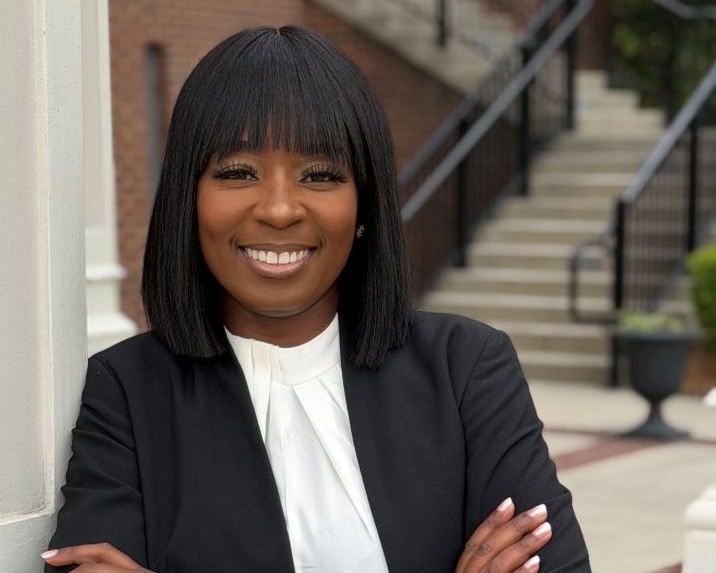
Tiffany Boozer, 39, is the Democratic candidate for comptroller general. She lives in Columbia and works as a quality assurance manager and internal auditor in the South Carolina Comptroller General’s Office. A certified public accountant, she holds bachelor’s and master’s degrees in accounting and has more than a decade of auditing experience in government and the private sector. She is a single mother of one and serves as treasurer of Talented Tenth. She has not previously held elected office.

Michael B. Burkhold Jr., 57, is the Republican candidate for comptroller general. He lives on Sullivan’s Island and founded Equiscript LLC, a Charleston-based company, in 2009. He led the company until June 2026 and now serves on its board. He holds a bachelor’s degree from the College of Charleston. Burkhold has served on the Charleston Executive Committee of Young Life and is a member of the Sons of the American Revolution. He has not held elected office but was the Republican nominee for South Carolina’s 5th Congressional District in 1998.
Candidate questionnaire responses
The following responses were submitted to The Island News by candidates for South Carolina comptroller general. Responses have been edited only for grammar, spelling, punctuation and Associated Press style where necessary. The substance and intent of each candidate’s answers have been preserved. Statements, opinions and allegations in the responses are those of the candidates.
1. The comptroller general is responsible for maintaining South Carolina’s accounting records and financial controls. What procedures would you use to ensure balances, classifications and statewide reports are complete and accurate?
Boozer: As the internal auditor, I understand the importance of reviewing agency reporting submissions, resolving discrepancies and ensuring balances are accurately reflected in the statewide financial statements. State agencies attest to the numbers in their reporting package submissions, while other reporting entities provide audited financial statements.
While the office has recently implemented software for the preparation of the Annual Comprehensive Financial Report (ACFR) to support accurate and reliable statewide reporting, I would explore additional internal control tools to help identify unusual transactions based on risks earlier in the process.
Burkhold: The first procedure is to stop keeping the books in spreadsheets. When outside investigators traced the $3.5 billion restatement, they found that the cash and investment totals in the state’s annual report were assembled in an Excel file outside the accounting system, and that the office made what it called “late manual adjustments” to the report that were never recorded in the system itself. That is how a company kept its books in 1990. It is also how a $3.5 billion error lives for years without anyone seeing it: The number in the report and the number in the system were never the same number, so nothing could catch the difference.
So every balance in the annual report comes straight out of the state’s accounting system, and no adjustment gets made to the report that is not posted in the system too. Modern accounting software does this as a matter of course. It also does something a spreadsheet cannot: It checks itself. The software flags a balance that moved when nothing was posted to it, a fund that has not been reconciled, an entry that does not have a matching entry on the other side. Those checks run every day, not once a year when the auditors arrive.
The second procedure is a real monthly close, with the system doing the tying. Every month, the state’s records get matched to the Treasurer’s cash and investment balances, every difference gets explained in writing, and the result gets published. A gap caught in month one is a correction. A gap caught in year four is a restatement.
The third is one person who owns the result. A CEO does not keep the books himself; he hires people who keep them right, gives them the tools to do it, and holds them to it. If the state’s financial report is wrong, that is on the Comptroller General, and I will say so on day one.
2. How would you ensure the state’s Annual Comprehensive Financial Report is accurate, understandable and completed on time? What should happen when an agency submits incomplete, late or unreliable information?
Boozer: I would focus on the accuracy of the ACFR without sacrificing quality for deadlines. Our office currently returns incomplete submissions for corrections and follows up on late submissions, when needed. We also work with the reporting entity to resolve discrepancies before finalizing the ACFR. As part of our existing procedures, we also communicate and document any concerns we believe to be material or may warrant further review to the State Auditors, when needed.
Burkhold: The annual report is late because the work that should happen all year gets pushed to the end, and it gets pushed to the end because the process depends on people copying numbers between spreadsheets by hand. Fix the process and the calendar fixes itself. If the books close in the system every month, the year-end report is 12 months of checked work added up, and most of it can be assembled by the software rather than typed.
Understandable is a separate job, and it is the one technology does best. The full report runs hundreds of pages and is written for accountants, and it should keep doing that, because the auditors need it. But the same data can also be published as one page per state program, showing what it was given, what it spent and what is sitting unspent, with each number linked to the line in the full report it came from. That page does not exist in state government today. It does not require a new law. It requires the office to treat the public as a customer.
When an agency submits numbers that are late, incomplete or unreliable, the system should catch it before a person does. Submissions get validated when they arrive: missing fields, balances that do not tie to prior periods, totals that do not foot. The agency gets the exception report the same day, with a due date to fix it. If the problem repeats, the office refers it to the State Auditor and the budget committees and tells the public what came of it. The one thing that does not happen is the report going out with a number nobody can support.
3. What statewide accounting controls are most important for preventing errors, improper payments and fraud? How would you test those controls and require agencies to correct weaknesses?
Boozer: It is important to note that it is not the responsibility of the Comptroller General’s Office to test agency-level internal controls but rather the State Auditor’s Office. However, with the upcoming SAP update to the state’s accounting system, expected to begin in 2027, and the system flexibility, I believe we will have the opportunity to build additional automated checks that can flag duplicates, unusual transactions or discrepancies earlier, etc. My focus would be on strengthening our review processes and using technology to catch issues sooner.
Burkhold: Three controls matter more than the rest, and all three are stronger when the system enforces them instead of a memo. First, the person who sets up a vendor is never the person who pays the vendor, and the software should refuse the transaction if the same login tries to do both. Second, every payment gets checked against the contract behind it, not just for whether a contract exists but for whether the amount approved matches the amount contracted. A vendor with a $2 million contract should not be able to collect $2.4 million without someone having to explain why, and the system should stop the payment at the moment it goes over, not at an audit two years later. Third, the books get checked against the bank monthly, so an error has 30 days to live instead of three years.
The office tests those controls today by pulling a sample. That was the right method when a person had to read every file. It is not the right method now. Modern tools can read every transaction, not a sample, and flag the ones that look wrong: a payment that exceeds its contract, a vendor address that matches an employee’s, invoices that round to the same number every month, a payment just under an approval threshold, a vendor set up and paid in the same week. Banks and large companies have used this kind of screening for years. The state should too.
When a weakness turns up, the agency gets a written corrective action plan with a due date, and the plan and its status get published. If the due date passes and the fix is not made, the office says so publicly and refers the matter to the State Auditor. A weakness written up every year and never fixed is not a finding. It is a decision.
4. What improvements are needed in South Carolina’s statewide accounting and payment systems? How would you manage modernization without disrupting payroll, vendor payments or year-end reporting?
Boozer: Most importantly, I believe all state agency-level financial data, including the Treasurer’s Office debt management system, should be integrated into one statewide accounting system to improve accurate year-end reporting. I’d work with the appropriate offices to prevent disruption of payroll and vendor payments.
Burkhold: The state is in the middle of replacing its statewide accounting system, and that project carries more risk than anything else in the office, because the system pays every state employee and every vendor. If it fails, people do not get paid. My first 100 days include a full review of where it stands: its scope, who is in charge of what, how far along it is and where the gaps are.
Then I would manage it the way I managed every system change in my own company. Run the old and new side by side until the new one proves it can produce the same numbers. Never cut over during payroll week or year-end close. Move one piece at a time, and do not move the next piece until the last one is right. Train the people before the switch, not after.
The test for the new system is simple. It should close the books monthly, tie every payment to its appropriation, screen every transaction for the patterns that signal error or fraud, and publish every transaction online without anyone building a spreadsheet by hand. The tools that do those things are off the shelf now, and the office should buy them rather than build them. A new system that still needs a stack of spreadsheets to produce the annual report is a new way to do the old job.
5. The office reviews payrolls, vouchers and interagency payments before authorizing disbursement. What level of review is appropriate, and when should a payment be delayed, rejected or referred for investigation?
Boozer: Our office has a team that reviews every payment before disbursement. They verify vendor information, invoice amounts, addresses and proper documentation to support payment. I believe this review process should continue. If documentation is incomplete, the payment is rejected and returned for correction. If a concern arises beyond missing or incomplete documentation, the payment should be rejected and escalated accordingly if it appears suspicious or fraudulent. My priority is to ensure accurate payment processing, protect taxpayer dollars and keep legitimate payments moving.
Burkhold: The Comptroller General’s signature is the last checkpoint before money leaves the Treasury, and the office reviews a very large number of payments a year. The right level of review is every payment checked, with the checking done by software and the judgment done by people.
Every payment passes three questions before it goes out. Is there an appropriation that permits it? Is there a contract, invoice or payroll record behind it? Did someone with the authority to approve it do so? A system can answer all three in a second, and it should. Payments that pass go out on time, because a late payment to a vendor is its own kind of waste.
The payments that need a person are the ones the screen flags: a payment that does not match its contract, a vendor paid twice for the same invoice, a pattern that looks like a payment split to stay under a threshold. Those get delayed until the paper is right, rejected when there is no legal authority for them, and referred when the pattern looks like more than a mistake. The Comptroller General does not investigate fraud. The State Auditor, the Inspector General and the Attorney General do. The Comptroller’s job is to stop the check and hand over the file, and a good screen means the file is already built.
6. How should the Comptroller General’s Office reconcile accounting records with cash and investment information maintained by the State Treasurer? How would you resolve a significant disagreement or unexplained difference between the offices?
Boozer: The Comptroller General’s Office should compare the totals in our accounting records with the reconciliation provided by the State Treasurer. If there are significant or unexplained differences, I would work with the Treasurer’s Office to identify the cause and resolve the discrepancy to keep the state’s year-end financial statement accurate.
Burkhold: The Comptroller General keeps the books. The Treasurer holds the money. The two sets of records should match every month, the way a family checks the bank statement against the checkbook, and the matching should be done by the system, not by hand. When the two offices’ balances are pulled from their systems and compared by software, the differences show up as a list, each one with a date and an amount, and most of them are timing: a deposit one office recorded on the 30th and the other on the 1st. Those clear themselves the next month.
I would set a standing monthly meeting between the two offices with one agenda item: here is the list, and here is the reason for every item on it. The ones that do not clear get worked item by item until they do, with both offices signing off on the explanation.
A difference that cannot be explained stays open on the books as an unresolved item with a dollar amount, and the year-end report says so rather than burying it.
7. How would you hold state agencies accountable for following accounting standards, submitting timely information and resolving audit findings? Should recurring failures result in public reporting or additional controls?
Boozer: I believe accountability starts with understanding the separation of duties, authority and oversight. The Comptroller General’s Office provides accounting guidance to state agencies. When that guidance is not followed, we work with the agency to obtain corrected reporting documentation. If the issue remains unresolved, it may be escalated to the agency head, although, in my experience, this is rarely necessary.
We follow a similar process for late submissions and reserve the right to make adjustments to ensure appropriate accounting standards are utilized, when necessary, to ensure the ACFR accurately reflects the state’s financial position.
The responsibility for resolving audit findings falls under the State Auditor’s Office, not the Comptroller General’s Office. I support public reporting of recurring failures and believe the State Auditor’s Office should have the appropriate authority and enforcement mechanisms to ensure agencies address audit findings and improve compliance.
Burkhold: Public reporting, every time, and the system should produce it. The tool the Comptroller General has is the one the public gives him: the ability to say in writing which agencies sent their numbers in on time and which did not, which audit findings were fixed and which were written up for the third year in a row. Today that would take a person a week to compile. A modern system produces it as a report, every month, by itself.
So I would publish an agency scorecard monthly: late submissions, incomplete submissions, open audit findings and how long each has been open, corrective action plans past their due date. Agencies that do the job well get credit on the same page. The scorecard goes to the State Auditor and to the House and Senate budget committees, because the budget writers are the people who can attach a consequence to it.
Recurring failures should bring additional controls, and the Comptroller General can apply some of them without waiting on anyone. An agency with a repeated finding on vendor payments gets every vendor payment screened at a higher level. An agency that is late three times gets its submissions checked line by line. None of that is punishment. It is making sure the easiest path for an agency is the one where the books are right.
8. What state spending and financial information should be available to the public in searchable, machine-readable form? How would you make complex reports understandable without oversimplifying the state’s financial condition?
Boozer: I believe the first step is having conversations with constituents, lawmakers and other stakeholders to understand what financial information they want and need to see. The public should have a voice in this process rather than decisions being made based solely on what I think they want.
I would also build on the state’s existing spending dashboard by providing searchable data that includes revenues, budget information, year-over-year analysis, top vendors and risk-based analysis of significant expenditures such as capital projects.
Spending alone does not tell the full story of the state’s financial condition, so I would also focus on making the state’s overall financial position and trends easier to understand.
As an auditor, I regularly work with complex financial information and understand the importance of explaining it in a way that people can understand without losing the substance. I would apply that same approach to public financial reporting by using plain language, clear explanations and visual summaries to help citizens understand what the numbers mean, as I’ve done throughout the campaign.
My goal is to make state financial information accessible and useful while preserving the details necessary for the public to draw informed conclusions about the state’s finances.
Burkhold: Every payment the state makes should be online, searchable and downloadable: who got paid, how much, by which agency, from which fund and what for, updated every month. A person should be able to type in a company, a school district or a state agency and see every check written to it, the way she scrolls her own bank statement. The same data should be available as a plain file anyone can open in a spreadsheet, because a reporter, a researcher or a legislator should not have to file a request for numbers the state already has.
Alongside the transactions, one page per state program: what it was given, what it spent and what is sitting unspent, with a link from each number to the line in the full report it came from.
9. How would you protect the office from political pressure when reporting an error or unfavorable financial condition? What accounting credentials, continuing education and ethical standards should apply to you and senior staff?
Boozer: As a CPA, my first responsibility is to uphold the professional and ethical standards required to protect my license and maintain public trust. I worked very hard to earn my CPA license, and I will not put my credentials or professional integrity on the line due to political pressure.
Whether the financial information is favorable or unfavorable, it must be reported accurately and objectively. I believe in maintaining a posture of continuous learning. Continuing education is a must in a profession where standards, systems and best practices continue to evolve.
I will encourage and ensure that senior staff have opportunities to continue learning, maintain their professional credentials and stay current with applicable accounting standards and ethical requirements.
My standard is integrity, and I expect the same from my staff.
Burkhold: The protection against political pressure is a schedule. The numbers come out on the same date every month and the same date every year, good news or bad, and once the public is used to that, a late or softened number gets noticed. The system helps here too: when the report is produced by the software from the books, there is a record of every change anyone made and when, and a number cannot be quietly adjusted on the way out the door. I ran a company for 17 years where the books were mine and so were the mistakes. I am not going to start hiding bad numbers now that they belong to the public.
On credentials, a CEO is responsible for seeing that the accounting gets done. He does not do it himself; he hires people who do it right, gives them the tools, and holds them to it. The same is true of this office. What it has lacked is leadership, and that is what I will provide. The senior accounting staff should hold the CPA or an equivalent credential, keep it current and have no financial interest in anyone the office pays. I will hire to that bar and pay to that bar. And I will hire people who know the new tools, because an accountant who can only work in a spreadsheet is going to keep the office in 1990.
10. What do you believe you would bring to the Comptroller General’s Office, and what should voters know about your priorities for strengthening financial accuracy and accountability?
Boozer: I bring professional accounting expertise and more than 10 years of valuable experience in accounting, auditing and financial reporting. I also bring firsthand knowledge of the Comptroller General’s Office, its operations and its nuances.
My background as a CPA and auditor provides me with a comprehensive understanding of the state’s financial reporting processes and positions me to lead efforts to strengthen financial accuracy, modernize accounting systems and improve transparency so South Carolinians can better understand the state’s financial position.
Under professional auditing standards, auditors are required to obtain an understanding of the entity being audited, including its operations, accounting processes, internal controls and systems relevant to financial reporting. This understanding helps auditors identify risks, assess the reliability of financial information and determine the appropriate procedures to substantiate reported balances.
I bring this same foundational knowledge to the Comptroller General’s Office because I understand the organization, its processes and the challenges involved in statewide financial reporting. This combination of technical expertise and firsthand experience positions me to ask the right questions, identify discrepancies and evaluate the financials with a critical eye.
My priorities are to strengthen the accuracy and reliability of the state’s financial reporting, spearhead accounting system modernization and improve transparency by making South Carolina’s financial position more understandable to the public.
Burkhold: I bring the experience of running something. I built a company from scratch, led the people, negotiated the deals, chose the systems and answered for every dollar on the books for 17 years. The company’s work was turning complicated financial data into something a customer could read and act on, which is this office’s job described in one sentence.
I also bring a record voters can check. This year I read the state’s own budget and audit documents and published what I found every week, in plain language, with page numbers, at count.burkhold.net.
My priorities are the ones in this questionnaire. Close the books in the system, every month, and publish the result. Screen every payment with modern tools rather than sampling a few. Put every state transaction online where a person can follow it. Publish one page per program that says what it got, what it spent and what is left. And use the Comptroller’s seat on the State Fiscal Accountability Authority to encourage more complete audits of the state’s agencies, because new tools make full audits practical in a way they were not 10 years ago, and the state’s books cannot be right if the agencies’ books are not.
None of that requires a new law. The technology exists and the office can buy it. What it requires is someone who decides to do it, and then does.
Delayna Earley, who joined The Island News in 2022, formerly worked as a photojournalist for The Island Packet/The Beaufort Gazette, as well as newspapers in Indiana and Virginia. She can be reached at delayna.theislandnews@gmail.com.