

Stumbo emphasizes prosecutorial experience, while Hricik calls for greater independence, consumer protection, changes to how the office operates
By Delayna Earley
The Island News
South Carolina’s candidates for attorney general agree that protecting residents, addressing public corruption and upholding the law should be priorities for the state’s chief legal officer, but their responses to questions from The Island News reveal different approaches to how the office should carry out those responsibilities.
Republican David Stumbo and Democrat Richard Hricik responded to questionnaires distributed by The Island News ahead of the Nov. 3 general election.
The candidates were asked about 10 issues, including the independence of the Attorney General’s Office, public corruption, violent crime, consumer protection, artificial intelligence, human trafficking, constitutional rights and the use of automated license-plate readers by law enforcement.
While both candidates emphasize accountability and public safety, Stumbo focuses on his experience as a prosecutor and his relationships with law enforcement, while Hricik advocates for changes to the office’s priorities, particularly in consumer protection, public corruption investigations and civil litigation.
Their responses also reveal differences over the use of surveillance technology and the role the Attorney General’s Office should play in protecting residents from misconduct by businesses and government agencies.
Independence of the office
Both candidates said the attorney general must make decisions based on the law rather than political relationships or outside influence.
Stumbo, who has served as solicitor for South Carolina’s 8th Judicial Circuit since 2013, said his experience as an elected prosecutor has required him to make independent legal decisions.
“As Attorney General, the first two questions I will ask as we approach any decision will be 1) what are the facts, and what does the law say? And, 2) what is in the best interest of the people of South Carolina?” Stumbo said.
He said he would answer directly to South Carolina residents rather than other elected officials or special interests.
Hricik, a Mount Pleasant attorney with more than 30 years of experience in trial and appellate litigation, also emphasized independence but identified campaign financing as a potential source of political influence.
Hricik said he does not accept campaign contributions, including money from political action committees or special interests, and is not personally financing his campaign beyond certain expenses.
He argues that refusing contributions would allow him to make decisions without obligations to donors.
“The law is black and white it is not ‘red’ or ‘blue’ and it should never be politicized,” Hricik said.
Hricik also emphasized that the Attorney General’s Office represents the interests of South Carolina residents rather than the governor, political parties or other elected officials.
Public corruption and government accountability
The candidates differ in how they would approach investigations involving public officials, ethics violations and the misuse of taxpayer money.
Stumbo said public corruption cases should be handled through the same investigative and prosecutorial process used in other criminal matters.
He supports providing law enforcement with the resources necessary to conduct investigations and making charging decisions based on evidence and applicable law.
Stumbo said holding government accountable is an important responsibility of the attorney general and that he would carry out that responsibility without political favoritism.
Hricik called for reestablishing a dedicated public corruption unit within the Attorney General’s Office.
He argues that South Carolina already has laws addressing corruption but needs stronger enforcement and a greater willingness to investigate powerful interests.
Hricik pointed to his background in forensic accounting and civil litigation as qualifications for examining financial records and identifying potential misconduct.
He said his approach would emphasize tracing financial transactions and investigating individuals and organizations involved in public corruption.
Violent crime and criminal prosecution
Stumbo and Hricik also differ in how they would address violent crime, repeat offenders and backlogs in the state’s criminal courts.
Stumbo emphasized his experience prosecuting criminal cases and managing a circuit solicitor’s office.
He has served as solicitor for the 8th Judicial Circuit, which includes Abbeville, Greenwood, Laurens and Newberry counties, since his election in 2012.
Before becoming solicitor, Stumbo worked in the South Carolina Attorney General’s Office and the 11th Judicial Circuit Solicitor’s Office, prosecuting cases involving violent crime, sexual assault, child abuse, narcotics, domestic violence and felony DUI.
Stumbo said he would approach violent crime and case backlogs with the same commitment he has demonstrated as a circuit solicitor.
Hricik called for a broader evaluation of how criminal cases move through South Carolina’s judicial system.
He acknowledged the Attorney General’s Office’s creation of a Violent Crimes Case Reduction Unit in 2025 but argued that additional changes are necessary.
Hricik proposes using data analysis and modern technology to evaluate staffing, identify areas with the greatest need and improve the allocation of prosecutorial resources.
He also questioned whether longstanding divisions of responsibility among state prosecutors and circuit solicitors have contributed to inefficiencies.
Consumer protection
Both candidates support protecting South Carolinians from fraud, financial exploitation and predatory business practices, although Hricik places greater emphasis on expanding the office’s involvement in consumer disputes.
Stumbo said existing consumer protection laws are sufficient and that his administration would focus on enforcing them.
“The laws we have on the books are sufficient,” Stumbo said.
He pointed to his experience prosecuting individuals accused of exploiting vulnerable residents and said he would continue those efforts as attorney general.
Hricik said the office should take a more active role in addressing consumer complaints involving insurance companies, improper fees, disputed debts and other business practices.
He criticized what he described as the office’s limited response to certain consumer concerns and said he would improve communication with residents seeking assistance.
Hricik also identified environmental protection as an area where he believes the office should be more active.
He said the attorney general should use existing laws to hold businesses accountable when their actions harm residents or South Carolina’s natural resources.
Artificial intelligence and online exploitation
The candidates agree that artificial intelligence presents new opportunities for criminal activity, particularly identity theft, fraud and the exploitation of children.
Stumbo said individuals who use artificial intelligence to commit crimes should be investigated and prosecuted under applicable laws.
He highlighted his previous work with South Carolina’s Internet Crimes Against Children Task Force, which he helped lead as a prosecutor earlier in his career.
Stumbo also expressed support for legislation criminalizing certain AI-generated child sexual abuse material.
Hricik said the rapid development of artificial intelligence and other technologies requires law enforcement to adapt.
He supports stronger enforcement of existing fraud, identity theft and exploitation laws, along with additional technical resources for investigators.
Hricik also proposes working with law enforcement agencies, circuit solicitors and technology specialists to identify gaps in existing legislation.
He emphasized the importance of protecting constitutional privacy rights while addressing crimes involving emerging technologies.
Opioids, trafficking and child exploitation
Both candidates identified human trafficking, child exploitation and drug distribution as serious concerns.
Stumbo supports using the statewide grand jury to investigate organized criminal activity, including fentanyl distribution, human trafficking and crimes involving children.
He also said money obtained through major legal settlements, including opioid settlements, should be used for its intended purposes.
Stumbo supports continuing the work of existing statewide task forces, including those addressing human trafficking and internet crimes against children.
Hricik called for expanding the Attorney General’s Office’s role in investigating organized criminal networks.
He said the statewide grand jury should more aggressively pursue cases involving trafficking, exploitation and the financial networks supporting criminal enterprises.
Hricik also supports greater coordination among local prosecutors, state investigators and federal law enforcement agencies.
He argues that investigations should focus not only on individuals committing crimes but also on the organizations and financial structures that allow criminal operations to continue.
State and federal litigation
The Attorney General’s Office also represents South Carolina in civil litigation, including lawsuits involving private companies and disputes over state and federal policies.
Both candidates said decisions about pursuing litigation should be based on whether a case benefits South Carolina residents.
Stumbo said he would prioritize transparency involving settlement agreements and payments to outside attorneys.
He said outside legal counsel should be retained only when necessary to obtain favorable results for the state.
Hricik emphasized his experience handling civil litigation in state and federal courts.
He said decisions about lawsuits should consider the evidence, legal arguments, potential recovery and risks associated with pursuing a case.
Hricik also said litigation should not be used simply to advance political objectives.
Both candidates identified protecting South Carolina’s interests as the central consideration when deciding whether to pursue legal action.
Flock cameras and privacy
The candidates expressed different views about the constitutional implications of automated license-plate readers, including Flock cameras, which are increasingly used by law enforcement agencies throughout South Carolina.
The cameras capture license plates and vehicle information that investigators can search when investigating crimes or attempting to locate missing people.
Supporters say the technology helps solve crimes, while critics have raised concerns about privacy, data retention and the potential for tracking individuals who are not suspected of criminal activity.
Stumbo said the use of license-plate readers by law enforcement does not, by itself, violate the Fourth Amendment.
He pointed to investigations involving murders, abductions and other violent crimes in which he said the technology has played an important role.
However, Stumbo acknowledged that the systems can be misused.
He said he would work with the General Assembly to establish stronger privacy protections and hold law enforcement agencies or private companies accountable for improper use of the technology.
Hricik also acknowledged the potential benefits of license-plate readers but placed greater emphasis on constitutional limitations.
He said communities should have a voice in deciding whether their law enforcement agencies use the technology.
Hricik also argued that collecting extensive information about a person’s movements raises greater privacy concerns than recording a vehicle at a single location.
He cited the South Carolina Constitution’s protections against unreasonable invasions of privacy and the U.S. Supreme Court’s June 2026 decision in Chatrie v. United States.
In that case, the Supreme Court ruled that police acquisition of certain cellphone location-history data constituted a search under the Fourth Amendment. The court did not determine whether the warrant used in that case was constitutionally sufficient, leaving that question for further consideration. The ruling did not directly decide the constitutionality of automated license-plate readers.
Hricik said the more extensively law enforcement uses technology to track an individual’s movements, the stronger the justification should be for requiring a warrant.
He also said law enforcement personnel who unlawfully access private information should face consequences.
Civil rights and constitutional protections
Both candidates said the attorney general has a responsibility to protect constitutional rights and ensure laws are enforced consistently.
Stumbo said the state and federal constitutions should guide lawmakers and government agencies when adopting new laws.
He supports using formal opinions from the Attorney General’s Office to advise state and local officials when proposed laws could conflict with constitutional requirements.
Hricik emphasized his experience litigating constitutional issues in federal courts and teaching constitutional civil rights litigation.
He said the attorney general must be willing to challenge government actions that violate constitutional protections, regardless of the political affiliation of the officials involved.
Hricik also stressed that the attorney general does not have the authority to write legislation, describing the office’s responsibility as interpreting and enforcing the law rather than advancing a particular political agenda.
Different backgrounds, different priorities
The two candidates bring different professional backgrounds to the race to succeed Attorney General Alan Wilson, who is running for governor rather than seeking another term.
Stumbo, 50, lives in Greenwood and is serving his fourth term as solicitor for the 8th Judicial Circuit.
He earned his law degree from the University of South Carolina School of Law and has worked as a prosecutor for more than two decades.
His previous experience includes two periods with the South Carolina Attorney General’s Office, where he worked on statewide grand jury investigations, criminal prosecutions and cases involving the exploitation of children.
Stumbo identifies public safety, criminal prosecution, cooperation with law enforcement and protecting vulnerable residents as priorities.
Hricik, 59, lives in Mount Pleasant and has practiced law for more than 30 years.
He earned an accounting degree from Cleveland State University and a law degree from William & Mary Law School.
His professional background includes forensic accounting, civil litigation and teaching constitutional law.
Hricik has also served in roles involving attorney ethics and disciplinary matters through appointments and service with South Carolina legal organizations.
He identifies government accountability, public corruption investigations, consumer protection, constitutional rights and greater independence for the Attorney General’s Office as priorities.
Although both candidates emphasize enforcing the law and protecting South Carolina residents, their responses reflect different views about how the office should allocate its resources and balance criminal prosecution with its broader legal responsibilities.
Stumbo points to his experience managing criminal prosecutions and working with law enforcement agencies as preparation for the office.
Hricik argues that the attorney general should take a more active role in civil litigation, consumer protection and investigating misconduct by powerful public and private interests.
South Carolina Attorney General candidates

Richard Hricik, 59, is the Democratic candidate for attorney general. He is a trial and appellate attorney who has lived in Mount Pleasant since 1997. He operates the Law Offices of Richard A. Hricik and teaches constitutional civil rights litigation as an adjunct professor at Charleston School of Law and William & Mary Law School. He earned a bachelor’s degree in accounting from Cleveland State University and a law degree from William & Mary. Before practicing law, he worked as a tax accountant with Arthur Andersen. His public service includes appointments to assist with attorney disciplinary investigations and attorney-client fee disputes. He and his wife, Pam, have two adult daughters.
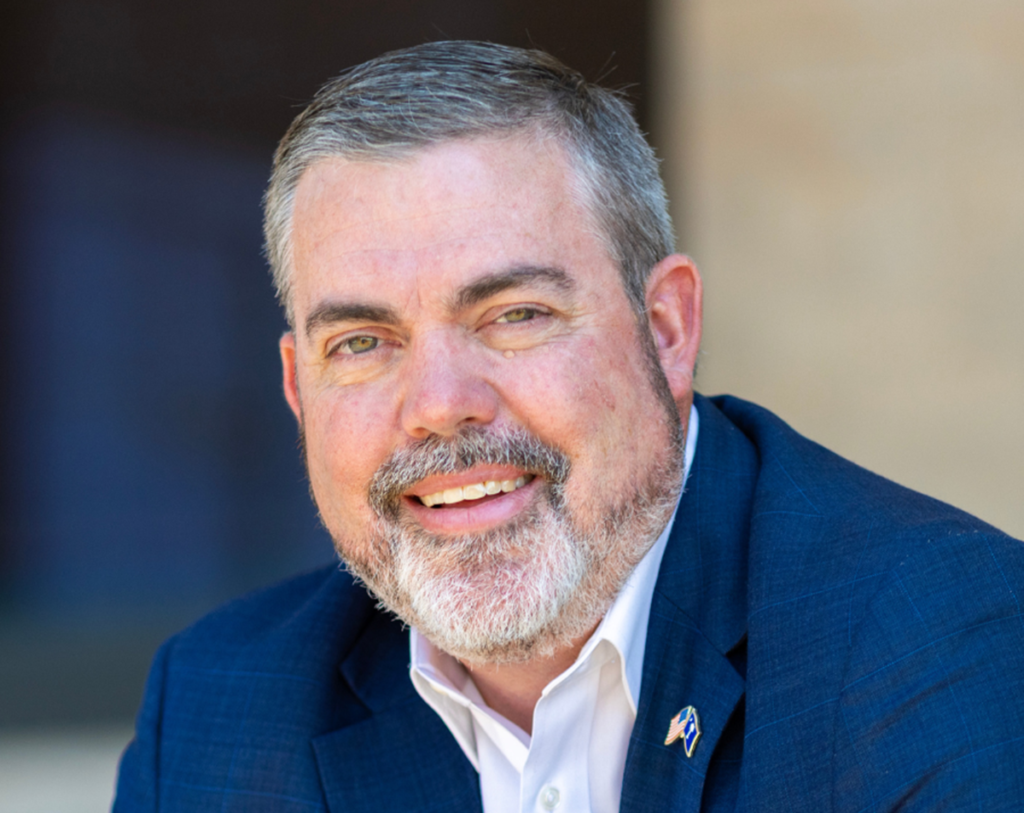
David M. Stumbo, 50, is the Republican candidate for attorney general. He is the solicitor for South Carolina’s 8th Judicial Circuit, serving Abbeville, Greenwood, Laurens and Newberry counties. First elected in November 2012, he is serving his fourth term. He previously worked in the South Carolina Attorney General’s Office and the 11th Judicial Circuit Solicitor’s Office. His experience includes supervising statewide grand jury and criminal prosecutions and serving as a special prosecutor with the Internet Crimes Against Children Task Force. He completed his undergraduate studies at Toccoa Falls College and earned a law degree from the University of South Carolina School of Law. He and his wife, Vanessa, live in Greenwood with their three daughters. Their adult son and his wife live in the Greenville area.
Candidate questionnaire responses
The Island News asked candidates for South Carolina attorney general the same 10 questions ahead of the Nov. 3 General Election. Their answers appear below, organized by question, with candidates listed alphabetically by last name.
Responses have been edited only for grammar, spelling and Associated Press style where necessary. The substance and intent of each candidate’s answers have been preserved. Statements, opinions and allegations in the responses are those of the candidates.
1. The attorney general serves as South Carolina’s chief legal officer while frequently working with the governor, legislators and law enforcement agencies. How would you preserve the office’s independence when legal conclusions conflict with the interests of political allies or state officials?
Hricik: The attorney general has two job duties as the managing partner of a roughly 400-person, 100-lawyer law office with seven divisions, which covers everything from securities commissioner to consumer advocate to defender of our natural resources to very select criminal prosecutions. First, ensure that the entire Office of the Attorney General represents and protects the interests of the people of South Carolina — not the governor, not any political party, not any official. That’s not campaign talk. It’s the actual job.
And the second is to uphold and defend the rule of law.
The law is black and white; it is not “red” or “blue,” and it should never be politicized because it should apply to you, me, the insiders and the powerful all the same.
That’s why I take no donations whatsoever, no PAC money, special-interest money — and I’m not self-funding, either. Because when you owe no one, you can fight for everyone. I believe it’s the only way the office can truly stay independent, serve you and uphold the rule of law. (I donated the filing fee and built my own website — I owe no one, not even me.)
You know in your own life — money gets in the way. That won’t happen with me as your attorney general. The rule of law will be applied equally to whomever is harming you, cheating you or polluting what’s ours. I will go after ALL the “bad guys” and hold them accountable.
Stumbo: I have had to make numerous independent legal decisions over my two decades as a prosecutor and especially in my 14 years as an elected circuit solicitor. As attorney general, the first two questions I will ask as we approach any decision will be: 1) What are the facts, and what does the law say? And 2) What is in the best interest of the people of South Carolina? I will answer directly to the citizens of South Carolina, not other elected officials or special interests.
2. What changes are needed to strengthen the investigation and prosecution of public corruption, ethics violations and misuse of taxpayer money? How should authority be divided among the Attorney General’s Office, circuit solicitors, SLED and state ethics agencies?
Hricik: Things have been real cozy in Columbia. For decades, the same career politicians from the same political party keep getting elected over and over and stay in control. And there’s corruption, you say? Wonder why? We don’t need more laws; they already exist. We need someone with the independence, skills and willingness to go after corruption and reestablish a dedicated Public Corruption Unit.
Corruption isn’t complicated — all you need to do is “follow the money.”
I’m not a career politician, owe no one, and am a formally trained forensic accountant. And I’ve spent 30 years as a trial and appellate lawyer, going through hundreds and thousands of documents in cases to find the “smoking gun.” My ethics record speaks for itself — the South Carolina Supreme Court trusts me to investigate my fellow attorneys. My record proves I know how to take on the most powerful interests, how to hold them accountable and how to win.
Send me to Columbia to find and take on the corruption because nothing changes if nothing changes.
Stumbo: I will approach public corruption cases as we do all investigations and prosecutions. I will give law enforcement all the support and resources they need to conduct a thorough investigation, and then make charging decisions based on the facts, evidence and the law. Making sure government is accountable to the people is a very important job of the attorney general, and I plan to execute that duty without partiality and theatrics.
3. What should the Attorney General’s Office do to help address violent crime, repeat offenders, illegal firearms and case backlogs? How would you work with circuit solicitors while respecting their independent prosecutorial responsibilities?
Hricik: I understand the county structure — but I also understand that structures create turf, and that “the way it’s always been done” has a way of becoming the only reason a thing is still done that way. Insiders see things only with an insider’s lens.
We’ve had the same attorney general for over a decade, and most solicitors have held their offices for multiple terms. This problem of “inefficiency” is not a sudden development. In 2025, the Attorney General’s Office created a three-lawyer team, the Violent Crimes Case Reduction Unit (VCCRU), to address this issue. It’s a start, but it’s not enough. The whole system of how we deliver justice from the county up needs fresh eyes.
For 30 years I’ve built an incredibly successful law firm from the ground up that only thrives by delivering results and winning. I know numbers the way only an accountant can, I know how to manage, be ruthless in efficiency, and I know how to get results. I’ll bring those private-sector skills to the office’s own staff attorneys and prosecutors — making sure they have what they need to keep you safe and that they win.
And I’ll bring this office into the 21st century: using modern data and analytics to put our resources — and your tax dollars — where the threats are greatest. A smarter, data-driven office delivers greater safety, without costing you more.
Stumbo: I plan to attack violent crime, repeat offenders, gun crimes and our backlogs with the same intensity and commitment that I have as circuit solicitor for the past 14 years. I am the only candidate in this race who has such background, real courtroom experience, and respect among the law enforcement community across the state of South Carolina.
4. What would you do to protect residents from scams, price gouging, predatory business practices, identity theft and exploitation of older or vulnerable adults? Should South Carolina strengthen any consumer-protection laws or enforcement powers?
Hricik: You should not lose your hard-earned money because of junk fees, debts you don’t owe, an insurance company giving you the runaround, or businesses ripping off you or our seniors.
And right now, when South Carolinians need this kind of help, the attorney general’s website often says, “Not my problem.”
I’ll fix that website. We’ll answer when you call. We’ll listen. Then we’ll go after ALL the bad guys, because you know not all of them carry guns; some of the worst ones are in corporate suits.
And our water, marshes, beaches and natural resources belong to all of us — they aren’t there to be abused or polluted just so a data center or some other giant business can make a buck, either. The office hasn’t done much here, either, often leaving these fights to nonprofits and citizens to defend their own communities.
The solution to all these problems is not more laws; it’s an attorney who knows the ones we have and has the will to use them. Government exists to serve you — not the other way around.
I’ve spent more than 30 years fighting — and winning — for ordinary people against these powerful interests, holding them accountable. These aren’t the opponents your county solicitor fights.
I’ll protect YOU and your family, your wallet, and what belongs to all of us.
Stumbo: The laws we have on the books are sufficient. I have been aggressively prosecuting those who would exploit innocent citizens my entire career. I plan to continue to protect vulnerable citizens in our state from financial thieves and predators at every turn.
5. Artificial intelligence can be used to automate fraud, impersonate public officials or family members, create deceptive election content and generate nonconsensual or exploitative images. What enforcement, legal or legislative steps would you support to address these harms while protecting lawful speech and innovation? Please also address data privacy, cybersecurity, breach notification, protections for children and vulnerable adults, and the resources or technical expertise the Attorney General’s Office would need.
Hricik: The scope of this question could fill a book, but the core problem identified is that the speed of technology is growing and evolving and the law is lagging behind. Solving these problems calls for a creative legal scholar who knows not only technology, but the most current issues in constitutional law and constitutional rights to protect you, protect us all, and protect your rights. (Did you know the South Carolina Constitution guarantees you the right to be free of “unreasonable invasions of privacy”? That means something and means more as technology advances.)
I’d use the Attorney General’s Office to do two things. First, aggressive enforcement of existing fraud, identity-theft and exploitation statutes will be pursued, expanded and, in some cases, started. It seems the criminal justice system often treats these crimes with a shoulder shrug and as your problem, taking your report and doing little else. Having your identity stolen takes something very real from you — the violation and harm are not abstract — they are a violation of your person and need to be treated as such. Technology crimes need technology-based investigators. I’ll get them the tech they need. As someone who has run a successful business for decades, I have leveraged technology at every step — it’s how I compete and win. Second, I’ll collaborate with law enforcement and local solicitors to see where the gaps are and bring outside tech expertise to help the Legislature write better and stronger laws. I don’t get a vote and won’t have their pen, but I’ll help protect you from the harms of both today and tomorrow by managing the problem as the CEO and managing partner of the people’s law firm.
Stumbo: If people use AI to commit identity theft or any other criminal action, we will investigate and prosecute it vigorously. We will be particularly vigilant in protecting children from exploitation online, as I did as the first prosecutor for the Internet Crimes Against Children Task Force (ICAC) over 20 years ago. I am thankful for the bill that was passed last year that included AI-generated child sex abuse material as a criminal offense under the law.
6. How should the Attorney General’s Office address fentanyl and opioid distribution, human trafficking, child exploitation and related organized criminal activity? How would you measure whether statewide task forces and settlement-funded programs are effective?
Hricik: In short, the office needs to do more because it has not been doing enough. The attorney general’s General and Special Prosecution Sections handled just 246 criminal cases in 2025, because local solicitors prosecute virtually all of the day-to-day street crime in South Carolina. There is so much more it can do. And priority needs to come from the eyes and ears on the ground — they see the crimes happening every day and need to be included in decision-making on where resources need to be allocated, what’s the highest-priority crisis they see that needs to be addressed. You probably never heard of cyclorphine, but it’s more deadly than fentanyl. When I met with the SCFOP, they often talked about being left out of this exact process. As a former criminal justice professor, I see the systems and where they need improvement.
Human trafficking and exploitation, including of children, deserve the highest priority: aggressive coordination between the Attorney General’s Office, solicitors and federal partners, and a willingness to use every civil and criminal tool available — asset forfeiture, consumer-protection statutes and direct litigation where the law permits — against the networks and businesses that profit from it, not just the individuals at the bottom of the chain. One specific priority: I want the State Grand Jury Prosecution Unit (SGJ) doing much more to pursue these crimes, uncover the connections behind organized criminal networks, and actively seek appropriate referrals from local solicitors. The goal is not simply to prosecute more individuals. It is to identify and dismantle the criminal enterprises behind them. This requires forensic knowledge and investigative skills to track down and prosecute ALL the “bad guys,” especially the worst ones who finance these operations. And one last: South Carolina ranks near the bottom in DUIs and domestic violence; county prosecutions of these crimes are failing and need to be improved in much the same way.
Stumbo: As I stated in my answer to question 5, we will utilize every investigative and prosecutorial tool available to protect the citizens of our state. The statewide grand jury is one such powerful tool that can be used to fight computer crimes against children, the fentanyl crisis and human trafficking. I will ensure that the dollars brought in by major settlement agreements, such as the opioid settlement and the tobacco settlement, are spent on their intended purpose for the benefit of the people of South Carolina. I will also continue to build on the successes of the statewide task forces, such as the human trafficking task force and ICAC, to hold sexual predators accountable.
7. Attorneys general increasingly participate in multistate lawsuits challenging federal policies or private companies. What criteria would you use to decide when South Carolina should initiate, join or decline such litigation, and how would you disclose its costs and anticipated benefits?
Hricik: The ONLY criterion for any litigation is: Does this lawsuit serve and protect the people and interests of South Carolina? Scoring political points doesn’t deliver anything for you. And in order to know if your rights, or our state’s 10th Amendment rights, are being violated, your attorney general must be a constitutional scholar of those rights and know how to litigate them and protect them in federal court, including the U.S. Supreme Court. That’s exactly the work I have done.
And when it comes to either pursuing litigation or hiring counsel to pursue multimillion-dollar harms in high-stakes civil litigation that most often occurs in federal court, against powerful interests, you need an attorney who has personally handled multimillion-dollar high-stakes litigation in federal court against giant powerful interests. Evaluating the risks, evidence, likelihood of recovery, legal theory, and what the best deal is for South Carolina, both at the time of hiring counsel and, even more importantly, if and when a settlement is actually a good deal for you and South Carolina, is the work I have been doing for 30 years.
Stumbo: I would ask one question — “Is this civil action against a private company in the best interests of the people of South Carolina?” We will be fully transparent in any settlement agreements and legal fees paid to any outside groups, and will only retain such outside legal help if it is necessary to get the best results for the people of our state.
8. South Carolina law enforcement agencies increasingly use Flock cameras and other automated license-plate readers to locate vehicles and investigate crimes. Supporters consider them valuable public-safety tools, while critics raise concerns about warrantless surveillance, inaccurate alerts and the tracking of people who are not suspected of crimes. What legal safeguards should govern their use? Please address when a warrant should be required, permissible searches, data-retention limits, sharing with federal, out-of-state or private entities, security, independent audits, public disclosure and consequences for misuse.
Hricik: License-plate readers can help solve crimes and find missing people, and solve serious crimes.
I support each community’s right to decide which law enforcement tools they want used to keep them safe in their community because every tool we entrust to government comes with limits on its use — whether it is a service weapon or a surveillance system. Oconee County citizens just made their voices heard to determine what they wanted for their community. And your constitutional rights are not obstacles to good policing. They are an inherent part of good policing. And if law enforcement violates the law and your privacy in accessing your data, they should be prosecuted.
The constitutional boundaries of these devices have NOT been conclusively defined or decided by either the Supreme Court of the United States or the Supreme Court of South Carolina. As a constitutional scholar, you should know two important considerations: (1) South Carolina’s Constitution expressly protects the people against “unreasonable invasions of privacy” and (2) just this June, the United States Supreme Court decided Chatrie v. United States (2026), and held that we have a reasonable expectation of privacy in our location information as it becomes aggregated. That’s the difference between being seen in public, one time, and noted by law enforcement, and being tracked, followed and surveilled. In short, the greater the aggregation of data by these devices about you and your movements, the greater the intrusion into your privacy, the greater the need for a warrant.
Stumbo: The constitutional issues surrounding the existence of license-plate reader technology have already been litigated, and it is not a violation of the Fourth Amendment for law enforcement to utilize such technology. There are dozens of crimes that have been successfully prosecuted and investigated in our state, including murders, abductions and other violent crimes, that would never have been prosecuted without the use of such technology. As with any tool used by law enforcement, there is a potential for misuse. I plan to work with the General Assembly this year to pass strong legislation to protect our citizens’ privacy and hold law enforcement actors or the companies themselves accountable if such technology is misused.
9. How would you ensure state laws are enforced consistently while protecting constitutional rights and equal treatment? How should the office respond when a state or local law may conflict with the state or federal constitution?
Hricik: See my responses to questions 1 and 2. The rule of law is what binds us all as Americans. No one is above the law, and that includes government itself.
My record of more than 30 years of ethics and integrity, and my no-donation pledge, speak for me as to my commitment to applying the rule of law. And as a lawyer who has spent 30 years litigating constitutional rights in federal court, including the United States Supreme Court, and as a professor of constitutional rights at two law schools, I know the law and I know your rights.
There’s further proof of my independence. Lots of groups say we’ll endorse you, but you need to say the law says this, or should be that. I tell them all, “That’s not the job of attorney general,” and I explain the Legislature writes the laws. I don’t get a vote. Then silence. And that’s OK by me.
No promises or favors owed to anyone but YOU and the rule of law.
The way the attorney general should be!
Stumbo: Our state and federal constitutions are our guideposts for the passage of any law. We will utilize attorney general’s opinions to caution state and local government entities against passing or enacting unconstitutional laws that will expose them to potential litigation.
10. What do you believe you would bring to the Attorney General’s Office, and what should voters know about your prosecutorial or legal philosophy and your priorities for the next four years?
Hricik: The job of the attorney general is to be the managing partner of a vast law firm, roughly 400 people, 100 lawyers, seven divisions, and overall, very little of the job of the attorney general and the office is criminal prosecution. That’s who you are hiring. A managing partner, not a criminal prosecutor. Creighton Waters is trying Alex Murdaugh because that’s the staff that exists to conduct those few trials. Not Alan Wilson.
If you’ve read this far, you now know me. I believe government exists to serve you. The attorney general is the people’s attorney, and my job will be to protect you, your wallet and our God-given natural resources from ALL the bad guys — not just the ones with guns, but also the ones in corporate suits who know you can’t fight back on your own. That’s the job, and that’s the work I have done for 30 years and will do for you. Even the people who don’t vote for me.
Stumbo: In addition to being an elected local prosecutor for almost 14 years, I served two different stints in the Attorney General’s Office working in multiple divisions of that office. I know the people of the Attorney General’s Office and the partnerships that the office has with agencies across South Carolina. I plan to lead with strength and character, leaning on my extensive prosecutorial experience to keep our families safe in South Carolina.
Delayna Earley, who joined The Island News in 2022, formerly worked as a photojournalist for The Island Packet/The Beaufort Gazette, as well as newspapers in Indiana and Virginia. She can be reached at delayna.theislandnews@gmail.com.