By Luke Frazier
The Island News
When you walk into Monkey’s Uncle toy store on Bay Street in downtown Beaufort, your eyes will be absolutely assaulted by shiny and colorful merchandise, all of it singing loudly in the key of fun.
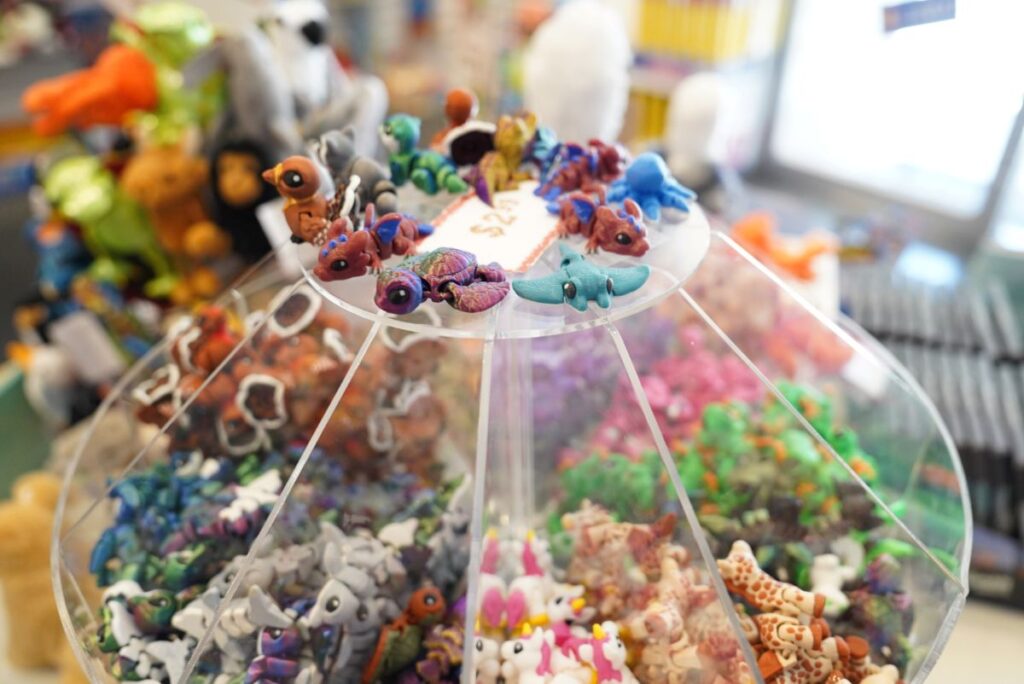
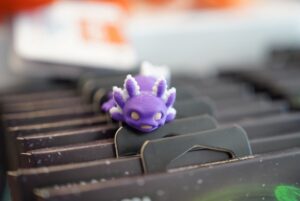
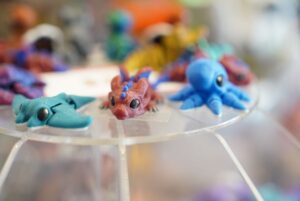
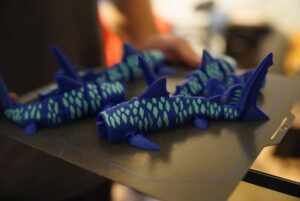
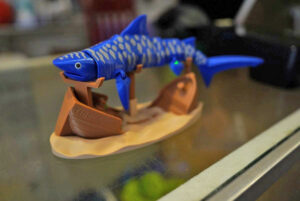
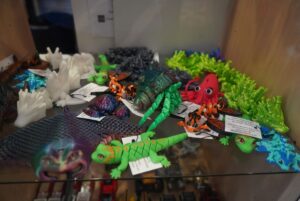
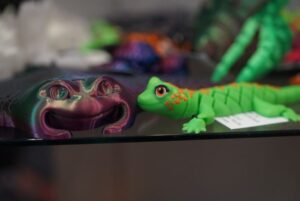
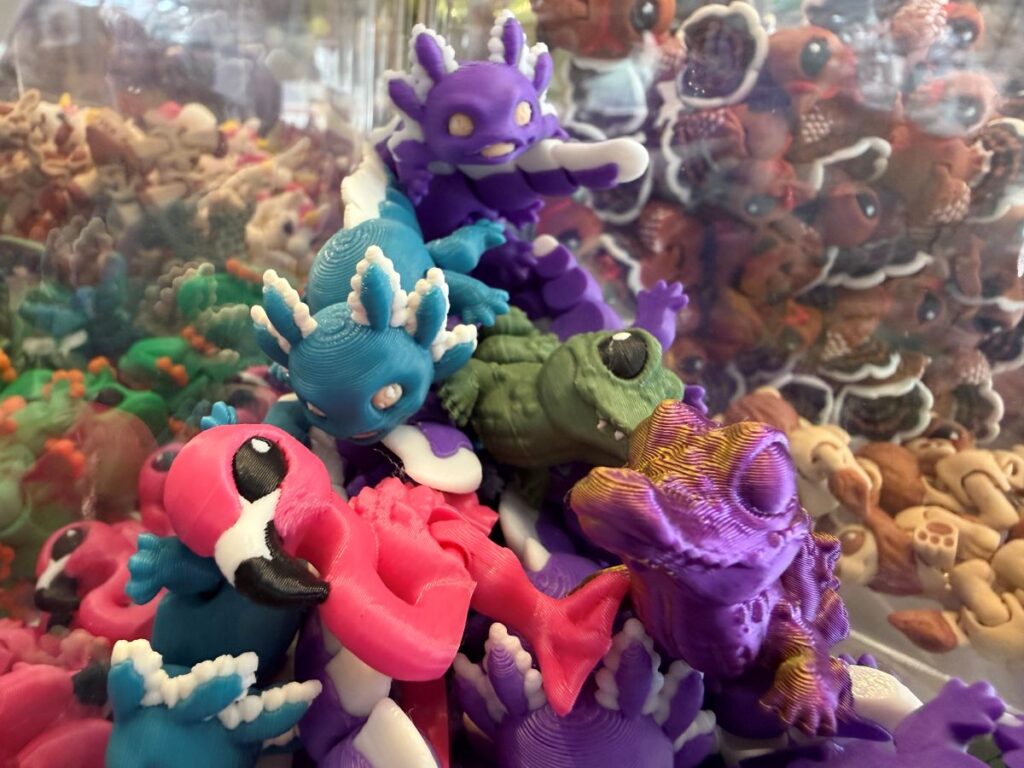
If your glance settles on the glass case next to the cash register, you’ll see a collection of intriguingly attractive plastic creatures. These include different shapes and colors of dragons and an array of aquatic types, featuring a shimmery tri-colored Manta ray, a squid with big eyes, and Hermes, the articulating hermit crab.
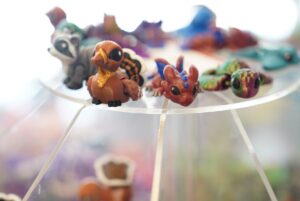
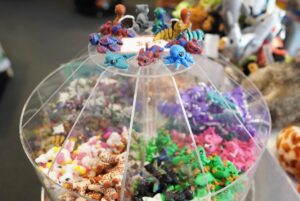
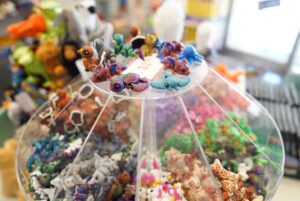
A quarter-turn to the left and a tiered carousel of dozens of varieties of colorful plastic creatures await, this time in two-inch or so miniatures: pink flamingos, unicorns, frogs, hippos, giraffes, skunks, turkeys, beavers, dolphins, zebras, octopi, bumble bees, moose, racoons, and more. They are pretty much in expected colors, but a few outliers appear, such as a purple giraffe. A teenage salesclerk mentioned how much she loved that one.
Since China is estimated to produce 70 to 80% of the world’s plastic toys, it would be reasonable for you to assume these creatures were born about 8.000 miles from Beaufort in Guangdong Province, where half of China’s plastic toy production occurs. But you would be wrong.
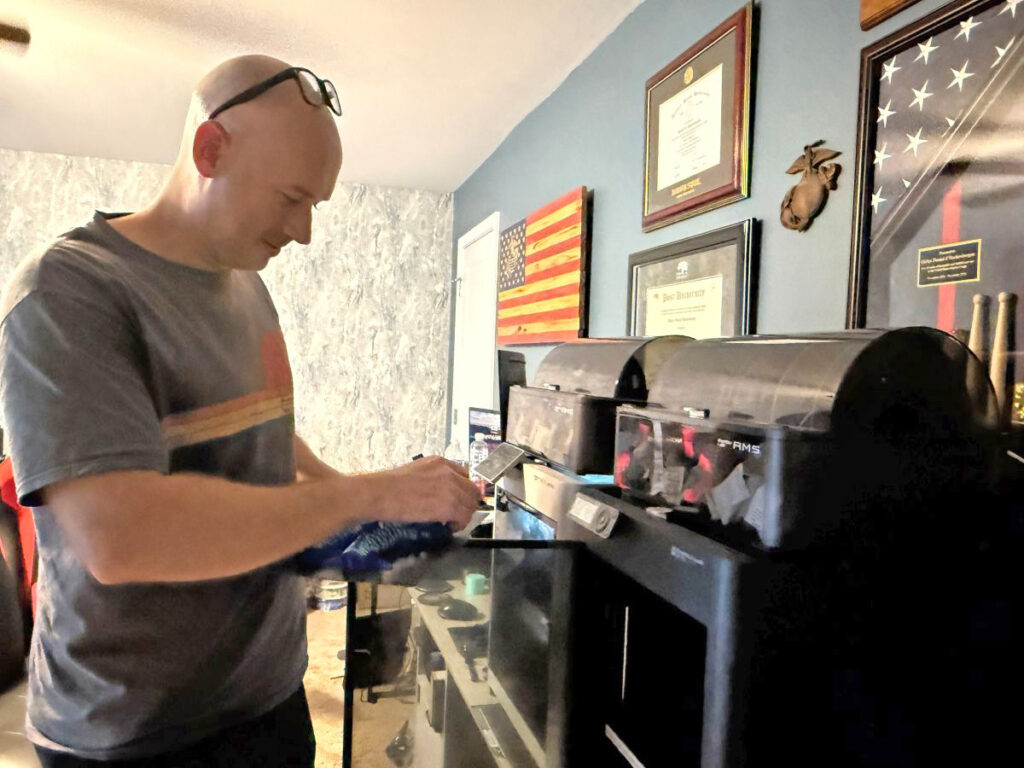
Instead, the production facility for 3d Printing and Design Services, the makers of this entire kingdom of real and imagined creatures, is a mere 8 miles away in Shell Point. If it wasn’t so hot you could ride your bike from downtown in about 40 minutes, wondering as you pedaled along, what kind of factory you were going to see that made such marvelous collectibles?
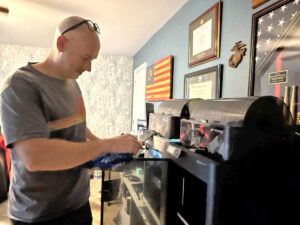
Arriving at the headquarters of 3d Printing and Design Services, you would not see a factory, however, but instead a well-tended yard leading up to a goo- looking house. At the door, Milo the Old English sheepdog will greet you, along with his owner Daniel Hockenberger.
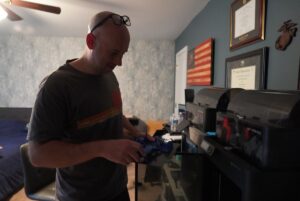
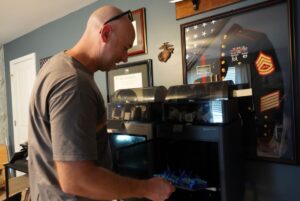
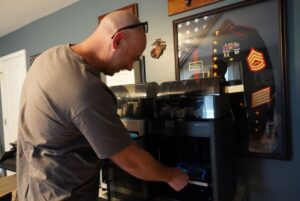
Daniel is the 3D guy. He’s the captain of the ship, the leader of the band, the production and executive teams, all rolled into one for the making of all the plastic products. Milo is more interested in his own plush toy, not the plastic ones that dad makes.
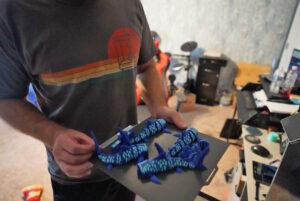
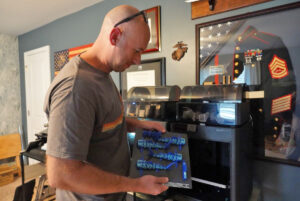
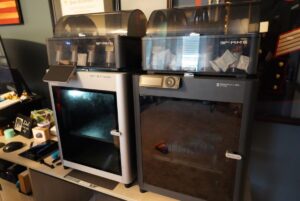
What Daniel does is called 3D printing, and he uses modest sized, glass-front boxes with spools of plastic filament wire connected from the top and plenty of computer chips. Out of the box, given the right design software and execution, come “printed” objects, not documents.
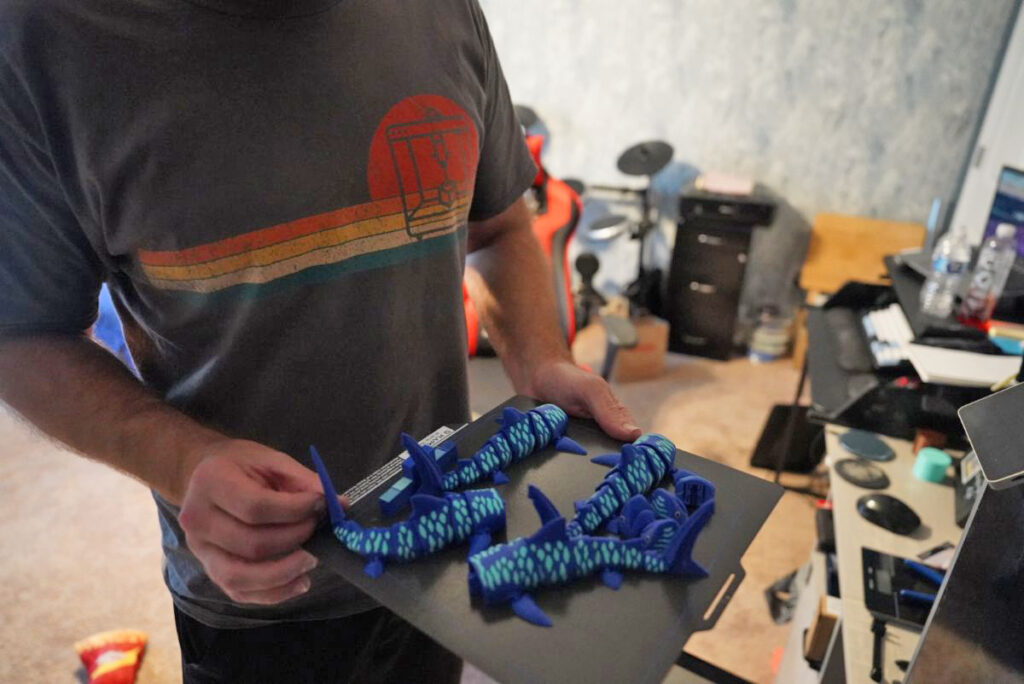
3D printing itself has been around since 1980 or so but didn’t gain consumer traction until about 2010. Daniel was given his first 3D printer five years ago for Father’s Day and started playing with it for fun. He says he has always been drawn to technology.
“My dad brought home a computer when I was 10 years old, and I have always been into tinkering and messing around with computers,” he recalls, “I got into tearing stuff down and rebuilding stuff and really enjoyed just getting my hands dirty with whatever I could.”
It certainly helps that Daniel is also a software engineer and caught on quickly to the intricacies of designing for this type of printing. After he started posting his creations on social media, people wanted to buy them, so it became a side hustle.
Next came a stint at Laurel Bay Flea Market before he got his LLC business license and set up a bedroom as a creature creation center. He does it because he enjoys the entire process.
“I like to take things apart and put them back together [and] see how they work,” he explains, “Finding problems, diagnosing them, fixing them, and then providing a service, helping out people with what they need.”
Well before embracing the power of 3D printing, Daniel grooved on musical creation. He spent 20 years in the Marine Corps Band as a percussionist, retiring two years ago. His Marine Corps job was instrument repair technician, certainly consistent with his life-long love of tinkering. He carries that attitude into whatever he makes.
“I love designing things that people ask me to design,” he reflects, “My absolute favorite things are stuff that my kids ask me to make.”
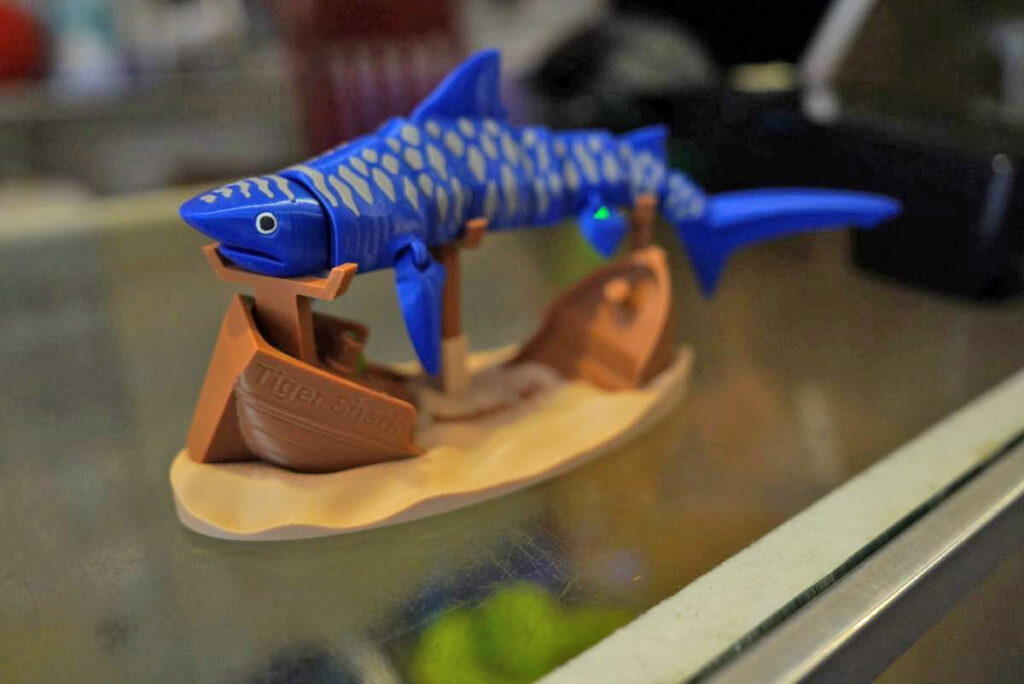
Daniel explains that one time his son, Scott, needed a customized holder for his bunk bed’s LED light strip remote control. He designed and printed it. Lights out, problem solved. Similarly, he has designed a custom rosin holder for a professional cello player, remote control car replacement bumpers and bodies for errant hobbyists, and tools and jigs for others to use in instrument repair outside the Corps.
He says that today when he tells people what he does, he gets a different reaction than a few years ago.
“I mean the typical reaction now is, oh, that’s really cool. Three or four years ago, it was like, what does that mean?”
Part of what it means for Daniel is spending anywhere from three to 25 hours of straight design time, depending on level of detail in what he is making. This is before even warming up the printers, arranging the spools, tinkering with the controls and hitting the start button.
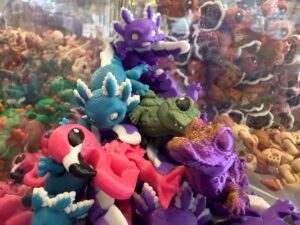
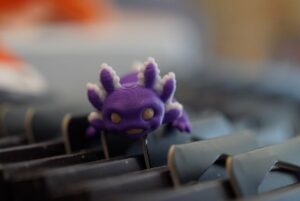
His creature creations are only about 20 percent of his business, but the giant articulated dragons are his No. 1 commercial seller. Part of their appeal might be the tactile experience of manipulating the figures into various poses. Daniel says it also has to do with the distinct colors.
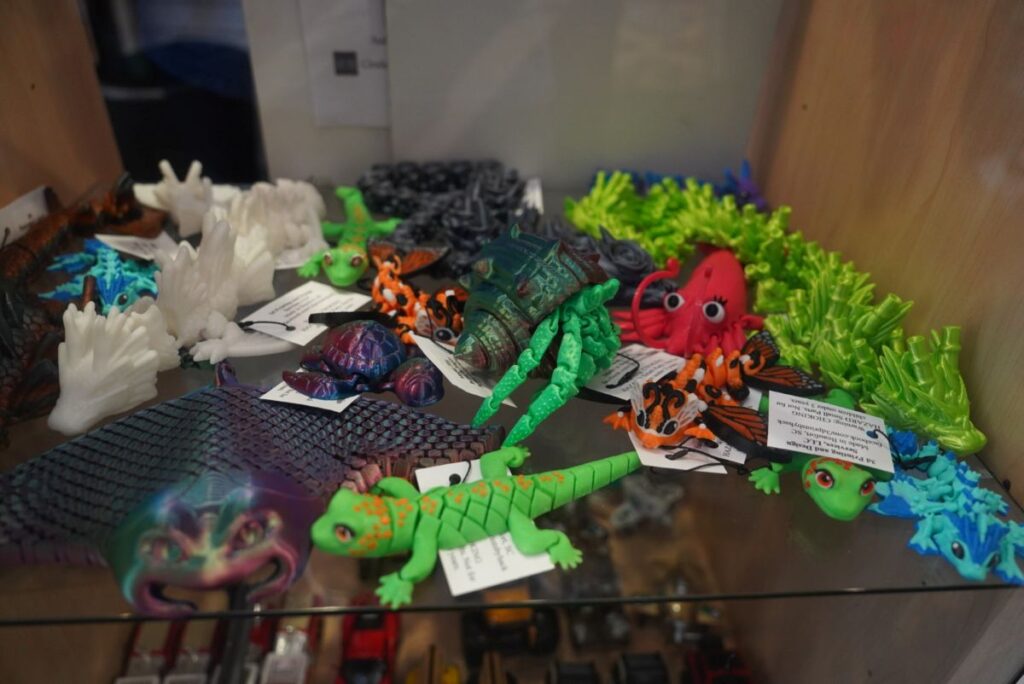
“I think the cool part about [the figures] is the color customizations that you can do,” he gushes, “There’s some filament out there that has three different colors in one filament and depending on which way you look at the item, it gives off a unique look.”
At this point, his business is growing, and he is considering getting a large format printer to add to his production capacity. Right now he must sometimes print separate pieces and connect them, which is an added design challenge.
The fact that it can take one batch of 40 miniatures anywhere from 12 to 24 hours to print leaves Daniel time to spend with his family. His wife Andrea and he have two other sons besides Scott, Bradley and Christian. He also enjoys watching soccer and playing the drums.
Daniel agrees that dragons are his spirit animal and are real, at least in his heart. He identifies another part of his heart that is responsible for the “why” of what he does.
“It’s the two paths colliding of wanting to figure out how things work and [wanting] to help people.”
And those two paths create a road and a life that is anything but miniature.
Luke Frazier is a writer and award winning media producer who moved to the Lowcountry in 2024. He runs NOW Communications and can be reached at nowandfuturecomms@gmail.com.