
By Delayna Earley
The Island News
Before Christopher Alan James left on his bicycle, he was the son who made his mother’s coffee.
He helped his parents care for their animals and remodel their home outside Wrens, Ga. When there was work to do, Shirley James said, Chris was there – offering help, telling his father to get off a ladder, asking what they needed.
“Don’t do that, Mom. I’ve got it,” she recalled him saying.
Since a driver struck and killed the 31-year-old on July 17 in Beaufort County, those everyday memories have become inseparable from his family’s questions about how authorities investigated his death.
His parents, Michael and Shirley James, and his brother, Marc James, have sought police records, examined photographs, reviewed dashcam footage and questioned investigators. They want to understand why the investigation resulted in three traffic charges, how officers ruled out impairment and whether evidence left along the highway received sufficient attention.
The records show investigators attributed the collision to the driver and recorded no improper action by Chris. They also document scene measurements, witness interviews and a hospital interview in which a trooper reported observing no signs of impairment.
But the records do not document a completed field sobriety test. A later phone conversation between Marc James and a S.C. Highway Patrol supervisor has deepened the family’s concerns about what they were told.
“It’s left such a void with us,” Shirley James said.
A collision from behind
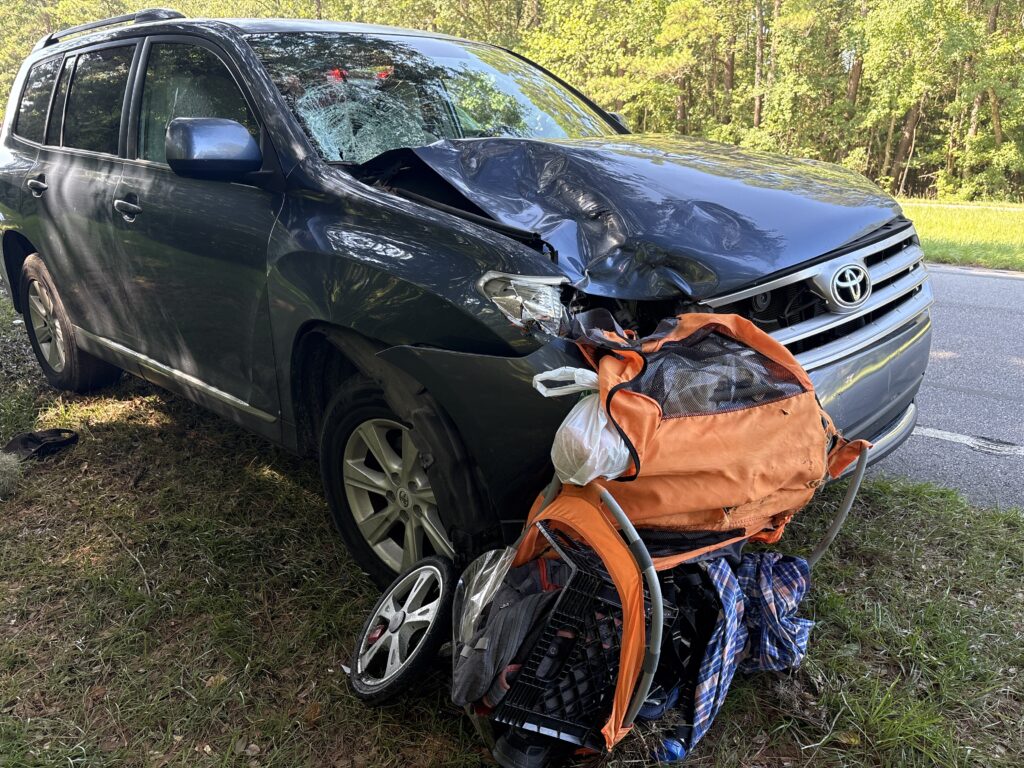
Chris was riding north on U.S. 21, also known as Trask Parkway, near Stroban Road at about 9:35 a.m., when a Toyota Highlander struck his bicycle and the cargo trailer he was pulling, according to the South Carolina Highway Patrol.
Investigators concluded he was traveling near the right edge of the right lane when the SUV hit him from behind. He struck the passenger side of the windshield and was thrown into the grass. He died at the scene.
The driver, Patricia D. Lopez Mendez, 34, of Beaufort, was charged with driving at a speed greater than reasonable under the conditions, operating or permitting operation of a vehicle that was not registered and licensed, and a first-offense uninsured motor vehicle fee violation.
Court records show all three cases pending in Beaufort Magistrate Court, with no disposition entered. Lopez Mendez has requested a jury trial.
A summons sent to Shirley James set a roster meeting for 3 p.m., Thursday, Nov. 5. It states that the jury trial’s date and time will be determined at the jury strike.
For the family, the pending traffic cases have not answered the larger questions surrounding Chris’s death.
What investigators documented
The crash report described clear weather, daylight and a dry roadway, with no obstruction to the driver’s view. It identified the driver as contributing to the collision and listed “no improper action” for Chris.
The report estimated the Highlander’s speed at 60 mph, matching the posted limit. The charge concerning speed under the conditions does not necessarily allege that a driver exceeded that limit: South Carolina law also requires a reasonable and prudent speed for existing hazards.
Investigators photographed extensive damage to the SUV’s right front corner, hood and passenger-side windshield. The crushed orange trailer and belongings were lodged against the front of the vehicle.
Other photographs show investigators marking reference points, vehicle positions, debris and roadway marks with paint and cones. A trooper is pictured carrying a measuring wheel. The investigative file includes a scene sketch and measurements.
Those records establish that officers documented the scene. They do not, by themselves, resolve the family’s questions about the scope of the investigation or the decisions that followed.
A witness interviewed by investigators, Linda Lee Dickson, was riding with her husband behind the Highlander. According to the investigative narrative, she estimated their vehicle was traveling about 60 mph. She did not see the bicyclist until the collision, when debris went into the air.
Dickson described Lopez Mendez as shaken afterward and repeatedly saying she had not seen the cyclist, according to the report.
Questions about impairment testing
The family has focused particularly on impairment testing.
In dashcam footage, officers discuss sending a trooper to the hospital to conduct field sobriety testing and rule out impairment. Trooper Cesar A. Cuata Hernandez later interviewed Lopez Mendez at Beaufort Memorial Hospital.
In his written account, Cuata Hernandez said her eyes were not glassy or bloodshot, her speech was not slurred and he detected no odor of alcohol. He described her answers as reasonable and articulate. His account also said investigators found no open alcohol containers, narcotics or drug paraphernalia in the SUV.
The hospital interview ended after an attorney arrived and advised against further questioning, according to the narrative.
The investigative narrative identifies that attorney as Christopher Dore. Court records list Anthony O’Neil Dore as Lopez Mendez’s counsel. They are separate attorneys at Dore Law Office, according to the firm’s website.
During an Aug. 13 phone call, Marc James challenged First Sgt. David M. Thomas about whether a sobriety test had been performed.
Thomas disputed Marc’s recollection that he had previously said a test was completed. He said investigators had ruled out impairment.
Later in the conversation, Thomas said officers had attempted sobriety testing at the hospital, but the driver’s attorney had stopped it.
The distinction matters to the family: Observations that a driver displayed no apparent signs of impairment are different from a completed test.
South Carolina law addresses field sobriety testing in fatal collisions, requiring testing of a driver suspected of causing the death when the driver is physically able to submit. The available records do not fully explain how investigators applied that requirement in this case.
The investigative narrative records additional efforts to obtain information after the hospital interview. It says an investigator contacted the attorney’s office Aug. 11 and that the office declined further interviews Aug. 13.
It also says Thomas sought a warrant for medical records Aug. 17, but a magistrate declined because there was insufficient probable cause of impairment. The materials reviewed do not include the warrant application or a written ruling.
The trooper reported no outward signs of impairment. The records reviewed contain no completed field sobriety test or test result.
A phone found afterward
Marc James also has questioned the handling of a cellphone and other belongings the family says were found when relatives returned to the crash site days later.
The family’s discovery made them wonder whether investigators had searched the area thoroughly enough and whether the phone could provide information about the collision.
In the Aug. 13 call, Thomas discussed arranging for a trooper to obtain the phone. That conversation does not establish whether it was subsequently collected or examined.
Neither the photographs nor the available records establish who owned that phone or whether anyone was using it when the collision occurred. Its discovery raises a question about evidence handling; it does not establish distracted driving.
The dashcam footage separately records officers discussing a phone found with a backpack at the scene. The available evidence does not establish that it was the same device the family later reported finding.
The son behind the bicycle
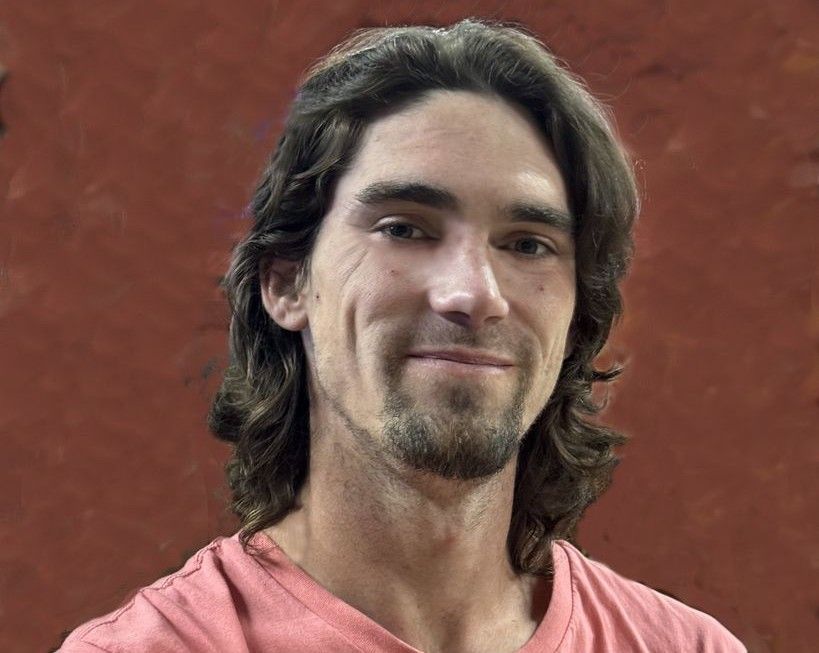
For Shirley James, questions about the investigation also touch on how officers perceived her son.
In roadside conversations captured by dashcam, officers speculated about whether he was homeless, referring to his bicycle, trailer and belongings.
His parents described a son who had a home on their property and who sometimes left on his bicycle with camping equipment when he wanted time away.
Shirley James said the family’s home sits on 75 acres where they raised their children. Chris helped with cows, goats, chickens and ducks, and worked alongside his father on renovations.
The family worries that assumptions about his circumstances affected the attention his death received. The available records do not establish that those assumptions determined investigative decisions or charges. The crash report recorded no improper action by Chris.
Still, hearing officers discuss his apparent living situation was painful for relatives who knew the person behind the bicycle and trailer.
Cases remain pending
Court records show the three traffic cases were transferred from Bluffton Magistrate Court to Beaufort Magistrate Court following an Aug. 20 change-of-venue order. The underlying motion was not among the materials reviewed, so the reason for the transfer is not established.
Financial entries total $905 across the three cases, with no payments recorded in the Oct. 27 screenshots. Because the cases remain pending, those entries do not establish convictions or a final sentence.
For Chris’s parents and brother, the process has meant returning repeatedly to the details of the morning he died – the roadway, the damage, the conversations among officers and the belongings left behind.
They are asking for an explanation they can follow from the evidence collected to the charges filed.
At home, Shirley James remembers the questions Chris used to ask her: What needed doing? How could he help?
The absence is measured in those small routines, too.
“Chris was the one who was here every morning making my coffee,” she said.
Delayna Earley, who joined The Island News in 2022, formerly worked as a photojournalist for The Island Packet/The Beaufort Gazette, as well as newspapers in Indiana and Virginia. She can be reached at delayna.theislandnews@gmail.com.