
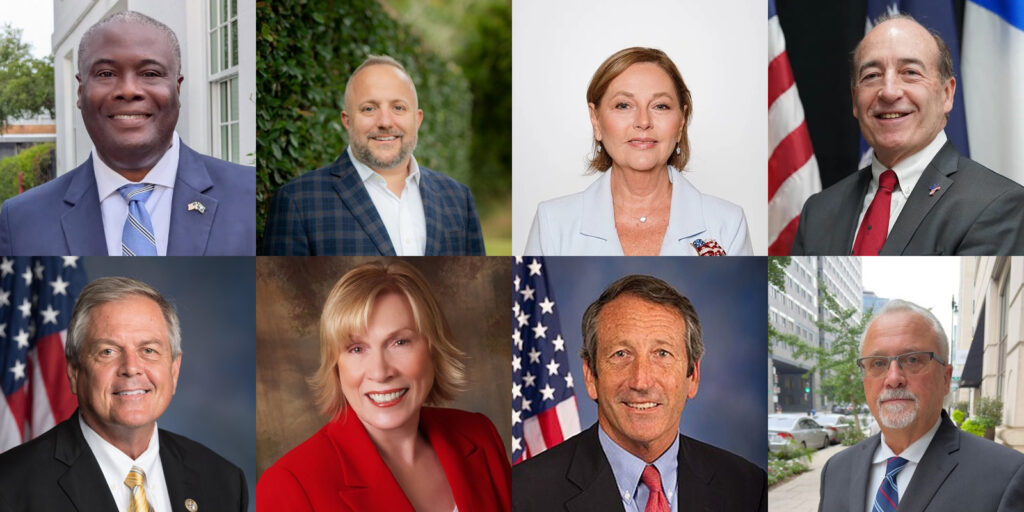
Candidates agree the national debt is an urgent threat; divided on loyalty to Trump, Graham’s legacy and the federal government’s role in growth
By Delayna Earley
The Island News
South Carolina voters will return to the polls Tuesday, Aug. 11 to choose a Republican nominee for the U.S. Senate seat held for more than two decades by Lindsey Graham, who died July 11 of a tear in his aorta.
Gov. Henry McMaster appointed Graham’s sister, Darline Graham, to fill the seat through January 2027, and she is among the Republicans on the special primary ballot seeking the nomination for a full six-year term.
Twelve candidates filed for the special primary during the window that opened July 21 and closed July 29. The South Carolina Republican Party certified nine of them; the party decertified Danny Ford II, Darius Mitchell and Clark Neilson. Mitchell and Neilson did not challenge their removal; Neilson had listed a North Carolina address on his filing, and the party said he did not meet the state’s residency requirement.
Ford, a Clemson farmer who ran for state commissioner of agriculture in June, sued the SCGOP and the State Election Commission after the party disqualified him under a new rule requiring candidates to have voted in two of the last three statewide Republican primaries. A Richland County judge sided with Ford on Tuesday, Aug. 4, ordering the SCGOP to certify him within 24 hours and the Election Commission to add his name to in-person and early voting ballots for Aug. 11. Absentee and military ballots already mailed before the ruling will not include Ford’s name. The case, and Ford’s status on the ballot, could still change before the primary.
Because of The Island News’ print deadline, this reporter reached out to Ford before the Aug. 4 ruling. He declined to participate in the questionnaire at that time, saying he wanted to wait until his legal challenge was resolved.
If no candidate clears 50% of the vote Aug. 11, the top two finishers will meet in a Tuesday, Aug. 25 runoff. The Republican nominee will face Democrat Annie Andrews, a Mount Pleasant pediatrician, in the Nov. 3 general election. Voters who cast ballots in June’s Democratic primary are not eligible to vote in the special Republican primary; voters who participated in the June Republican primary, or who sat out both, are eligible.
The Island News distributed a questionnaire to the nine certified candidates, asking them to address issues including affordability, the national debt, growth and infrastructure, the state’s economy, political division in Washington, Graham’s legacy, President Donald Trump’s agenda and military and veterans’ issues.
Who responded?
The Island News received questionnaire responses from eight of the nine candidates seeking South Carolina’s U.S. Senate seat.
Candidates Duke Buckner, Russell Fry, Mark Lynch, Ralph Norman, Glenda Gail Parker, Mark Sanford, Samuel “Sam” Shepherd, Darline Graham all sent in responses to the questionnaire. Mark McBride did not return a questionnaire.
National debt draws near unanimous alarm
Nearly every candidate who responded pointed to the national debt, approaching $40 trillion, as one of the race’s defining issues.
Former Gov. Mark Sanford, who represented Beaufort County’s 1st Congressional District in Congress, said the debt threatens far more than the federal balance sheet.
“We will add a trillion dollars of debt to the national debt in the next hundred days, and it is not getting the attention that is needed,” Sanford wrote, citing former Joint Chiefs Chairman Adm. Mike Mullen’s assessment that the debt itself is the country’s biggest national security threat.
U.S. Rep. Ralph Norman, who represents South Carolina’s 5th Congressional District, made the debt central to his campaign, warning that the interest payments on it now exceed the national defense budget.
“I’ve said for years that I believe our growing national debt, which is quickly approaching $40 trillion, is also a national security crisis waiting to happen,” Norman wrote.
Businessman Mark Lynch said he would cut “wasteful foreign aid, any welfare for illegal aliens, programs, unnecessary bureaucracy, and reckless spending hidden inside massive omnibus bills” while protecting Social Security, Medicare, veterans’ benefits and defense.
Attorney Duke Buckner proposed a 20% across the board reduction in federal spending, excluding Medicare, Medicaid and Social Security, to pay down the debt. U.S. Rep. Russell Fry said “Washington doesn’t have a revenue problem, it has a spending problem,” and pledged to protect Social Security and Medicare while cutting waste.
Retired budget analyst Glenda Gail Parker took a different approach, arguing that reducing dependence on fossil fuels and investing in rail transportation would lower inflation and, in turn, reduce the interest burden on the debt. Technology consultant Sam Shepherd said simply he has “a plan to reduce the debt” built around cutting wasteful spending, though he did not provide additional detail in his response.
Candidates split sharply on Graham’s legacy
Asked which parts of Graham’s more than two decades in the Senate they would continue and where they would differ, candidates largely praised his constituent service and support for the military while distancing themselves from his foreign policy record.
Sanford, who overlapped with Graham for years in South Carolina politics, offered the most pointed contrast, referencing a line Trump used at Graham’s funeral.
“President Trump jokingly said at Lindsey’s untimely funeral that Lindsey never saw a war he didn’t like, and I, in my approach to foreign policy, would be a bit more restrained and more in line with Teddy Roosevelt’s notion of speaking softly and carrying a big stick,” Sanford wrote.
Norman said he would continue Graham’s role as “a fierce advocate for South Carolina” but described himself as more of a budget hawk than his predecessor.
“I’m not for endless wars, and I’m not for funding each and every project that comes along the pipe in other countries,” Norman wrote. “We need to take care of our country and our people first and foremost.”
Fry struck a similar note, saying he respected Graham’s commitment to veterans and constituent service but that “it’s time for a new generation of conservative leadership.” Lynch said he would continue fighting for South Carolina’s military installations but differed with Graham “on foreign policy, spending, immigration and the Washington establishment,” saying he opposes “endless wars” and “backroom deals.”
Buckner said he would continue Graham’s work “strengthening our partnerships and relationships with our allies around the world” but broke with the late senator’s support for red flag laws, which Buckner said “slowly chip away at our right to keep and bear arms.”
Parker, who said she has heard from South Carolinians that Graham “responded to his constituents with thoughtful replies,” said she planned to continue that level of accessibility. Shepherd’s response focused on continuing Graham’s record on “military support and jobs and energy.”
Candidates diverge on loyalty to Trump
All the candidates expressed support for Trump’s broader agenda, but several drew lines around where they would break with the president if they believed South Carolina’s interests were at stake.
Norman pointed to his voting record as evidence of his alignment with the president, saying he has backed “96% of the vote for legislation that moves President Trump’s agenda forward.”
Lynch, however, used his response to break with Trump directly over the president’s endorsement of Darline Graham in the race.
“I would support President Trump’s America First agenda when it strengthens our economy, secures the border, keeps us out of endless wars, and protects our freedoms. But my responsibility is to my constituents in South Carolina,” Lynch wrote. “His endorsement of Darline Graham is one example. I respect the president, but I believe South Carolinians should choose a proven conservative who has earned their support, not accept the coronation of another member of a political family.”
Darline Graham, for her part, said Trump’s backing reflects her own commitment to his agenda.
“President Trump gave me his Complete and Total Endorsement because he knows I’ll fight for his America First agenda,” Graham wrote.
Sanford said he voted with the Trump administration nearly 90% of the time during his last term in Congress but pointed to his opposition to offshore drilling, a position that put him at odds with the administration and, he said, cost him politically.
“Those disagreements cost me very significantly in political terms, but I think they represented the will of the people I was elected to represent,” Sanford wrote.
Buckner said he supports Trump’s America First agenda but would part ways with the president on anything he believes “promotes the socialist revolution or adds to the national debt or brings harm to the people of South Carolina or the environment.” Parker said she would try to “disagree without being disagreeable,” expressing support for stronger immigration enforcement while opposing what she called the SAVE Act. Shepherd said simply that he supports Trump and would “test every bill to understand its effect on our state.”
Growth, infrastructure and the federal role produce a range of answers
Asked what role the federal government should play as South Carolina absorbs rapid population growth, most Republican candidates called for a limited federal role paired with reduced regulation, while Parker offered a distinct alternative built around rail investment.
Fry and Lynch offered nearly identical framing, both describing the federal government’s role as a “partner, not a planner” (Lynch’s phrasing) that should reduce regulations and return tax dollars for local infrastructure while leaving zoning and development decisions to state and local governments.
Norman said the state’s growth “is a sign that we’re doing something right” and called for the federal government to help maintain roads and bridges while removing regulations that drive up housing costs. Buckner tied the state’s growth pressures to illegal immigration, citing an estimate of 139,000 people living in South Carolina illegally and calling for state and local cooperation with U.S. Immigration and Customs Enforcement to reduce demand for housing.
Parker broke from the field, proposing a shift in federal transportation funding away from highways and toward high speed and regional rail.
“Reduce the federal subsidies for roadways (which increases the demand for fossil fuels) from 80% federal funding to 20%,” Parker wrote, calling for federal rail subsidies to rise from 20% to 80% in response. She also called for local governments to require new developments to include at least 25% affordable housing units.
Sanford, drawing on his work as governor, said the federal highway trust fund needs to be restructured to be more merit based, which he said would favor a fast growing state like South Carolina. Shepherd’s response on the topic was brief, calling simply for the federal government to “reduce rates.”
Military and veterans’ care draw detailed proposals
Given South Carolina’s large population of service members, veterans and military families, several candidates offered specific proposals for improving their care beyond defense spending.
Norman pointed to legislation he has already worked on in the U.S. House, including H.R. 6398 and the Ensuring Quality Care for Our Veterans Act, both aimed at improving oversight of veterans’ health care. Fry and Buckner both called for greater accountability at the U.S. Department of Veterans Affairs and expanded access to mental health care for veterans transitioning to civilian life.
Sanford returned to his concerns about the national debt, warning that failing to address it threatens military pensions and other benefits troops have been promised. Parker’s response emphasized reducing American involvement in foreign conflicts tied to oil, saying she wants veterans’ “major ailment” to be growing old with a good quality of life, and proposed federal support for research into herbal remedies in military medicine. Shepherd said he would focus on identifying problems within the VA system directly from veterans.
Candidates flag underrated issues, from privacy to political disillusionment
Asked what issue has received too little attention in the race, candidates offered some of their most distinct answers.
Fry pointed to the unchecked expansion of surveillance technology and data centers.
“The unchecked expansion of Flock cameras and massive data centers has received too little attention. These systems threaten privacy, consume enormous resources, and give government and corporations unprecedented power over citizens’ data,” Fry wrote.
Buckner warned repeatedly throughout his questionnaire responses about what he called a “Socialist Revolution,” arguing that government control of private property and agriculture represents a necessary precursor to communism. Parker and Norman both returned to the national debt, while Sanford emphasized how quickly it continues to grow. Shepherd offered a more general critique of the political process itself, writing, “Political Insanity, we keep electing the same people expecting a different outcome.”
Republican candidates
Duke Buckner is a Walterboro attorney and small business owner who previously served on Walterboro City Council and the South Carolina Commission for the Blind. A former public school teacher and newspaper owner, Buckner holds a B.A. in English education from South Carolina State University and a J.D. from Nova Southeastern University’s Shepard Broad Law Center. He has been married 30 years and has three children.
Russell Fry represents South Carolina’s 7th Congressional District in the U.S. House and previously served in the S.C. House of Representatives, including as chief majority whip. A Surfside Beach native who now lives in Murrells Inlet, Fry holds a bachelor’s degree from the University of South Carolina and a law degree from the College of Charleston. He and his wife, Bronwen, have a 9-year-old son, James.
Darline Graham was appointed by Gov. Henry McMaster to fill her brother Lindsey Graham’s Senate seat following his death and is seeking a full term. Before her appointment, she served as commissioner of the South Carolina Commission for the Blind, overseeing a $90 million budget, 130 employees and 10 offices statewide. A Lexington County resident, Graham holds a bachelor’s degree from the College of Charleston and a master’s in rehabilitation counseling from South Carolina State University. She is married to Larry and has two daughters, Emillie and Nicole, and a grandson, Copeland.
Mark Lynch is a Woodruff businessman and president of Lynch Appliance Center, a family business he said he has run for 40 years. Born and raised in Greenville, Lynch attended the University of South Carolina, where he majored in advertising and public relations. He and his wife, Sarah, have been married 38 years. (Lynch’s submission listed both two and four grandchildren; The Island News has reached out for clarification.)
Ralph Norman represents South Carolina’s 5th Congressional District in the U.S. House and previously served in the S.C. House of Representatives. A Rock Hill native and real estate developer, Norman holds a bachelor’s degree from Presbyterian College. He and his wife, Elaine, have four children and 17 grandchildren.
Glenda Gail Parker is a retired federal budget analyst and retired U.S. Air Force Reserve officer who now lives in Myrtle Beach. She holds an MBA with a certificate in software engineering administration from the University of Michigan and previously ran as an independent and Green Party candidate for U.S. Senate in Virginia in 2006 and 2008. A single parent since 1973, Parker has three children, four grandchildren and one great-grandchild.
Mark Sanford served as governor of South Carolina and represented the state’s 1st Congressional District in the U.S. House. Born in Florida and raised in Beaufort, Sanford now lives in Mount Pleasant, where he owns and operates a logistics firm. He holds a bachelor’s degree from Furman University and an MBA from the University of Virginia, and served in the U.S. Air Force Reserve. He has four sons and one grandson.
Samuel “Sam” Shepherd is a self-employed technology consultant who lives in Lexington. Born in Barnesville, Ohio, and raised in nearby Bethesda, Shepherd holds a bachelor’s degree in chemical engineering, a master’s in biochemical and environmental engineering, and a Doctor of Divinity. He is married to Tommie Shepherd.
Note: Republican Mark McBride did not respond to The Island News’ questionnaire.
Republican questionnaire responses
The following responses were submitted to The Island News by candidates seeking the Republican nomination for South Carolina’s U.S. Senate seat. Responses have been edited only for grammar, spelling and Associated Press style where necessary. The substance and intent of each candidate’s answers has been preserved.
Republican Mark McBride did not respond to the questionnaire.
1. Why are you the best person to represent South Carolina in the U.S. Senate, and what distinguishes you from the other Republican candidates in this race?
Buckner: I am best person to represent South Carolina in the U.S. Senate because I bring my unique experiences and skills I have developed as a former public school teacher, newspaper owner, and now practicing attorney and small business owner to the U.S. Senate. What distinguishes me from the other candidates are the following: I am not a career politician or Washington insider; I am not be a puppet or pawn or allow myself to be bullied by party leaders, super PACs, or large money donors to make decisions that will hurt the people of South Carolina and our nation. I do not have millions of dollars for my campaign. The South Carolina U.S. Senate seat is not for sale. And Duke Buckner cannot be bought.
Fry: I’m the best person to represent South Carolina because I’ve already proven I can deliver conservative results. In the State House and in Congress, I’ve fought to cut taxes, secure the border, protect our constitutional freedoms, and stand up for South Carolina families. What distinguishes me is a record of getting things done. South Carolina deserves a new generation of conservative leadership that’s ready to shake up the Senate, not someone who needs on the job training. I’ll be ready on day one to make life more affordable and fight for the values that make South Carolina strong.
Graham: President Trump gave me his complete and total endorsement because he knows I’ll fight for his America First agenda. I’m not a career politician. I’ve spent nearly 30 years helping South Carolinians with disabilities find jobs, and turning around a state agency with a $90 million budget and 130 employees. I’m also the candidate in this race who lives like the voters I’d represent. I’m not an expert on Congress. I’m an expert on the family budget, and that’s what South Carolina needs in the Senate right now.
Lynch: I am a successful businessman, not a career politician, who has fought to create jobs and opportunities here in South Carolina for 40 years. What distinguishes me is that I have spent my career solving problems, meeting payroll, balancing budgets, and being accountable for results. In business, failure is not an option. You cannot make excuses, blame someone else, or keep kicking problems down the road. Many of my opponents have already spent years in elected office. They have had opportunities to address the problems facing South Carolina, yet families are still struggling with rising costs, failing infrastructure, and an unaccountable federal government. I am running to bring less talk and more action to Washington. I will fight for President Trump’s America First agenda, defend our constitutional freedoms, secure our border, restore fiscal responsibility, and always put South Carolina first.
Norman: I’m a businessman who passed on our third-generation family business to my son to run. I’ve signed the front of a paycheck, and I’ve been a job creator in the Rock Hill area for decades. That real world experience shaped my perspective. I’m running to break the gridlock in the United States Senate and ensure good bills being passed in the House don’t end up in the Senate’s graveyard. I’m running to fight for conservative principles, defend our Constitution, stand up to reckless spending, and I’ll always remember it was South Carolinians who sent me to Washington. People don’t have to guess where I stand. I have a proven conservative record they can look up. I don’t just talk the talk, I walk the walk. I’ve never run for two offices at the same time because I believe it’s unfair to the people you already represent. I’m a businessman who treats public service like public service, not a career. At this critical time in our state and nation, we cannot afford to take a chance on “maybe.” I’m ready on day one to fight for President Trump’s America First agenda, nuke the filibuster if that’s what it takes to pass the SAVE America Act, and make sure South Carolina has a strong, consistent conservative voice in the Senate. This seat is open for the next six years. Voters deserve someone who has already shown what they’ll do, not someone they’re still learning about.
Parker: I am a retired budget analyst with 36 years of service as a civil servant. I understand federal appropriations and legislation. I am a retired GS/GM 15, a retired Air Force officer and veteran, a parent of three children, four grandchildren and one great-grandchild.
Sanford: Because I’ve actually held the line on spending, and we have a profound spending problem in Washington, D.C. When I was governor, we closed an inherited billion-dollar financial hole, and we did something no governor has done prior or since, over the eight years, in enacting financial restraint for taxpayers in the state. Concurrently, I’ve long believed that conservatism should apply to more than just financial resources but to natural resources as well, and during my governorship we preserved over 250,000 acres of land. I grew up in Beaufort County, and this sensitivity to debt, spending and even the look and feel of our state, I think, was born from experiences at home in the Lowcountry.
Shepherd: I am not a politician. I support term limits. I have a plan to reduce the debt. No taxes on Social Security.
2. What are the top three issues facing South Carolina, and what specific actions would you take during your first year in office to address them?
Buckner: The top three issues facing South Carolina is stopping the socialist revolution, affordability, and economic growth and development in the rural less affluent counties of South Carolina. To address the issue of stopping the socialist revolution I will seek to pass legislation that reduces the size of government and protects our constitutional rights from being taken away, especially our 2nd Amendment rights. On the issue of affordability, I believe that we have people in the country illegally competing with American citizens for the scarcity of goods and services we have. As a result, we have more demand than we have supply which is driving up costs. I will introduce legislation that will require proof of legal status or citizenship to be able to rent or buy a home that is being subsidized by the federal government. I would also support deporting all illegals from the country. Last, on the issue of economic growth and development in the rural less affluent counties of South Carolina, I would support removing burdensome regulations that are driving up costs, reduce taxes and provide incentives for companies to locate in counties that need economic growth.
Fry: My top priorities are making life more affordable, growing our economy, and strengthening South Carolina’s infrastructure. Families are feeling the squeeze from rising costs on everything from groceries to housing. I’ll work to make the Trump tax cuts permanent, unleash American energy, and cut wasteful spending to help lower the cost of living. I’ll also fight to keep South Carolina competitive by investing in critical infrastructure, supporting job creation, and securing our border. My first year won’t be about making headlines. It will be about delivering results.
Graham: The biggest issue is affordability. I know what that feels like because I live it. I do my own grocery shopping. I pump my own gas. I shop the clearance rack for my shoes and clothes. I have daughters with health problems, so I know what it’s like to pay an outrageous medical bill. My brother Lindsey was an expert on foreign policy. I’m an expert on the family budget, because I’ve had to be. In the Senate, I’ll fight to cut wasteful spending, cut taxes, and get out of families’ way so they can keep more of what they earn.
Lynch: The top three issues facing South Carolina are affordability, failing infrastructure, and illegal immigration. First, I would lower costs by cutting wasteful spending, opposing tax increases, reducing burdensome regulations, and supporting President Trump’s energy policies. Second, I would fight to bring South Carolina’s tax dollars home for roads, bridges, ports, water systems, and rural broadband, with strict accountability for how that money is spent. Third, I would support securing the border, expanding deportations, ending sanctuary policies, and giving law enforcement the tools needed to remove illegal aliens who have violated our laws.
Norman: When I am elected to the United States Senate, I will fight for the America First agenda both nationally and here at home. We need energy independence to end our reliance on foreign oil, a strong military that keeps us safe, and real fiscal discipline through transparency and audits to stop drowning future generations in debt. I’ll push hard to pass the SAVE America Act to secure our elections with basic voter verification, and we must nuke the filibuster so we can actually get things done with a simple majority instead of letting everything go to die in the Senate.
Parker: Affordability issues, traffic, population growth issues. These positive, common sense solutions would address most issues: Reduce the cost of transportation by decreasing the demand for fossil fuels. Encourage use of solar, wind and hydro energy. Encourage the use of rail transportation, specifically high-speed rail from Washington, D.C. to Florida, light rail in our cities connecting to regional rail connecting to high-speed rail nationwide. Reducing the cost of transportation will reduce the cost of most everything including housing and food, and will lower inflation. Lowering inflation has a snowball effect, decreasing interest rates and making housing more affordable. Reducing interest rates can lower the payment on the national debt, now at $39 trillion. The payment on the interest rate, not the principal, just the interest rate payment, is now the largest expense in the federal budget, surpassing the Defense Department budget. Reducing this debt will reduce our tax burden.
Sanford: Our government debt, transportation, and retaining a quality of life for our citizens even as South Carolina is the fastest growing state in the union. The debt issue that I’ve been focused on has ramifications for all of us. Whether that is in funding the highway trust fund, or in paying for Social Security or Medicare, which are scheduled to go bankrupt in a little over five years. It’s a much longer conversation, but the same resolve that enabled us to do what we did financially in Columbia is the baseline of what we would work to do in fixing Washington’s finances.
Shepherd: Affordability, submit bill to reduce national debt. Term limits, submit or cosponsor bill. Jobs.
3. Lindsey Graham represented South Carolina in the U.S. Senate for more than two decades. Which parts of his legacy would you continue, and where would your approach differ?
Buckner: I would support the late Senator Graham’s legacy of strengthening our partnerships and relationships with our allies around the world. I would have a different approach as it relates to the senator’s support for red flag laws that I believe slowly chip away at our right to keep and bear arms.
Fry: Senator Graham has served South Carolina for many years, and I respect his commitment to our veterans and his dedication to constituent service. Those are priorities I would continue. Where I differ is that I believe it’s time for a new generation of conservative leadership. Washington needs fresh energy, fiscal discipline, and leaders focused on lowering costs, shrinking government, and delivering results for South Carolina families. That’s the perspective I’ll bring to the Senate.
Graham: No answer provided; her submission did not directly address this question.
Lynch: Senator Graham served South Carolina for more than two decades, and I respect his commitment to our state, our military, and our veterans. I would continue fighting for South Carolina’s military installations and ensuring our state has a strong voice in Washington. My approach would differ on foreign policy, spending, immigration, and the Washington establishment. I oppose endless wars, reckless spending, weak border policies, and backroom deals that put Washington ahead of South Carolina. His service deserves recognition, but the next chapter requires new leadership. I would bring a businessman’s urgency, accountability, and America First approach to the Senate.
Norman: Senator Lindsey Graham has left behind a legacy that our state and nation will never forget. Like Senator Graham, I will be a fierce advocate for South Carolina. More importantly, Senator Graham and I had a penchant for letting voters judge us, not by our words, but by our actions. I’ve always said my record is my resume. You may not like how I voted, but you’ll always know where I stand on the issues. Like Senator Graham, I’ll carry that same mentality in the Senate. Where I differ with Senator Graham is that I will be a budget hawk. I’m not for endless wars, and I’m not for funding each and every project that comes along the pipe in other countries. We need to take care of our country and our people first and foremost. With a national debt quickly approaching $40 trillion and the interest on that debt surpassing our national defense budget, we need to prioritize our country’s finances first.
Parker: I have heard many things about the former Senator Graham. From my personal experience, he responded to his constituents with thoughtful replies. I plan to continue that practice and be available to South Carolinians.
Sanford: I think he is pragmatic in looking for ways to watch out for the interests of South Carolinians, and I would work to continue that tradition. President Trump jokingly said at Lindsey’s untimely funeral that Lindsey never saw a war he didn’t like, and I, in my approach to foreign policy, would be a bit more restrained and more in line with Teddy Roosevelt’s notion of speaking softly and carrying a big stick.
Shepherd: Military support and jobs and energy.
4. South Carolina continues to experience rapid population growth, rising housing costs and strained infrastructure. What role, if any, should the federal government play in addressing those challenges while preserving state and local control?
Buckner: The federal government has a responsibility to enforce our immigration laws. There is an estimated 139,000 people in South Carolina illegally competing for housing with American citizens and driving demand and costs for energy and other goods and services. State and local officials should work with ICE officers to deport people who are in our country illegally. This will help reduce demand and result in lower prices.
Fry: The federal government’s role is to empower states, not manage them. South Carolina’s leaders know our communities better than Washington bureaucrats. Washington should support major infrastructure projects, reduce regulations that drive up housing costs, and give states the flexibility to solve local challenges. I’ll fight to bring our tax dollars back home while ensuring decisions remain in the hands of South Carolinians, not Washington.
Graham: No answer provided; her submission did not directly address this question.
Lynch: The federal government should be a partner, not a planner. Decisions about zoning, development, and land use belong with state and local communities, not Washington bureaucrats. The federal role should focus on reducing unnecessary regulations, expanding access to infrastructure funding, and returning South Carolina’s tax dollars for roads, bridges, water systems, etc. Growth can create opportunity, but it must be managed responsibly. Washington should provide resources and flexibility while allowing South Carolinians to decide how their communities grow.
Norman: I’m a Rock Hill native and I can tell you: South Carolina’s rapid growth is a sign that we’re doing something right. Families and businesses are moving to the Palmetto State because of our strong economy and great quality of life. Now, we need to keep our promises to the people who call South Carolina home. The federal government’s role is important, but it should be limited. We should partner with Washington to maintain our crumbling roads and bridges, and also remove unnecessary regulations that drive up the cost of housing and delay critical projects. As your next U.S. senator, I will fight to ensure South Carolina receives its fair share of federal resources while protecting the state’s ability to make its own decisions.
Parker: The federal government (specifically the current Congress) has failed to legislate policies that would lessen our dependence on fossil fuels and has therefore exacerbated the problems. These are the actions needed: Reduce the federal subsidies for roadways (which increases the demand for fossil fuels) from 80% federal funding to 20%. Increase federal subsidies for rail track (high speed, regional and light rail) from 20% to 80%. Laying track is less costly than expensive toll roads and deadly highways which the state and municipal governments must then maintain. New track and track maintenance is more economical, and rail is a safer way to move people. Encourage use of alternative energy, like solar, wind, hydro and magnetic. The byproduct is cleaner air, cleaner water and mitigated weather extremes. This positive solution also addresses affordability issues. Homeowner insurance has risen 89% in the past ten years, that is if your home is in an area that is considered “insurable” by insurance companies. The policy changes above might have some effect on rapid growth issues from folks escaping weather issues; however, state and local government should play a larger part in addressing associated development issues rather than relying on the feds. For example, mandating that new development have at least 25% affordable housing units (granny flats, flexible housing, age in place, etc.). Local governments are better equipped to know about local population growth issues and can balance the increase in revenues generated by growing population with requiring developers to fund needed infrastructure such as new schools, water treatment, etc.
Sanford: As mentioned earlier, our highway trust fund is presently in real trouble based on the way that the formula was reordered to prevent so called “donor status.” Rather than borrowing from Peter to pay Paul, I do think highway trust funds need to be dedicated and increasingly merit based, which would favor a state like ours seeing population rise.
Shepherd: Reduce rates.
5. South Carolina’s economy depends heavily on manufacturing, agriculture, tourism, military installations and the Port of Charleston. Which industry or economic issue deserves the greatest federal attention, and why?
Buckner: There can be no socialist revolution without the government takeover of agriculture. China is buying farmland in the United States so that it can control the food consumption of American citizens. I would propose legislation to restrict for a time period foreign nationals from buying homes and land in the United States.
Fry: South Carolina’s economy is effective because manufacturing, agriculture, tourism, our military, and the Port of Charleston all work together. Rather than picking winners and losers, Washington should create an environment where every industry can succeed. That means keeping taxes low, reducing regulations, expanding American energy, and developing a skilled workforce. When businesses thrive, families have better jobs, higher wages, and a lower cost of living.
Graham: No answer provided; her submission did not directly address this question.
Lynch: Manufacturing deserves the greatest federal attention because it supports thousands of South Carolina families and strengthens our national security. I would fight unfair foreign competition, reduce regulations and energy costs, protect American supply chains, and expand workforce training. South Carolina should remain a place where companies build products, create jobs, and invest in American workers.
Norman: As South Carolina’s next U.S. senator, I will work to ensure South Carolina remains the best place to build, grow, and create jobs. That starts with strengthening our manufacturing base and modernizing the infrastructure that supports it. We must begin by fixing our crumbling roads and bridges. In order to do so, the federal government must reduce burdensome regulations, invest in strategic infrastructure, and expand workforce development so that we can find more skilled workers in the Palmetto State.
Parker: South Carolina is better equipped to handle these issues, with the possible exception of military installations and the Port of Charleston. Military installations are funded by federal appropriations and must be addressed by the Department of Defense budget. The Port of Charleston is an important port and the melting of the polar ice and rising sea levels significantly impact ports, not only Port of Charleston. Reducing our dependence on fossil fuel has a dual positive impact of reducing air pollution and thereby slowing the melting of polar ice. The wharfs at some ports have gone to great expense to raise the height of the wharfs so that they are still usable at higher water levels. While this theory is not accepted by some folks, placing the decision in the hands of local and state authorities places the decision in the hands of those most affected and most able to take action.
Sanford: I don’t believe it’s the role of the federal government to pick winners and losers in the marketplace, it is for this reason that we focused as we did on the underlying civil conditions for business when I was governor, so that whether a brand new business, a family business more than a century old or a business relocating to our state were treated equally and given the same chances for growth and success.
6. Many voters say they are frustrated by political division in Washington. Describe a time you worked with someone who strongly disagreed with you to achieve a successful outcome. How would that experience shape your work in the Senate?
Buckner: I am a conservative Republican. However, the former pastor of my church supports more Democratic Party ideas. However, we were able to have our debates on community issues with respect for each person’s viewpoint and work together on the business of the church.
Fry: I’ve already shown that I can work across the aisle without compromising my conservative principles. In the U.S. House, my Trafficking Survivors Relief Act earned bipartisan support and became law because we focused on solving a real problem. That’s how I’ll serve in the Senate. I’ll work with anyone if it benefits South Carolina, but I’ll never compromise on securing the border, protecting constitutional freedoms, defending life, or lowering taxes. Voters don’t want more dysfunction. They want results.
Graham: No answer provided; her submission did not directly address this question.
Lynch: While running Jeff Lynch Appliances, I often negotiated with representatives from major companies who disagreed with our business strategy. By listening, focusing on shared goals, and negotiating in good faith, we were almost always able to reach agreements that benefited both sides. That experience taught me to stand firm on principles while finding practical solutions. I would bring that same approach to the Senate.
Norman: While President Biden was in office, I partnered with Sens. Jacky Rosen and Rick Scott to pass the No Corruption Act. The No Corruption Act, which was signed into law at the end of President Biden’s term, ensures that members of Congress are held to the highest ethical standards. If a member commits serious corruption offenses, they should not continue receiving a taxpayer funded congressional pension, benefits that can exceed $70,000 per year. That is simply a matter of accountability and restoring public trust. Although Sen. Rosen and I come from different political backgrounds and disagree on many other issues, we focused on the principle we all agreed on: elected officials should be held accountable to the people they serve.
Parker: As a budget analyst for the Department of Defense’s investment funds, my job was twofold: to send out money to the appropriate accounts after appropriated and to cut the budget when necessary. Program managers often took my recommended reductions personally. I learned to work in an adversarial environment without taking it personally and to give and take to arrive at the best position possible. This experience has provided me with valuable experience to deal with funding issues.
Sanford: When I was governor, we worked with Gerald Malloy and produced bipartisan sentencing reform that made common sense. Similarly, when I was governor, we worked with the then governor of Montana in delaying efforts for a national identification card that we both believed would impinge upon several state prerogatives and the theme of federalism in federal power usurping state authority. As an example of what we did on conservation on this front with people of differing political perspectives, I was the only Republican endorsed by the Sierra Club in my second run for governor.
Shepherd: In sales, trying to sell chemicals to a potential client. I taught compromise and find common ground.
7. The national debt continues to grow. What specific federal spending would you reduce, reform or eliminate, and which programs or priorities would you protect?
Buckner: Outside of Medicare, Medicaid and Social Security, I would propose a 20% across the board reduction in the federal budget and use that money to pay down the national debt that is nearing 40 trillion dollars.
Fry: Washington doesn’t have a revenue problem, it has a spending problem. I’ll fight to eliminate waste, fraud, and abuse, reduce unnecessary bureaucracy, and restore fiscal discipline through a responsible budgeting process. At the same time, I’ll protect our military, honor our veterans, and preserve Social Security and Medicare for those who have earned them. Making the government live within its means is essential to making life more affordable for American families.
Graham: No answer provided; her submission did not directly address this question.
Lynch: I would cut wasteful foreign aid, any welfare for illegal aliens, programs, unnecessary bureaucracy, and reckless spending hidden inside massive omnibus bills. I would protect Social Security, Medicare, veterans’ benefits, national defense, and essential infrastructure. Washington must stop wasting money while keeping its promises to American citizens.
Norman: High costs are crushing families. The answer is not more government spending, it’s less. We need energy independence so that gas and electricity prices come down. We need to stop the reckless, blank check mentality that politicians have when it comes to wasting taxpayer dollars in Washington, which drives inflation. We need to bring smart strategic manufacturing and businesses back to America and the Palmetto State so people have good paying jobs right here in South Carolina. I’m a businessman, I’ve signed the front of a check, and I’ll take my experiences to the Senate to cut regulations, expand domestic production, and get the federal budget under control so South Carolina families can afford to live the American Dream again.
Parker: There are only three ways to balance the budget again: increase revenue (income), reduce spending (outgo), and grow the economy. All three approaches will need to be used and used very carefully. One additional way to increase revenue is to incentivize industry to pay their workers more. Since the 1940s the share workers receive from corporations has reduced from about 65% to 54%. Paying workers more would mean they also pay more taxes. DOGE implemented several data automation improvements, and I support that, though the states now need to pick up funding shortfalls for education. My solution is to grow the economy by laying less costly track for high-speed rail and regional rail connecting to light rail in our cities. This will create new jobs, as would encouraging alternative energy such as solar, wind and hydro and possibly magnetic energy. The programs I would like to support are Social Security, Medicaid, Medicare and SNAP. We must take care of our elderly and disabled.
Sanford: I think we can get hung up on specific programs and agencies and get hung up on the larger picture of total spending; it is for this reason that I like Switzerland’s approach of defining the edge of the budgetary table. From this one can then have the normal partisan debate as to which priorities should be funded within that budget.
Shepherd: I have a complete plan that has been modeled and is applicable.
8. President Donald Trump remains a central figure in the Republican Party. Under what circumstances would you support his agenda, and when would you be willing to disagree with him if you believed doing so was in South Carolina’s best interest?
Buckner: I support the president’s America First agenda. I am willing to disagree with him if any part of his agenda promotes the socialist revolution or adds to the national debt or brings harm to the people of South Carolina or the environment.
Fry: I have supported President Trump’s America First agenda in Congress, and I’ll continue supporting policies that secure the border, make the Trump tax cuts permanent, restore American energy, and strengthen our economy. President Trump’s wins are our wins. But my first responsibility is to the people of South Carolina. If I believe a policy isn’t in our state’s best interest, I’ll say so. My loyalty is to South Carolina and the Constitution.
Graham: No answer provided; her submission did not directly address this question.
Lynch: I would support President Trump’s America First agenda when it strengthens our economy, secures the border, keeps us out of endless wars, and protects our freedoms. But my responsibility is to my constituents in South Carolina. His endorsement of Darline Graham is one example. I respect the president, but I believe South Carolinians should choose a proven conservative who has earned their support, not accept the coronation of another member of a political family.
Norman: I will do everything I can to support President Trump’s America First agenda, just as I have done as a member of the U.S. House of Representatives. The American people gave Republicans a unified government because they expected us to govern, not to watch the Senate become a place where good bills go to die. They weren’t asking for more excuses or more finger pointing. They expect us to solve problems, secure our border, strengthen our economy, protect taxpayers, and keep the commitments we made when we asked for their trust. That’s exactly what I intend to keep doing. The voters of South Carolina proudly supported the president’s America First agenda when they voted to make him president. While there are areas where we will disagree, I’m proud to be one of the only members of Congress to have a record that supports the America First agenda, with 96% of the vote for legislation that moves President Trump’s agenda forward.
Parker: As a budget analyst, I found it necessary to disagree without being disagreeable. I would hope to do that with the president. I support parts of his agenda: I support efforts to clean up the elections. We govern ourselves and should not need the SAVE Act, which I believe was tabled; we can clean up the elections ourselves. I support efforts to learn who is in our country, why they are here, what they are doing and what is the condition of their health. Congress needs to support the president by adding to current immigration laws the names of the agencies responsible for enforcement of those laws and properly funding enforcement, equipping and training the agencies on the proper way to enforce the laws. I support going after Medicare fraud vigorously and prosecuting those found guilty.
Sanford: During the two years that we overlapped, I voted with the administration nearly 90% of the time, but I also disagreed with the administration on things like offshore drilling, wherein local people in Beaufort and along the coast held a very different opinion than the administration on offshore drilling. Those disagreements cost me very significantly in political terms, but I think they represented the will of the people I was elected to represent.
Shepherd: I am in support of President Trump. I will test every bill to understand its effect on our state.
9. South Carolina is home to a significant population of active-duty service members, veterans and military families. Beyond defense spending, what would you do to improve their lives and ensure they receive the services and support they have been promised?
Buckner: I would make sure that our veterans have easy access to their VA benefits including making significant improvements in the VA hospitals and increase funding for VA nursing homes. Last, I would make sure that veterans suffering from mental health challenges get the support and help they need to transition from warrior to citizen.
Fry: South Carolina’s military community deserves more than our gratitude. They deserve a government that keeps its promises. I’ll work to improve accountability at the VA, expand access to quality care, support military spouses and children, and protect the installations that are vital to our national defense and our state’s economy. Taking care of those who serve will always be one of my top priorities.
Graham: No answer provided; her submission did not directly address this question.
Lynch: I would fight to ensure veterans and military families receive timely health care, disability benefits, mental health support, and help transitioning into civilian careers. I would also hold the VA accountable, expand access to local providers, and cut the bureaucracy that forces veterans to fight for benefits they have already earned.
Norman: We must do whatever we can to honor the men and women who sacrificed their lives, their families, their homes, and so much more in the name of service to our country. First, we must ensure they have access to the benefits already afforded to them, it’s the least we can do. Next, we must fix the challenges with their health care and the VA that have cost veterans their lives. No veteran should suffer due to long wait times or inadequate care. It’s why I supported legislation like H.R. 6398, which utilized existing relationships with data and the VA to improve veteran health care, and the Ensuring Quality Care for Our Veterans Act, which required third party reviews of medical records for veterans who received care from a VA doctor who lost their qualifications.
Parker: The first and most important thing I would do is reduce dependence on fossil fuel. We can leave the oil in the ground. No wars for oil. That is most important. I would like the major ailment of our veterans to be how to grow old with a good quality of life. My own experience with the Veterans Administration has been pretty good. I would like to hear from other veterans, as I really have no complaints. One improvement I would like to see is the use of herbal remedies. This would likely require legislation at the federal level to mandate the study of herbal remedies and interactions in U.S. medical schools.
Sanford: I’d change the trajectory of national spending; after all, it was Adm. Mike Mullen, former chairman of the Joint Chiefs of Staff, who, when asked what the biggest threat to national security was, said “the national debt.” If we don’t get that right, military pensions, the PX, and a host of other benefits that servicemen and women count on will be threatened.
Shepherd: Identify the VA problems, listen to the vets and find solutions.
10. What issue do you believe has received too little attention during this campaign, and why should South Carolina voters care about it?
Buckner: The dangers of the socialist revolution has received too little attention. I am the only candidate warning the American people and the citizens of South Carolina about it. There are two revolutions that must happen before communism can take place. The first is the democratic revolution. We had that in our country in 1776 when we revolted against British monarchy rule. The second revolution that must happen before you have communism is the socialist revolution. This is when the government takes over private property, private enterprise, means of production and agriculture. Communist rule has resulted in the deaths of millions of innocent people via starvation, communist party purges, and suicides. We do not want that here in South Carolina or America.
Fry: The unchecked expansion of Flock cameras and massive data centers has received too little attention. These systems threaten privacy, consume enormous resources, and give government and corporations unprecedented power over citizens’ data. I have been sounding the alarm on these issues, and now other candidates are beginning to talk about them. South Carolinians deserve a senator who leads on threats to their freedom, not one who follows after the issue becomes politically convenient.
Graham: No answer provided; her submission did not directly address this question.
Norman: Our national debt. I’ve said for years that I believe our growing national debt, which is quickly approaching $40 trillion, is also a national security crisis waiting to happen. We should be concerned when the interest, just the interest, on our national debt surpasses that of our national defense budget. We must be ready for anything that comes our way, and we cannot do that when our debt is reaching critical levels.
Parker: In most campaigns, positive solutions are not discussed and negative campaigning is used. My campaign is about positive, common sense solutions. The issues that need more discussion are positive solutions for weaning the USA off of fossil fuels, by laying track and more use of renewable energy. This goes to the heart of affordability issues. Another issue that needs more discussion is the national debt, now at $39 trillion. We are mortgaging our children’s and our grandchildren’s future. Shame on us.
Sanford: How dire our national debt problem really is. We will add a trillion dollars of debt to the national debt in the next hundred days, and it is not getting the attention that is needed.
Shepherd: Political insanity, we keep electing the same people expecting a different outcome.
Delayna Earley, who joined The Island News in 2022, formerly worked as a photojournalist for The Island Packet/The Beaufort Gazette, as well as newspapers in Indiana and Virginia. She can be reached at delayna.theislandnews@gmail.com.