By Luke Frazier
The Island News
Every place has its own rhythm and flow of history, oft-told stories, and wise guides. In the Beaufort area there is an abundance of places offering each, especially when it concerns the Civil War and Reconstruction.
Examples include the Reconstruction Era National Historical Park, Penn Center, Secession House, and the beautifully evocative Harriett Tubman statue outside Tabernacle Baptist Church.
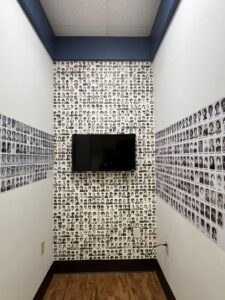
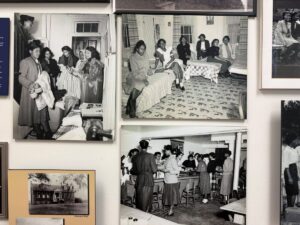
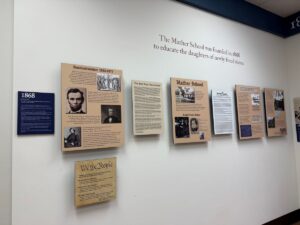
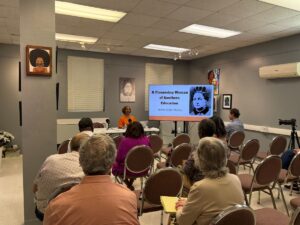
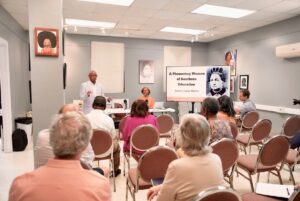
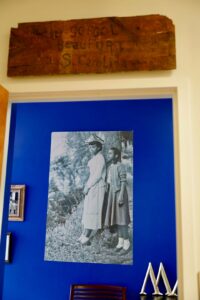
But it was the pleasantly compact Mather School Museum and Interpretive Center on the Technical College of the Lowcountry (TCL) campus that provided a place for history buffs to gather on Saturday June 27, 2026.
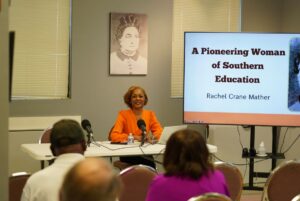
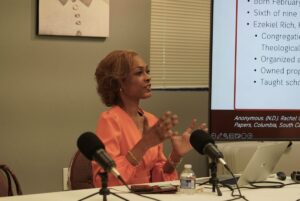
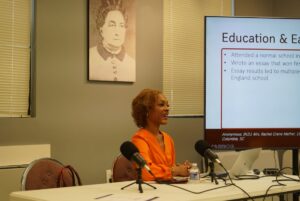
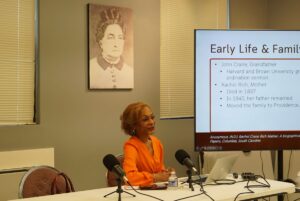
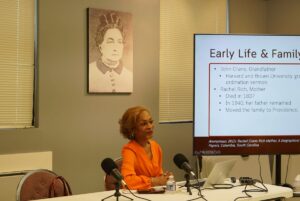
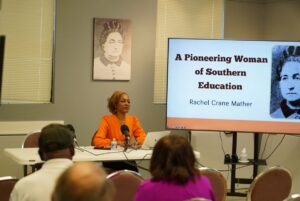
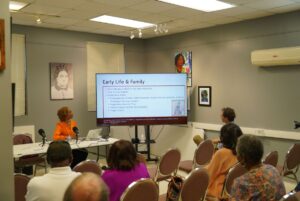
The wise guide on this occasion was Sharon Beasley, Ph.D., who spoke on the life and legacy of Rachel Crane Mather, the namesake of the school founded in 1868. Beasley is now an Assistant Dean of Accreditation and Assessment at Mercer University, and her presentation was part of the “Voices of Mather” oral history project, a larger effort to collect and share Mather School alumni stories.
Beasley herself has a deep connection to TCL and Rachel Crane Mather, having graduated from nursing school at TCL and eventually becoming a faculty member and administrator. When it came to figuring out the subject for her dissertation a few years ago, she was inspired by her proximity to Rachel Crane Mather’s legacy, writing “Pioneering Women of Southern Education,” which featured Mather.
Interestingly, Rachel Crane Mather’s educational background itself remains a mystery in terms of where it took place. She was born in New Hampshire in 1823 and was a teacher in Boston for more than a dozen years before moving to Beaufort in 1868. She came to start a “normal school” for teacher training at the behest of the American Missionary Association (AMA) but quickly decided to change her course. Beasley described the pivot as rooted in what Mather found when she arrived in the Sea Islands.
“She did her assessment of the area and realized the children needed something different,” Beasley said, “They did not have the capacity at the time to matriculate into a normal school but needed to be boarded and provided food.”
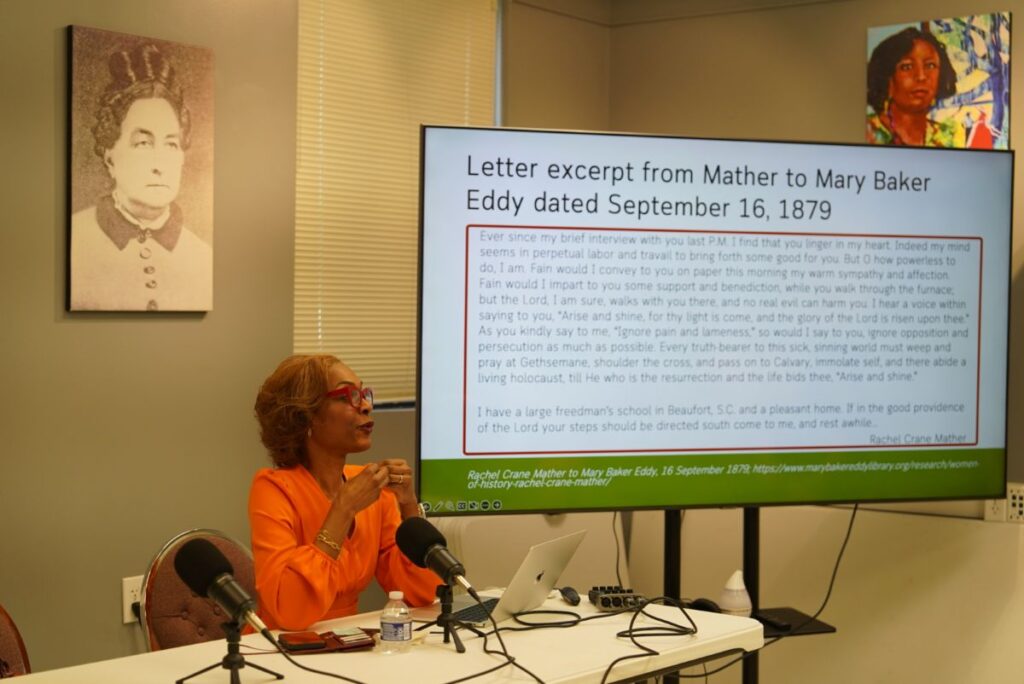
Beasley said that led to a conflict with her AMA benefactors, and that is when things took a serious turn. Beasley, with her warm smile and bright orange blouse, peered over bold, red-framed glasses and labeled Mather a kind of disrupter for defying what the funding folks wanted.
“That money was very specifically designated for normal schools, and so they did not want a boarding home. They did not want to support distribution of food and clothing,” Beasley explained, “Those were the things the young pupils needed, and she just didn’t see the concession from AMA. And then she had a deep talk with God.”
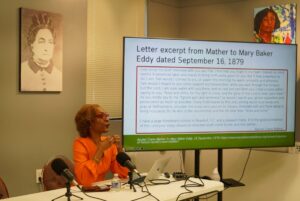
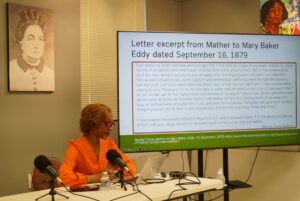
Beasley asked the audience to imagine Rachel Mather looking out over the Beaufort River and then projected a quote on a slide taken from a letter written by Mather pondering her future after she spoke her truth to powerful AMA funders.
“I was unsure of my purpose and how I would adopt a work that I came to start devoid of help from my original primary sponsors. I spent time in prayer and asked God for his guidance.”
What Mather decided was to proceed according to her own plan. She lined up additional funding by authoring a book about her work in Beaufort, publishing letters in The New York Times, appealing to politicians, and challenging those who stood in the way of her vision. All this raised awareness and developed a national donor pool.
Beasley says this proved what a force Mather was in terms of political astuteness and resourcefulness, characteristics she tried to impart in her students even as she worked to ensure that these young girls would be able to provide for themselves and their families.
“I think [Mather’s] personality was one that was very serious. She was a thoughtful and deliberate person. I think she thought through things in totality,” Beasley marveled, “The Bible was her foundation, and she was a deeply spiritual person, and I do believe she was an evangelist at heart.”
Dorothy Johnson was in the audience this day listening in rapt attention to Beasley. Johnson might also be considered an evangelist of sorts, based on her love of being a Mather alumna.
Johnson, who graduated in 1958, sat there 68 years later making notes, nodding, and participating in the exchange of questions and answers afterward. Johnson testified to the power of this historical place.
“I’m from Dale, South Carolina. I didn’t have my own room or my own bed. We had outdoor toilets and all of those things, and this was new to me, but my aunt had been [a Mather student],” she said.
Johnson said the teachers were very bright and she learned both practical skills and more during her time at Mather and launched into a career in the military and the U.S. Postal Service.
“I was the first black female from Beaufort County to go into the military in 1961, “Johnson proudly related, “I had to be a mediator between black and white [persons] and then they chose me to speak to teach others about getting along.”
Johnson was also named the Grand Marshal for the 2025 Beaufort County Veterans Day Parade.
Between Sharon Beasley and women such as Dorothy Johnson, the ripples of Mather School’s history continue to positively impact the wider world. Beasley points to Rachel Mather’s persistence as a fundamental piece of her identity and how she got things done.
“Rachel Mather was a very strong woman of faith,” Beasley concluded, “And I think her faith was the inner strength that fueled her persistence over nearly 40 years.”
Luke Frazier is a writer and award winning media producer who moved to the Lowcountry in 2024. He runs NOW Communications and can be reached at nowandfuturecomms@gmail.com.