
Beaufort County accounted for most of SC’s reported nests by late September
By Delayna Earley
The Island News
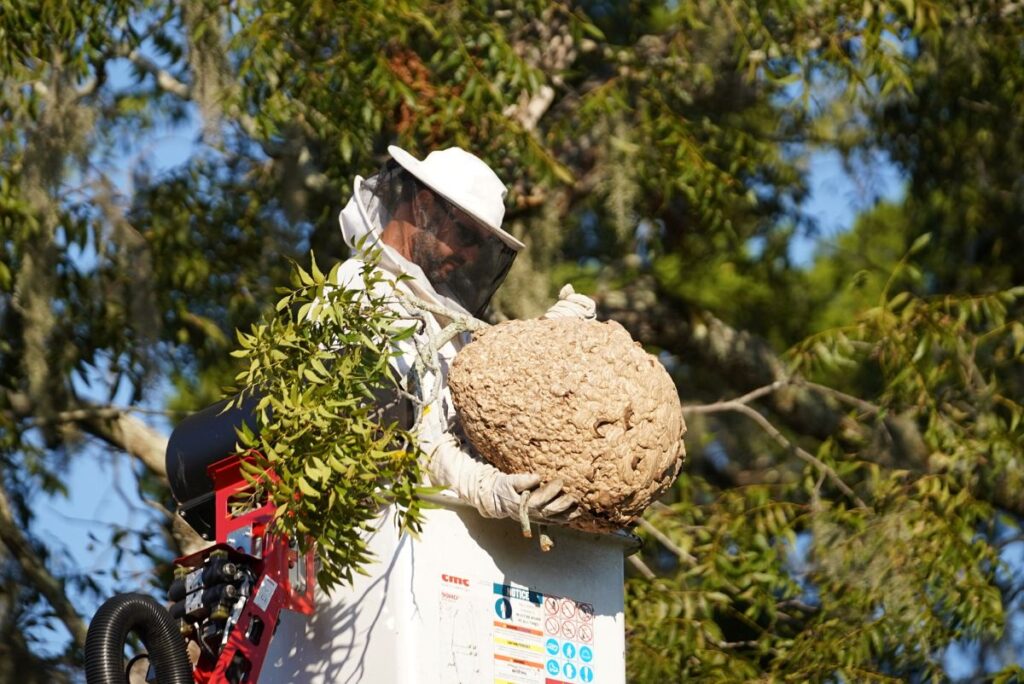
Last November, Beaufort temporarily closed Southside Park after a nest of invasive yellow-legged hornets was found high in a sweetgum tree near the playground. The discovery in Mossy Oaks showed how late in the fall a nest can still be active.
Fall is an important stretch in the hornet’s life cycle. By late summer and early fall, colonies are producing males and new queens. Workers may attack honeybee hives for protein to feed the developing hornets. Later in the fall, the new queens leave the nest to mate and find shelter for the winter, according to the U.S. Department of Agriculture.
Beaufort County has accounted for most of South Carolina’s known nests this year. As of Sept. 21, 501 of the 578 nests found statewide in 2026 were in Beaufort County, WSAV-TV reported. In October, Clemson Extension said the hornet continued to spread in Beaufort, Colleton and Charleston counties. The species also has been detected in neighboring Jasper County.
What changes when winter arrives?
Hornet activity typically drops as winter sets in. The workers and the queen that founded the colony die off, while newly mated queens spend the colder months in sheltered spots. Surviving queens emerge in spring and begin building nests of their own.
The yellow-legged hornet was first detected in the United States in Savannah in 2023. It preys on honeybees and other insects. The USDA says that if the species becomes established, it could reduce honeybee populations and affect pollination for crops.
What to do if you spot one
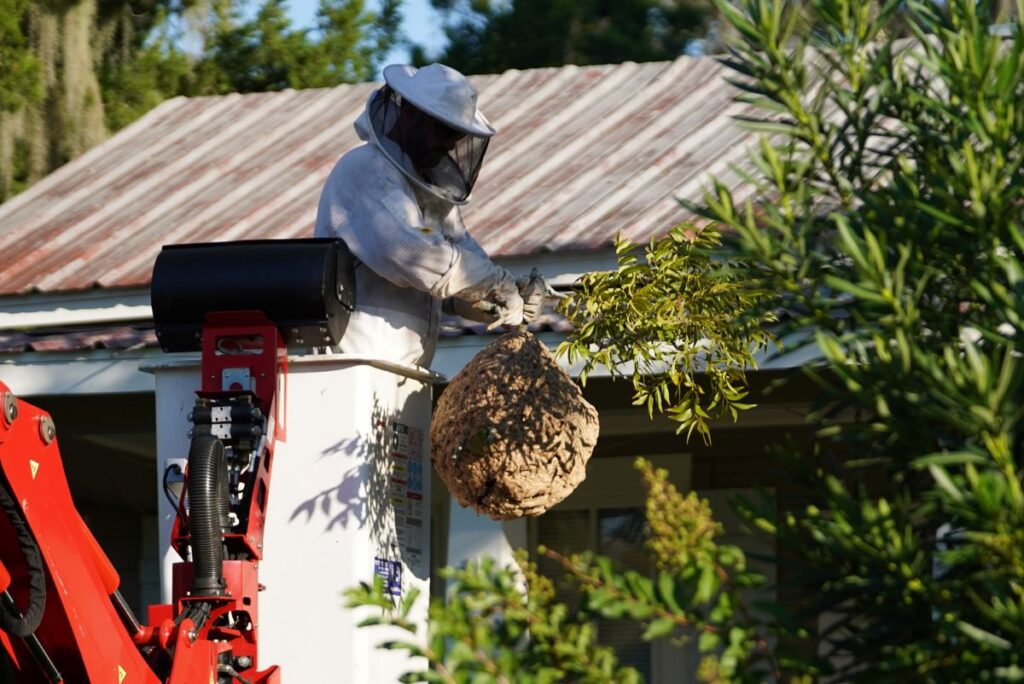
Yellow-legged hornets are about an inch long, with mostly dark bodies, banded abdomens and distinctive yellow lower legs. Their large paper nests can hang high in trees or under roof overhangs. Bald-faced hornets and other wasps can look similar.
Clemson says that despite the colder temperatures, they still want residents to report nest sightings so they can be properly removed.
If you see a suspected hornet or nest this fall or winter, keep your distance and leave removal to trained responders. Note the exact location and take a photo only if you can do so safely. Report the sighting to Clemson University’s Department of Plant Industry at 864-646-2140 or through its online reporting form.
Delayna Earley, who joined The Island News in 2022, formerly worked as a photojournalist for The Island Packet/The Beaufort Gazette, as well as newspapers in Indiana and Virginia. She can be reached at delayna.theislandnews@gmail.com.