
Council members supported Tidewater Windows & Doors’ plan to reuse the property, worried RMX zoning could allow more intensive future development
By Delayna Earley
The Island News
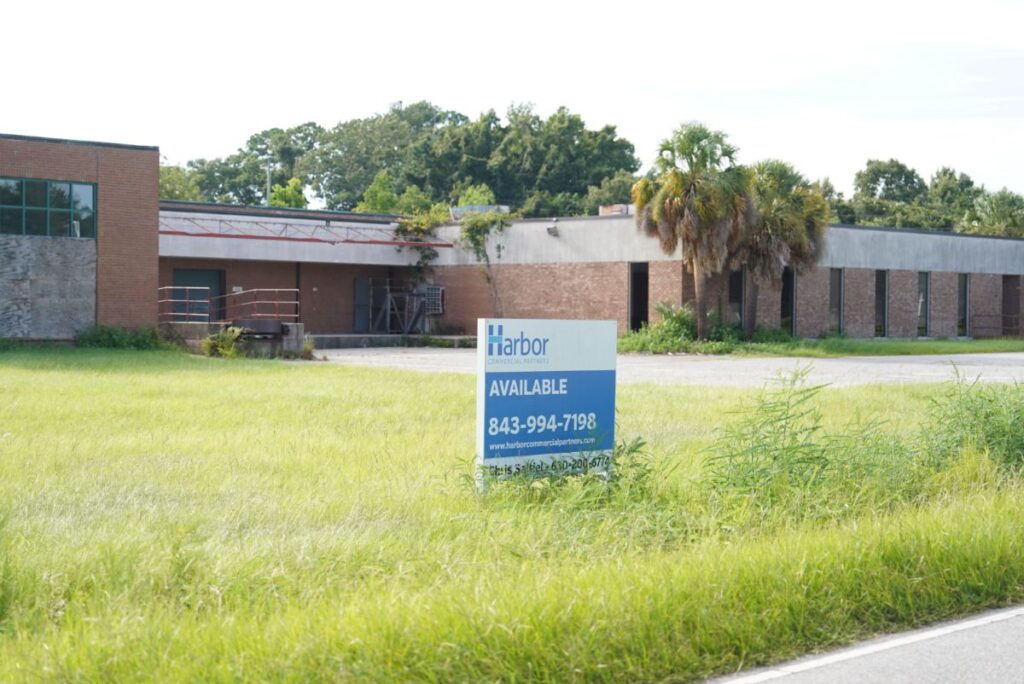
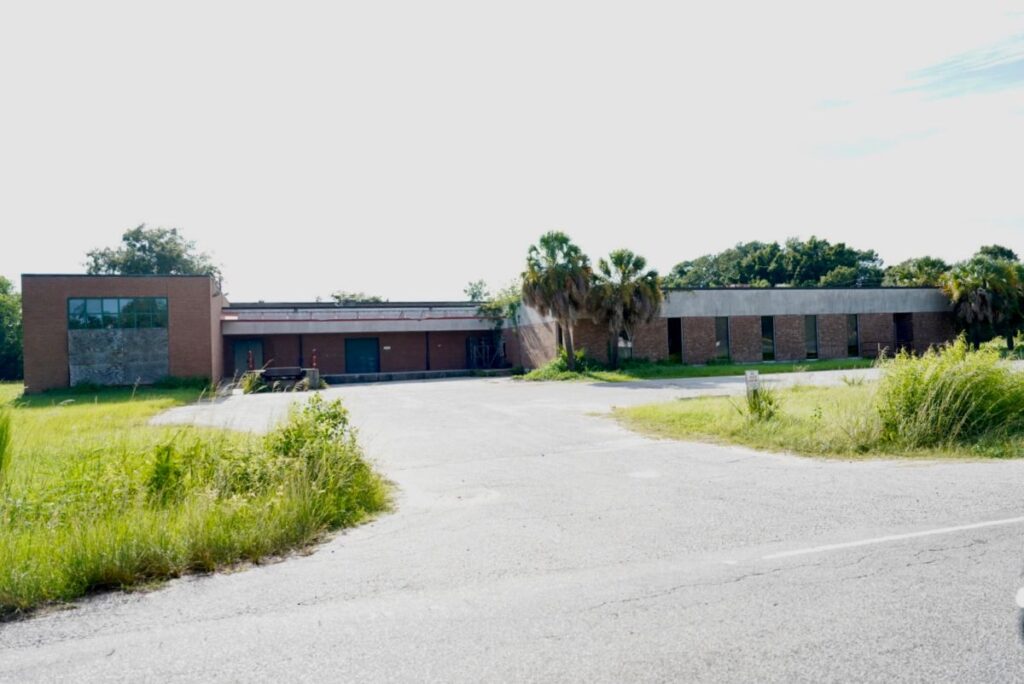
A plan to breathe new life into the former Beaufort Gazette building on Salem Road, vacant since 2015, came to an end Tuesday after Beaufort City Council rejected the rezoning needed for Tidewater Windows & Doors to move into the property.
Council voted 4-1 Aug. 18 against the second and final reading of an ordinance that would have rezoned the roughly 20,000-square-foot property at 1556 Salem Road from T4 Neighborhood, or T4N, to Regional Mixed Use, or RMX. Councilman Neil Lipsitz cast the only vote in favor, while Mitch Mitchell, Mike McFee, Phil Cromer and Josh Scallate voted against it.
The vote was not a rejection of Tidewater’s proposed use of the building. Council members repeatedly said they supported owner Andy Martin’s plan to renovate and reuse the long-vacant property. Their concern was what the broader RMX designation could allow on the site in the future.
The decision marked a reversal from the ordinance’s first reading June 9, when Council voted 4-1 in favor of the rezoning.
Martin has a contract to purchase the former newspaper building and planned to use it for offices, a showroom and warehouse space for Tidewater Windows & Doors, which currently operates across the street at 1555 Salem Road.
Under the property’s existing T4N zoning, Martin can use the building for offices but cannot warehouse the windows and doors his company sells and installs.
His contract to purchase the property expires Aug. 31.
Concerns go beyond Tidewater
Councilman Josh Scallate said his concern was not Martin’s proposed business.
“I think that what they’re proposing is completely appropriate,” Scallate said. “I think that we should encourage reusing buildings that are underutilized and vacated like this.”
His concern was what could happen years later if the property changed hands and a future owner sought a more intensive use permitted under RMX.
Scallate gave the example of Martin purchasing the property with plans to reuse the building, only for the property to be sold several years later to a developer who could demolish it and pursue something such as a four-story hotel.
“And we’re stuck dealing with the aftermath,” Scallate said.
If the city is going to be responsible stewards, he said, it needs to consider not only the current proposal but what the zoning could allow in the future.
“The more reasonable approach seems to be finding a way to restrict some of those more impactful developments that would be allowed in RMX, but also providing a way for the applicant to reuse the building to suit their needs,” Scallate said.
McFee expressed similar concerns, saying Salem Road is primarily residential and RMX zoning is more appropriate for larger highway-oriented commercial corridors.
“I wish you could have found a way to repurpose this building and keep it in T4N,” McFee said. “But I can’t go with the upzone.”
That distinction was also at the center of opposition from several nearby residents.
Donna Bradley, president of the Live Oaks at Battery Creek Property Owners Association, said the quality of life in the area depends on preserving a community where residents can walk, bike and enjoy the outdoors without increasing traffic pressures.
She said residents were concerned not only about what Martin intends to do with the property today, but what could happen if it were rezoned and later changed hands.
Once the property becomes RMX, Bradley said, future owners would have access to the broader range of uses allowed under the designation.
She also pointed to existing traffic on the two-lane Salem Road, which serves Live Oaks at Battery Creek, Salem Point, Battery Point, Salem Bay and nearby apartment communities, as well as residents accessing the Spanish Moss Trail.
Other residents raised concerns about noise, lighting, stormwater runoff and the potential effects of more intensive future development on nearby neighborhoods and Battery Creek.
Martin pushes back
Martin argued that Tidewater’s proposed use would not add significant traffic to Salem Road and that leaving the property under its current zoning does not necessarily guarantee a lower-impact use.
Tidewater has operated across the street for about five years, Martin said, with five employee vehicles arriving each day and roughly two truck deliveries each week.
Moving into the former Gazette building would allow the company to warehouse windows and use the property’s entrances on Salem Road and B.E. Wheatley Drive to improve the way delivery trucks move through the site.
“Our intentions have always been to eliminate that front loading dock, and bring everything into the back,” Martin said.
Martin also pointed out that the current T4N zoning would allow the building to be filled with offices as long as the property was not being used for warehousing.
“I could tomorrow buy that building,” Martin said. “I could buy that building and I could put in 50 offices.”
During the discussion, the figure was corrected to about 40 offices.
Martin estimated an office use of that size could bring 50 to 100 vehicles to the property, compared with the five employee vehicles he said Tidewater currently has.
Martin has described the former Gazette building as a “total eyesore” and said the vacant property has attracted people seeking shelter inside. His plan was to renovate the existing building rather than demolish it.
Two of Martin’s sons also spoke in support of the project.
“The last thing I want to do is ruin the neighborhood for all of you all,” Marcus Martin said.
Marcus Martin also told Council that an out-of-town developer plans to purchase the property if his family does not.
From 4-1 approval to 4-1 rejection
Martin’s frustration with the process became increasingly apparent as the discussion continued.
He said he has spent nearly a year pursuing the property and about nine months dealing with the rezoning process.
“You can’t believe how frustrated I am,” Martin said. “I’ve been dealing with you all for nine months.”
Martin said he initially sought light industrial zoning for the property because he believed that would return it to something similar to its previous commercial use as the Beaufort Gazette.
According to Martin, city planning staff determined light industrial would not work and, after consulting with the city attorney, recommended RMX instead.
City staff recommended approval of the RMX rezoning, and Martin went through the city’s Technical Review Committee process before receiving a unanimous recommendation for approval from the Beaufort Planning Commission.
Council then approved the rezoning 4-1 on first reading June 9.
After the proposal reached Council, however, concerns grew about the wider range of uses RMX would allow in the future.
Following a July meeting, Scallate drafted a proposed ordinance intended to find a way for Martin to reuse the existing building while limiting some of the potential impacts that concerned Council and nearby residents.
Martin strongly objected to the proposal, saying its restrictions went so far that he was unsure whether Tidewater could operate under them.
He called the way the matter was handled “underhanded” and a “bad deal.”
Martin said he had been transparent with city officials about what his family intended to do with the property and questioned how a proposal recommended by staff, unanimously supported by the Planning Commission and initially approved 4-1 by Council could lose nearly all of its Council support before final reading.
“How can the planning department, the city attorney, the planning commission all be so wrong about this property and our intentions?” Martin asked.
“And now, the switch has turned or somebody’s got your ear,” Martin said. “And now it’s like the plague.”
He said the time spent pursuing the project was something he could not get back.
“One thing I can’t replace in my life is time,” Martin said.
If Council members had told him earlier that they would not support the rezoning, Martin said, he would have walked away.
“Sayonara. Goodbye. I wouldn’t have wasted all my time doing this,” Martin said. “So the way it’s happened, the way it’s gone, really not a good reflection on you all and how the city operates.”
The Planning Commission ultimately did not advance the alternative ordinance.
Scallate said he had hoped the proposal could be refined to accommodate Martin’s use while addressing concerns about more intensive development.
“That’s what I was hoping would come back from the Planning Commission,” Scallate said. “What we had sent obviously was a very quick draft that could have been massaged in several different ways.”
Council also discussed whether Martin could voluntarily place deed restrictions on the property to prohibit some of the uses that concerned Council members and residents.
Martin said he was willing to restrict several uses and offered to add hotels to the list if that was among Council’s concerns.
City officials cautioned that Council could not condition its rezoning decision on Martin placing private deed restrictions on the property. Questions were also raised about whether such restrictions could always remain in place if the property changed hands.
Curt Freese, the city’s director of Community Development, said another potential solution could be sent through the Planning Commission, but a substantial change would require another recommendation and restart the ordinance process.
City officials estimated that process would take at least three months.
Martin said that was not an option for him.
His contract to purchase the property expires Aug. 31, and he told Council it will not be extended.
Delayna Earley, who joined The Island News in 2022, formerly worked as a photojournalist for The Island Packet/The Beaufort Gazette, as well as newspapers in Indiana and Virginia. She can be reached at delayna.theislandnews@gmail.com.