By Luke Frazier
The Island News
It might or might not be an obvious inquiry, but it jumped to mind shortly after arriving at Hunting Island State Park on a sweltering Tuesday, May 26 morning.
A group of musicians were setting up to play and the question, “What kind of music goes with grand re-opening festivities at the iconic Hunting Island Lighthouse?” occurred to me.
The answer, according to Stephanie Askew of the musical group Lowcountry Strummers, is sea shanties, and soon the ukeleles twanged into the classic shanty “Drunken Sailor.” What was interesting is how well it fit, due primarily to the belted-out chorus of, “Way hay and up she rises, early in the morning!”
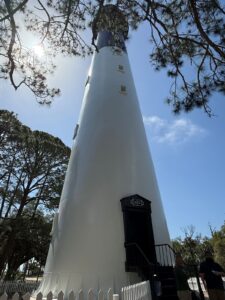
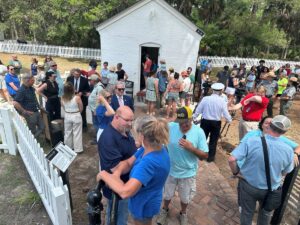
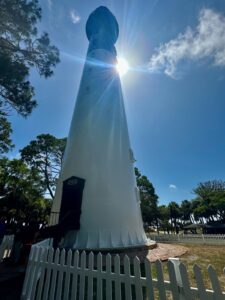
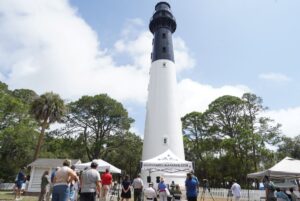
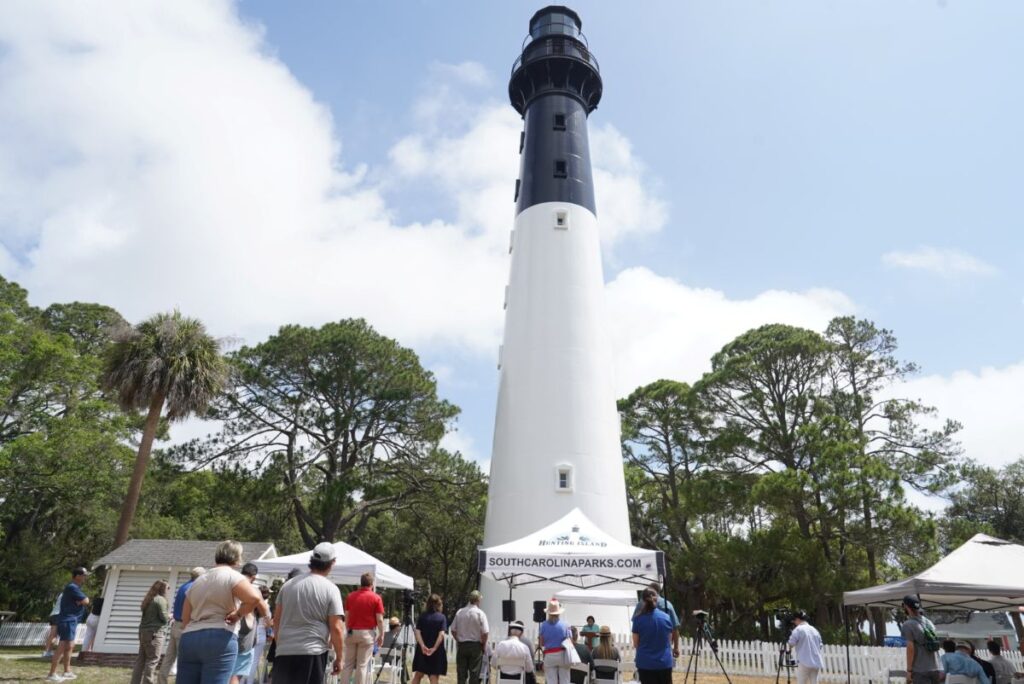
Because that is exactly what all the assembled dignitaries, state administrators, park rangers, preservationists, media types, and lighthouse fans were there to see: a glorious beacon rising 136 feet into the clear blue sky on this long-awaited morning amid the sand and sea.
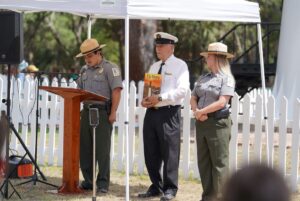
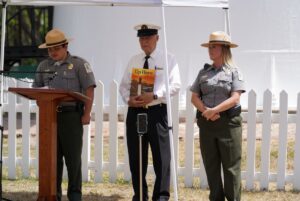
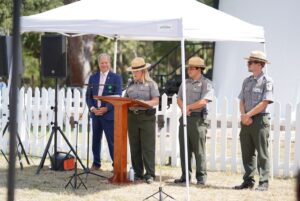
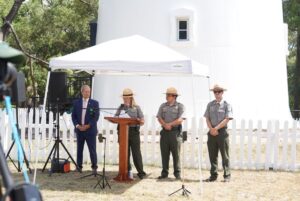
The assembled listened to five speeches, clapped politely, sweated a bit, and, if they talked to the right people, learned a few things.
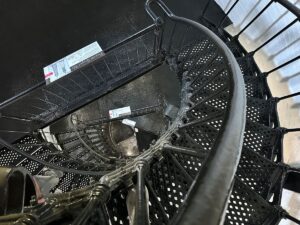
The Hunting Island Lighthouse was built in 1859, blown up in 1861 by Confederate forces, rebuilt in 1875, moved more than a mile inland in 1889 to escape erosion, and closed in February 2022 for repair and restoration. Now visitors can once again trudge (in the best of ways) up all 167 steps to the observation deck.
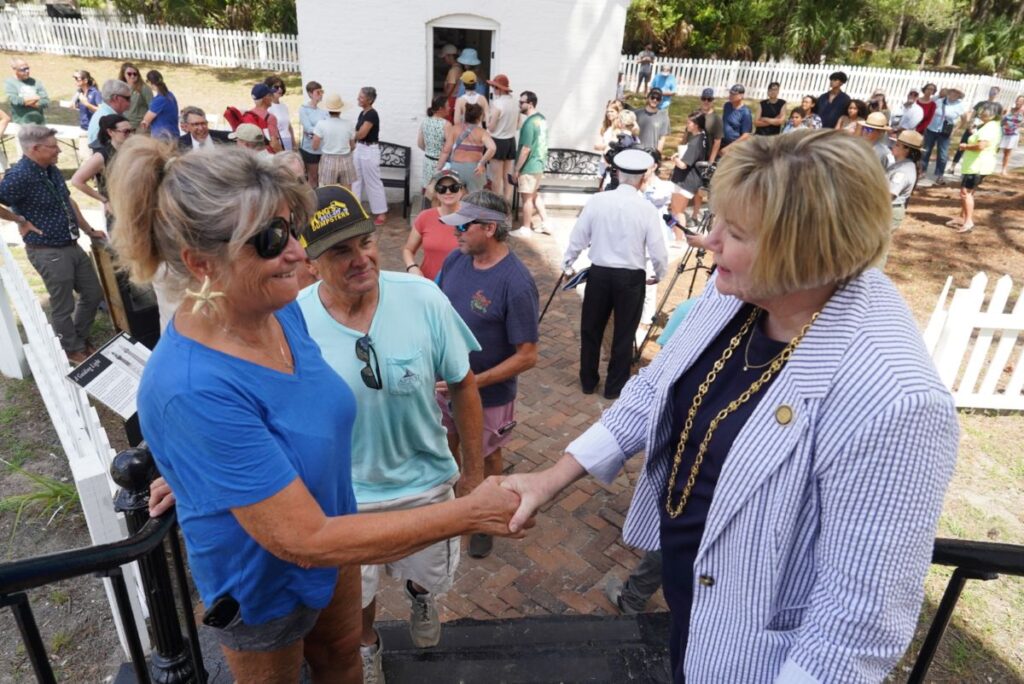
The major restoration project took longer than four years, and cost more than $4 million. State appropriations provided most of the money, so Rep. Shannon Erickson (R-124) of Beaufort County and Chair of the House Education and Public Works Committee, is a good friend for any lighthouse in need to have. Erickson was glad to be there.
“It’s really exciting for me, I’m the nerdy state park girl,” Erickson gushed, “[The Lighthouse] can withstand a lot because of her structure, but every bit of it is a work of art. This is one of those legacy moments.”
Duane Parrish, Director of the South Carolina Department of Parks, Recreation & Tourism, agreed with Erickson’s sentiment. He noted the fact that the Lighthouse is a landmark for so many people, signaling they have arrived at the coastal beauty of the Lowcountry, and early in the appropriation process that produced a realization.
“This [restoration] is going to be expensive, but you know what? It’s worth it,” Parrish reflected, “It’s just one of those things that you need to invest in from a state perspective.”
From a technical perspective, the work was challenging for both Huss Construction and Bennett Preservation Engineering, a company based in Charleston that has experience working on 11 other lighthouses.
Craig Bennett of the engineering firm pointed out a historical reality.
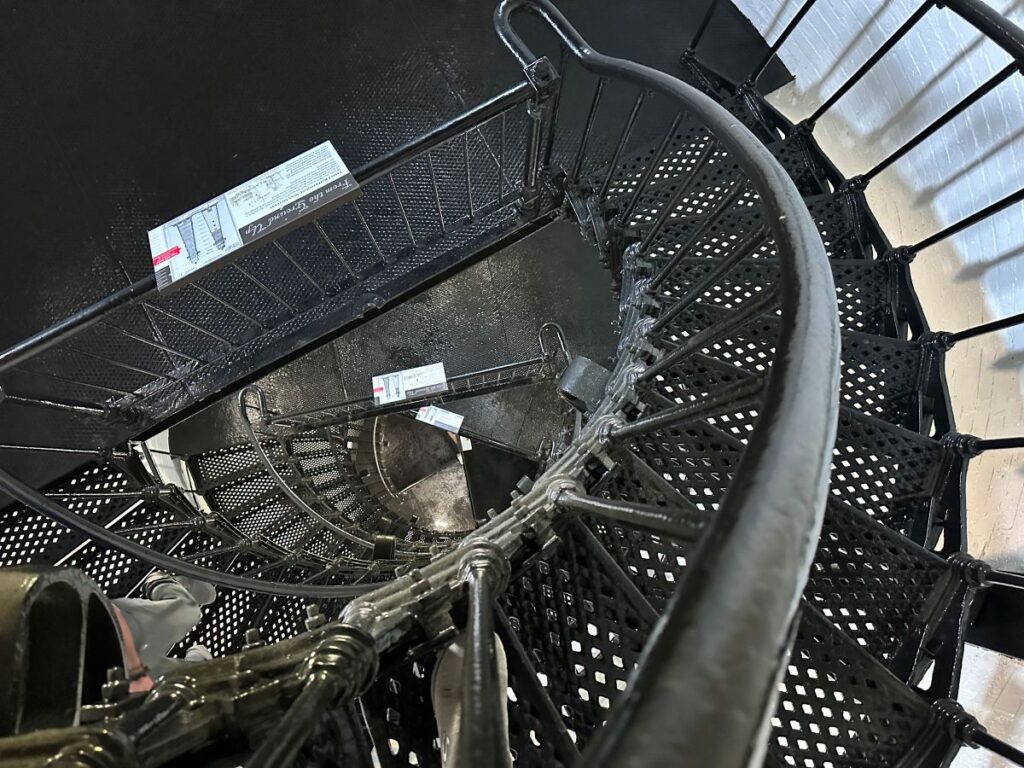
“Oddly enough, the stairs in lighthouses were meant for one lighthouse keeper, carrying a 40-pound can of oil,” he drolly mused.
Now they must be prepared for thousands of visitors climbing on the metal treads and grabbing onto the handrails. This becomes a factor, according to Andrea Williams, also of the engineering firm, for this specific lighthouse.
“Instead of being fully brick masonry all the way to the top there are cast iron sheets around the exterior, built to be taken apart and moved,” she explained, “Our goal is to mostly make it seem like we were never here. We want to be really sensitive to the historic fabric.”
Joy Raintree, Director of State Parks, was also in attendance at the ceremony. She mentioned sensitivity of a different kind that offers perspective when you step out onto the deck of the tallest man-made structure in Beaufort County.
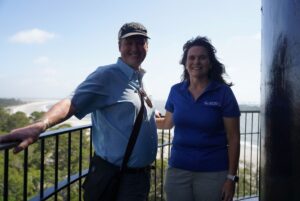
“[There is] a reverence in the moment. … It’s probably as high up and as freestanding as I’ve ever been. Standing up there, man, you feel pretty small, and a breeze down here feels a little bit different than a breeze up there. And to be at the level of birds flying around. … It puts you in your place in a good way.”
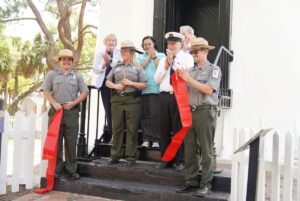
So after all the sandblasting, repainting, cast iron repairs, construction puzzles, engineering considerations and raising of the pile of cash it took, what is left is a simple and joyful celebration of history and vision.
Park Manager Kirby Brady pointed out the food trucks and trailer where a virtual reality tour is available for those who can’t climb and smiled as she thought of the hordes of upcoming visitors.
“It’s a part of our history, and it’s really just kind of a mascot of the state. A lot of people have been coming to Hunting Island for years and years, so it’s exciting to give this back to them.”
And what all the attendees were given on this morning of renewal, besides toe-tapping sea shanties, was the opportunity to gaze up in wonder, take a deep breath, and start climbing.
Luke Frazier is a writer and award winning media producer who moved to the Lowcountry in 2024. He runs NOW Communications and can be reached at nowandfuturecomms@gmail.com.