
Candidates weigh in on issues ahead of June 9 primary election
By Delayna Earley
The Island News
Ahead of the June 9 primary election, The Island News sent detailed candidate questionnaires to those running in several contested local and state races impacting Beaufort County voters.
Questionnaires were sent to candidates in the Beaufort County Sheriff Republican primary, Beaufort County Council District 4 and District 5 Republican primaries, and the South Carolina House District 121 Democratic primary. Each questionnaire included a general candidate information section, along with 10 issue-focused questions tailored specifically to the office being sought.
Questions focused on topics currently impacting Beaufort County and the Lowcountry, including public safety, gang activity, growth and infrastructure, affordable housing, transparency in government, Pine Island and the Cultural Protection Overlay, property insurance costs, education, environmental concerns and the relationship between local and state government.
Candidates were also invited to submit guest opinion columns as part of the publication’s election coverage.
All candidates contacted by The Island News participated in the questionnaire process and submitted responses.
Due to print space limitations, only portions of candidate responses appeared in print. Each candidate’s questionnaire responses appear in their entirety at the end of this story.
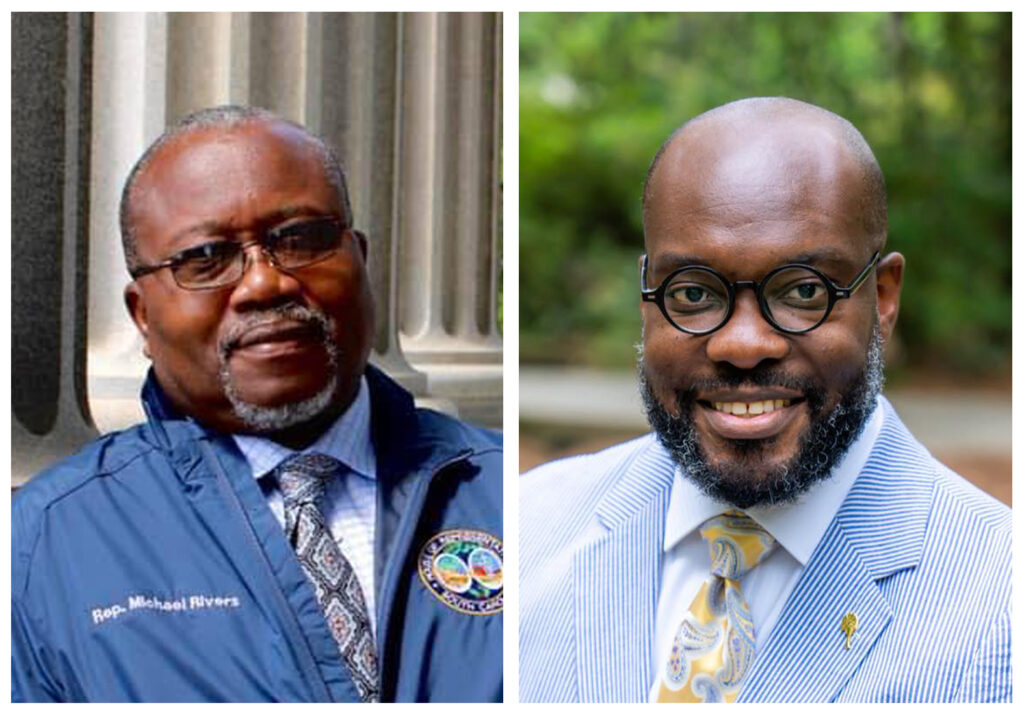
South Carolina House District 121
Democratic candidates Michael Rivers Sr. and Shannon Nehemiah DeLoach both emphasized affordability, infrastructure and protecting historic Gullah-Geechee communities in their responses, while offering different perspectives shaped by their professional and political backgrounds.
Rivers, the incumbent representative for District 121, is a St. Helena Island native who has lived in Beaufort County for roughly 60 years. A retired U.S. Air Force veteran, minister and former Beaufort County Board of Education member, Rivers said he is seeking another term to continue “providing proven leadership for the Lowcountry.” He and his wife, Lisa, have seven children.
DeLoach, a Burton native who has lived in Beaufort County most of his life, is a pastor, former law enforcement officer, funeral director and small business owner. He currently serves as pastor of Mt. Sinai Baptist Church and owns Serenity Mortuary. DeLoach said he is running because communities in Beaufort and Colleton counties deserve “strong, accessible and accountable leadership.”
When asked what they believe is the biggest issue facing District 121 residents, both candidates focused heavily on affordability and growth pressures affecting longtime residents.
Rivers pointed specifically to balancing growth while protecting Gullah communities from displacement and ensuring infrastructure keeps pace with development. He also stressed the need to preserve historic communities as demographics continue changing across the Lowcountry.
DeLoach described affordability as the district’s most pressing issue, pointing to rising housing costs, groceries, insurance, utilities and healthcare expenses affecting working families, seniors and young residents throughout Beaufort and Colleton counties.
Both candidates also supported reforming state law surrounding affordable housing tax exemptions, an issue that has recently drawn concern from Beaufort County leaders who warned the law could significantly reduce local government revenues.
Rivers said affordable housing remains important but argued any tax exemptions must remain fair to local governments and taxpayers while still being truly affordable and accessible.
DeLoach similarly supported reforming the law, saying affordable housing incentives must remain financially sustainable for counties, municipalities, schools and emergency services that rely heavily on property tax revenues.
Property insurance costs along the South Carolina coast also emerged as a major issue in both candidates’ responses.
Rivers called simply for “insurance reform,” while DeLoach outlined a broader series of proposals, including increasing market competition among insurers, strengthening oversight from the South Carolina Department of Insurance and exploring relief programs or tax credits for seniors and low- to moderate-income homeowners struggling with rising premiums.
The candidates also addressed Beaufort County’s rapid growth and ongoing infrastructure challenges.
Rivers pointed to his current work on the South Carolina House Department of Transportation Modernization Committee, saying continued coordination between state lawmakers and local governments will be necessary as growth continues throughout Beaufort County.
DeLoach argued the state must become a stronger partner with local governments by increasing funding for roads, drainage, bridges and other infrastructure before communities reach a crisis point. He also stressed the importance of including local officials and residents in planning decisions affecting their communities.
Both candidates expressed support for greater local control over development and zoning decisions.
Rivers emphasized the importance of “Home Rule” and argued local governments should maintain influence over growth and development decisions affecting their communities, particularly as demographic changes continue impacting historic Gullah communities.
DeLoach similarly said local governments are often best positioned to understand the needs of their communities and should have greater flexibility when balancing development, infrastructure, environmental protection and quality of life concerns.
The Pine Island controversy and Cultural Protection Overlay also featured prominently in the candidates’ responses.
Rivers defended the Cultural Protection Overlay, noting he was involved in helping formulate the ordinance and emphasizing the importance of preserving historic Gullah communities.
“The CPO is law,” Rivers wrote.
DeLoach also voiced support for the goals behind the overlay, arguing Beaufort County has a responsibility to preserve environmentally sensitive areas and protect Gullah-Geechee communities from being erased by unchecked development.
The candidates additionally addressed the current debate over potentially reopening congressional redistricting ahead of the next census.
Rivers strongly opposed reopening the process, arguing redistricting traditionally occurs every 10 years following the census and warning that new efforts would threaten minority representation and potentially invalidate votes already cast by military members.
DeLoach also opposed reopening redistricting at this time, describing it as political “gamesmanship” rather than an effort focused on fair representation. He argued lawmakers should instead focus on issues directly affecting residents, including affordability, healthcare and infrastructure.
Education and teacher shortages were another major topic in the candidates’ responses.
Rivers said the state should allow “real teachers” the freedom to teach while supporting educators who have demonstrated their ability to connect with and inspire students.
DeLoach argued teacher retention requires more than salary increases, calling for reduced bureaucracy, improved classroom support, affordable workforce housing initiatives, childcare assistance and student loan support for educators.
Both candidates also emphasized balancing economic growth with preserving the Lowcountry’s environment and cultural identity.
Rivers argued growth should not displace the communities that helped create and preserve the region’s character, particularly historic Gullah communities.
DeLoach similarly supported “smart growth” policies balancing development with environmental protection, infrastructure planning and preservation of historic neighborhoods and cultural heritage.
When asked why voters should choose them, Rivers pointed to his experience and record in office, describing himself as the “responsible choice” for District 121.
DeLoach emphasized his background in ministry, law enforcement and small business ownership while arguing the district needs “fresh leadership” focused on affordability, accountability and practical solutions for working families.
The winner of the Democratic primary will advance to face Republican Shelley Gay Yuhas in the November general election.
1. What do you believe is the single biggest issue currently facing District 121 residents?
Rivers: Balancing growth and ensuring that the Gullah community is not displaced, as well as needed infrastructure because of growth.
DeLoach: The biggest issue facing District 121 residents is affordability and sustainable growth. Families across Beaufort and Colleton counties are struggling with rising housing costs, insurance rates, groceries, utilities and healthcare expenses. At the same time, communities are experiencing rapid growth that is putting pressure on infrastructure, schools and public services.
2. Beaufort County leaders recently warned that a loophole in state law tied to affordable housing tax exemptions could significantly reduce local government revenues. Would you support changing state law to close or reform that loophole? Why or why not?
Rivers: Yes, I would support state law to close or reform that loophole. Affordable housing is needed, but it also has to be accessible as well as truly affordable. Intent and original understanding should influence the decision in favor of local government. It builds trust.
DeLoach: Yes. Affordable housing is important, but any tax incentive program has to be balanced against the long-term financial health of counties, municipalities and school districts. If the current law is being used in ways that significantly reduce local revenues without delivering meaningful affordability, then it needs to be reformed.
3. Property insurance costs continue to rise dramatically in coastal South Carolina. What specific legislative solutions would you support to address affordability and availability of homeowners insurance?
Rivers: Insurance reform is needed.
DeLoach: We need comprehensive insurance reform that increases competition in the market, strengthens oversight of insurance rate increases and provides relief for homeowners in high-risk coastal areas. I would support exploring tax credits or relief programs for seniors and low- to moderate-income homeowners struggling with rising premiums.
4. Beaufort County continues to struggle with rapid growth, traffic congestion and infrastructure demands. What role should the state play in helping local governments address those challenges?
Rivers: As a member of the S.C. House of Representatives Department of Transportation Modernization Committee, we are looking at rapid growth, traffic congestion and infrastructure demands. As population continues to grow in South Carolina as well as Beaufort County, the Beaufort delegation and local government must continue communicating together to address these challenges.
DeLoach: The state should be a true partner with local governments. That means investing more in roads, drainage, bridges and infrastructure before communities reach a crisis point. The state should also give local governments more flexibility and support when planning for growth.
5. Local governments in Beaufort County have increasingly argued that state law limits their ability to manage growth, zoning and development issues. Do you believe local governments should have greater control over development-related decisions?
Rivers: Yes. Local governments and Home Rule should have input and influence in efforts to manage growth, zoning and development issues. The Beaufort delegation in Columbia will respect the voices of the people and local government.
DeLoach: Yes. Local governments are often in the best position to understand the needs and challenges of their communities. The state should not impose one-size-fits-all solutions that limit a community’s ability to manage growth responsibly.
6. The Cultural Protection Overlay and Pine Island litigation have sparked debate about property rights, environmental protection and preservation of historic Gullah-Geechee communities. What is your position on the issue?
Rivers: The CPO is law. The community has voiced their concerns and feelings. Additionally, I was part of the input in the formulation of the CPO.
DeLoach: I support protecting the cultural heritage of Gullah-Geechee communities and preserving environmentally sensitive land. Development should not come at the expense of communities that have deep historical and cultural roots in the Lowcountry.
7. South Carolina lawmakers are currently debating whether to redraw congressional district lines again ahead of the next census as part of a broader national redistricting push supported by President Donald Trump and other Republicans. Do you support reopening the redistricting process at this time? Why or why not?
Rivers: We were recently called into a special session to address the redrawing of congressional lines. The goal is to eliminate the only African American representation in the U.S. House of Representatives from South Carolina. You can’t change the rules in the middle of the game. Redistricting is done every 10 years after the Census. The last Census was in 2020 and the next Census is in 2030. I do not support reopening the redistricting process.
DeLoach: No. Redistricting should happen through the normal constitutional process following the Census, not as a political tool whenever one party sees an advantage. Reopening the process now creates unnecessary division and undermines public confidence.
8. Teacher shortages continue to affect school districts across South Carolina, including Beaufort County. Beyond salary increases, what changes would you support to improve teacher recruitment and retention?
Rivers: Allow real teachers the ability to teach. Real teachers are those who have the competence, commitment and connectivity to inspire students to excel regardless of their ZIP code. Do not penalize teachers who have proven themselves from sharing their gift with students.
DeLoach: Teacher retention requires more than salary increases. We need to reduce unnecessary bureaucracy, improve classroom support, provide more mental health resources and make housing more affordable for educators. We should also explore childcare assistance and student loan support for teachers.
9. How should South Carolina balance economic growth with environmental protection and preservation of historic communities in coastal regions like the Lowcountry?
Rivers: The beauty that attracts many should not displace those who helped establish and protect the beauty. This region is no longer a secret. However, the historic communities, particularly the Gullah community, must be preserved.
DeLoach: We need smart growth. Economic development is important, but it must be balanced with protecting natural resources, infrastructure capacity and historic communities. Once these communities and landscapes are lost, they cannot be replaced.
10. Why are you the best candidate to represent District 121 in the South Carolina House?
Rivers: Serious times require serious decisions. Proven leadership versus promises. Experience matters. Rivers is the responsible choice.
DeLoach: My background in ministry, law enforcement, business and public service gives me a unique perspective on the challenges facing working families. I believe District 121 needs leadership that is accessible, accountable and focused on practical solutions.
Delayna Earley, who joined The Island News in 2022, formerly worked as a photojournalist for The Island Packet/The Beaufort Gazette, as well as newspapers in Indiana and Virginia. She can be reached at delayna.theislandnews@gmail.com.