By Scott Graber
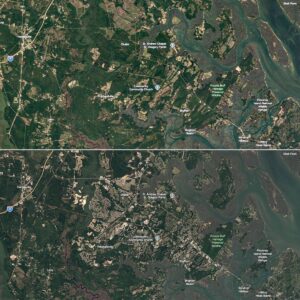
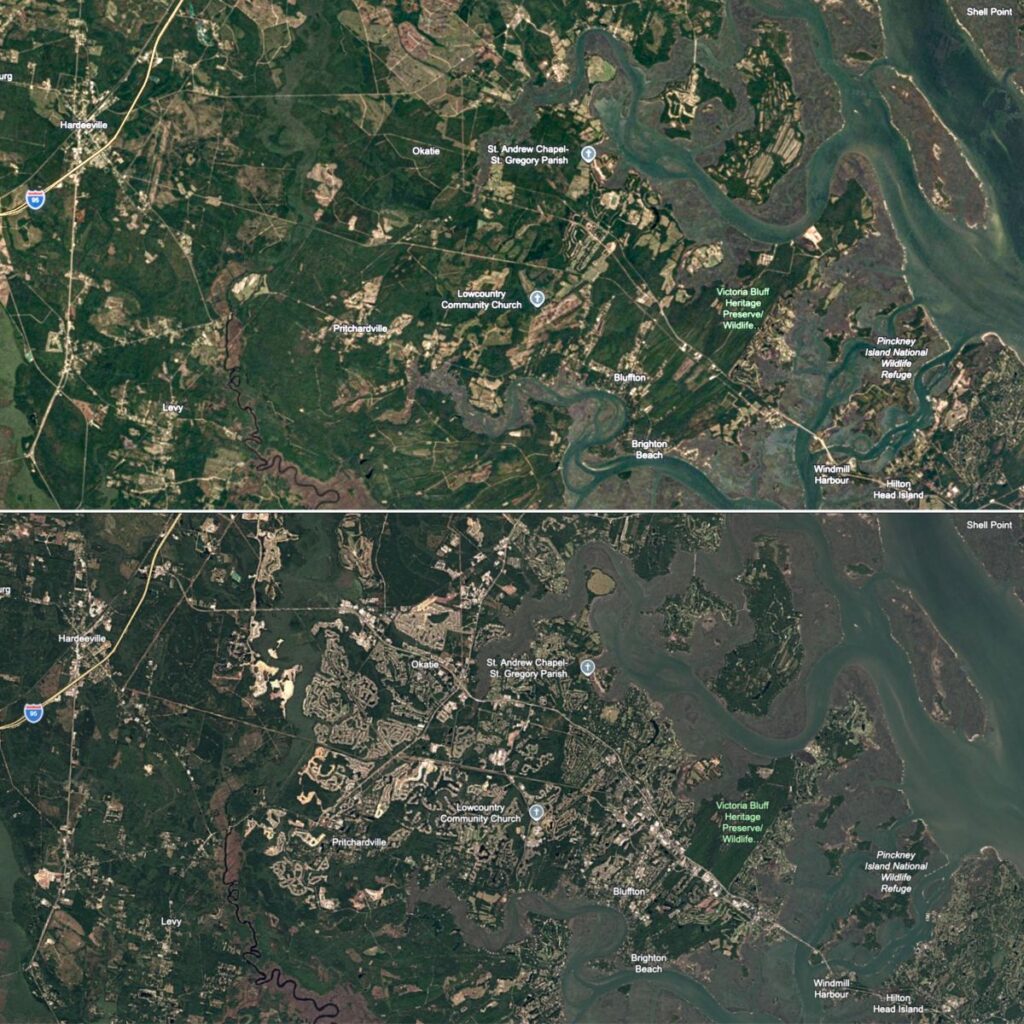
Well folks it’s official. Jasper County is — as reported by the Charleston Post and Courier — the fastest growing county in the United States of America.
This statistic is not qualified by anything like Jasper is the fastest growing county in South Carolina; or in the Southeast. No, it’s the fastest growing county; full stop; end of sentence; exclamation mark.
In 2020, there were 28,811 souls living in this political subdivision;
then 36,330 in 2024; then 38,563 in July of 2025.
Some may know that I have spent most of my adult life writing columns many of which were condescending, “Poor Jasper” stories. Columns about failing schools; no industry; little tax revenue; and a small cohort of rich folk who spent December hunting quail and turkeys on thousands of acres of unimproved, undeveloped pine forest.
If someone had told me in, say 1980, that Jasper County would be leading the nation in something other than poverty or pellagra; I would have said, “I’ll believe that when a young, club-hopping Manhattan realtor tries to annex Greenland.”
It seems like every recent retiree in Greenwich, Conn. —formerly commuters on the New Haven Railroad — wakes up fevered and sleepless yelling, “Babs, we’re putting the house on the market and moving to a place called Hardeeville.”
This flow of rich refugees is so strong that Exit 8 — the exit on I-95 used by these desperate, Lexus-driving people — is undergoing a major, multi-million dollar redesign.
Hardeeville is not alone in this category; Myrtle Beach, Charleston and Spartanburg are all seeing growth that is erasing every field and farm; clogging-up roadways; forcing municipalities to spend millions of dollars on asphalt and rebar. According to a March 20 editorial in the Post and Courier these “governments” are worried.
“Last year, Charleston County Council made a move to condition some of its rezoning decisions on the availability of infrastructure to support the new development, and now Dorchester County is expressing interest in following suit.
Both local efforts are good ideas, inasmuch as they respond to increasing concerns that growth is outpacing government’s ability to keep pace with improved roads and transportation options, drainage infrastructure, schools and more.”
Much has also been written about the creation of a brand new exit (Exit 3) in Jasper, and the 20,090 “housing units” that Hardeeville has approved; all of which presents the Beaufort Jasper Water and Sewer Authority with serious challenges.
Why?
In May of last year, BJWSA revealed its Capital Improvement Plan FY26-FY28; and that plan showed it intended to spend a total of $558,965,667 on capital projects over the next 3 years. Of this amount $196,053,406 was designated for water and $327,456,500 was targeted for sewer.
There were other, lesser administrative expenditures planned but the entire spending package was $558,965,667.
A good bit of this money would be spent for “improvement,” repairs and maintenance — $273,726,106; but $284,739,561 would be spent on “growth”; a big part of that “growth” centered on Hardeeville.
In fact, the Authority’s Cherry Point (sewer) Plant will be expanded to 11.25 MGD: the Hardeeville (sewer) Plant will be expanded to 6 MGD; and a brand new sewer facility near New River in Southern Jasper County will be constructed to help handle the flows connected with the 20,000 new homes being built around Hardeeville.
Some know that the Water and Sewer Authority collects what is called a “capacity fee” from developers in an effort to off-set the cost of new facilities — I happened to be on the BJWSA Board in 1984 when Bill Cochran, a man instrumental in the development of Dataw Island, suggested the Authority collect these fees upfront as was then being done in Florida.
But at this point it cannot be said whether or not these fees will cover the cost of expansion — BJWSA is, apparently, now in the process of reviewing these fees.
Right at the moment there is a bill — authored and introduced by Sen. Tom Davis — that may help with the situation around Hardeeville, Charleston, Myrtle Beach and the rest of South Carolina.
“That could change soon if the General Assembly passes a bill that would clearly authorize local governments to enact concurrency programs — the formal name for programs to ensure that roads, utility lines and other infrastructure won’t be overburdened by development and, if it is, to ensure that developers pay their fair share of the costs to develop it.” (Post and Courier, March 20, 2026).
Senate Bill 227 authorizes “local governments” to deny rezoning requests if those local governments determine that there isn’t sufficient infrastructure — when there isn’t enough water and sewer capacity available for example.
The Senate’s Labor, Commerce and Industry subcommittee heard testimony on Senate Bill 227 last week with supporters, including Representative Wetmore saying this was a “safety valve” for local governments facing rapid growth and “creates a mechanism for a proportional share …”
But others, like Alex James from the Home Builders of South Carolina, said it could duplicate the state’s existing impact fee statute while removing or weakening “guardrails” like independent studies by qualified consultants.
Meanwhile Hardeeville itself seems to have little interest in losing its No. 1-in-the-nation (growth) rating.
“You go back 20 or 25 years ago, and Hardeeville was a small, rural community,” City Manager Josh Gruber told the newspaper last year. Now we are a growing metropolitan area. Not only are our neighborhoods growing. But just the area in general is growing. That is not likely to change anytime in the near future.” (Post and Courier, March 31).
It seems that almost every candidate for office in South Carolina speaks about the dangers of runway growth. But here, in the Concurrence Bill, we have simple “tool” to help municipalities cope.
It will be interesting to watch how this plays out in the Legislature.
Scott Graber is a lawyer, novelist, veteran columnist and longtime resident of Port Royal. He can be reached at cscottgraber@gmail.com.