
Developers argue St. Helena protections amount to race-based zoning
By Delayna Earley
The Island News
The legal battle over Pine Island and the future of development on St. Helena Island is once again headed to federal court, with developers now directly accusing Beaufort County of enforcing what they describe as a racially discriminatory zoning ordinance.
Filed April 20 in U.S. District Court, the amended complaint by Pine Island Property Holdings, LLC and Pine Island GC, LLC argues Beaufort County’s Cultural Protection Overlay, or CPO, violates the Equal Protection Clause of the 14th Amendment and unlawfully restricts development based on race.
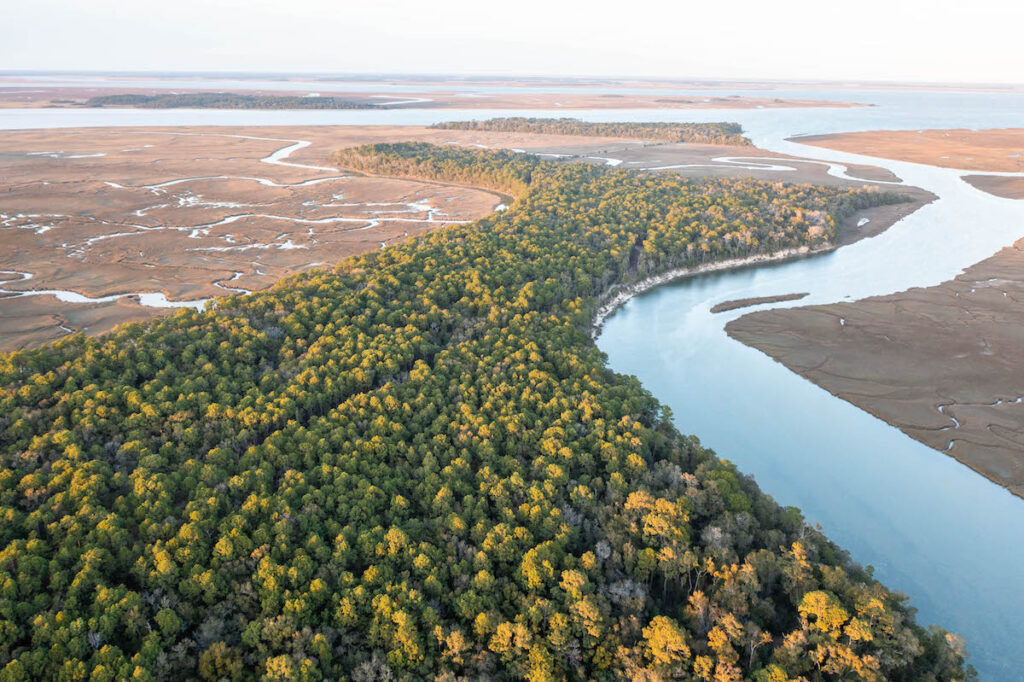
The lawsuit repeatedly characterizes the county’s overlay district as a “race-conscious zoning scheme” and claims the county strengthened the ordinance specifically to block development at Pine Island Plantation, a roughly 502-acre property on northern St. Helena Island owned by developer Elvio Tropeano.
The filing marks the latest chapter in a yearslong battle that has become one of Beaufort County’s most divisive development fights.
A battle that has divided St. Helena since 2022
Tropeano first unveiled plans for the property in late 2022, proposing an 18-hole golf course, residential development, docks and related amenities on what many residents viewed as one of the last large undeveloped tracts remaining on St. Helena Island.
The proposal quickly sparked backlash across the island.
Public meetings routinely drew standing-room-only crowds as residents packed County Council chambers and community meetings urging officials to reject the project and preserve St. Helena Island’s rural and cultural character.
“Protect St. Helena” signs spread throughout the island as opposition to the project grew.
Organizations including the Coastal Conservation League, the South Carolina Environmental Law Project and the Penn Center became heavily involved in opposition efforts, arguing the proposed golf course threatened the island’s environment, historic resources and Gullah/Geechee heritage.
Supporters of the project argued the development represented a lower-density alternative to what could otherwise be built under existing zoning and would bring jobs, investment and infrastructure improvements to St. Helena Island.
The fight intensified in 2023 as Beaufort County moved to strengthen the Cultural Protection Overlay, clarifying that golf courses were prohibited uses within the district.
Developers responded by proposing three separate six-hole golf courses after county officials acknowledged smaller golf courses were not explicitly prohibited under the previous wording of the ordinance.
County officials ultimately rejected those proposals, along with subsequent zoning map amendment requests tied to the property.
In 2025, developers returned with what they described as a “downsized” proposal that included 49 residential units, fewer docks and large amounts of protected open space alongside the golf course.
Tropeano argued the revised proposal would reduce density compared to what could otherwise be developed under existing zoning regulations.
County Council again denied the proposal after months of hearings, public comment and negotiations.
The Pine Island fight has since resulted in multiple lawsuits, appeals, public protests and years of political and legal conflict surrounding development on St. Helena Island.
Lawsuit argues ordinance is racially discriminatory
At the center of the lawsuit is the CPO, a zoning overlay first adopted in the 1990s to limit large-scale resort-style development on St. Helena Island.
The overlay prohibits developments including golf courses, resorts and gated communities across much of the island in an effort to preserve its cultural heritage and rural character.
The lawsuit argues the ordinance is unconstitutional because it specifically identifies and seeks to protect the Gullah/Geechee community, which the filing describes as a racial classification under the law.
According to the complaint, the ordinance defines Gullah/Geechee people as descendants of enslaved Africans and indigenous Americans from the Sea Islands.
The lawsuit claims the county “explicitly prohibits otherwise productive land uses for the stated purpose of preservation of the Gullah/Geechee people.”
Attorneys also argue the county’s underlying T2 Rural zoning district already protects rural character through race-neutral land-use regulations and say the overlay goes further by prohibiting uses associated with outsiders and resort development.
The filing repeatedly accuses the county of adopting and enforcing zoning rules based on race.
It also points to the language used throughout the ordinance and related studies incorporated into the county code.
According to the lawsuit, county documents tied to the overlay contain thousands of references to terms including “Gullah,” “Geechee,” “Black,” “African American” and “race.”
The complaint argues no other local zoning ordinance in the United States contains that level of racial references tied to land-use restrictions.
Other legal arguments in the lawsuit
In addition to alleging racial discrimination, the lawsuit argues the CPO is vague, arbitrary and improperly enforced.
The complaint claims the ordinance fails to clearly define terms including “culturally significant,” “restricted access,” “large-scale growth” and “rapid growth,” leaving property owners without clear standards for what development is permitted.
Developers also argue the ordinance is irrational because it prohibits golf courses while still allowing uses including amusement parks, go-cart tracks, water parks, mining operations and regional waste facilities.
The lawsuit further claims the county improperly changed procedures and review standards during the Pine Island approval process in order to block the project.
According to the filing, county officials delayed applications, redirected developers into procedural pathways that were later denied and advanced amendments to the overlay while Pine Island applications were still pending.
The complaint also accuses county officials of altering language from a National Park Service study to strengthen findings supporting broader development restrictions on St. Helena Island.
Developers additionally argue the overlay exceeds what South Carolina law allows for zoning overlay districts because it outright prohibits uses otherwise allowed under the property’s underlying zoning.
The filing claims there is effectively no remaining administrative path available for property owners seeking relief from the overlay because the county provides no mechanism to remove land from the district or appeal certain denials.
Attorneys also allege the developers have suffered millions of dollars in damages tied to planning costs, legal fees, engineering work, taxes and delays connected to the prolonged fight over the project.
Comments from officials included in filing
The lawsuit also cites comments made by county officials and members of the county’s CPO Committee as evidence developers say shows the ordinance was intended to target Pine Island and preserve racial and cultural separation on St. Helena Island.
According to the complaint, County Council member York Glover stated during a March 2023 committee meeting that one of the committee’s “first priorities was to focus on Pine Island.”
The lawsuit also references remarks Glover allegedly made during a March 2023 community rally discussing what he described as “two distinct cultures on St. Helena.”
At the same event, the complaint alleges Glover referred to the Pine Island project as “a little yeast out there that we need to destroy.”
The filing also points to comments attributed to County Attorney Brian Hulbert describing golf courses as “repugnant to the Gullah cultural community.”
Additionally, the lawsuit references comments from County Council member Lawrence McElynn, who allegedly described golf courses as “destructive and erosive to the Gullah culture” during a 2025 hearing.
The complaint argues those statements show the county’s actions were motivated by race-conscious goals rather than neutral land-use planning concerns.
Previous lawsuits and ongoing legal fight
This is not the first lawsuit tied to Pine Island. Developers previously filed multiple lawsuits challenging both county decisions and the legality of the overlay itself.
One federal lawsuit was dismissed earlier this year by U.S. District Judge Richard M. Gergel after the underlying development applications had been withdrawn.
In the new filing, attorneys argue the previous dismissal never addressed the legality of the overlay itself and say the new lawsuit directly challenges the ordinance itself rather than any specific denied application.
Developers have also appealed the dismissal of the earlier federal lawsuit to the Fourth Circuit Court of Appeals.
As of this week, no hearings or court dates had yet been publicly scheduled in the newly filed federal case, which remains in its early procedural stages.
The lawsuit seeks a declaration that the CPO is unconstitutional, an injunction preventing Beaufort County from enforcing it and monetary damages tied to alleged economic harm suffered by the developers.
The case remains pending in federal court.
Delayna Earley, who joined The Island News in 2022, formerly worked as a photojournalist for The Island Packet/The Beaufort Gazette, as well as newspapers in Indiana and Virginia. She can be reached at delayna.theislandnews@gmail.com.