

Incumbent touts experience and systems already in place, while challenger calls for a fresh review of how the county safeguards and manages public money
By Delayna Earley
The Island News
Beaufort County voters choosing their next treasurer will decide between a longtime incumbent who says the office should continue building on systems and technology already in place and a challenger who says his private-sector financial experience could bring a different approach to managing public money.
Incumbent Maria Walls and challenger Scott Songer responded to a questionnaire from The Island News addressing financial safeguards, taxpayer service, delinquent taxes, technology, growth and transparency and the office that currently handles more than $650 million in billing and collections and manages an annual average of $900 million across 41 bank and investment accounts.
Managing growth
Both candidates identified Beaufort County’s growth as a challenge for the Treasurer’s Office, but they proposed different approaches to preparing for it.
Walls identified population growth and employee recruitment and retention as the office’s most significant challenges. She pointed to employee surveys, regular staff communication and a virtual operating manual documenting office procedures as steps already taken to improve retention and training.
She said the office would continue investing in technology, including upgrades to the myBeaufortCounty platform and its customer service system, while maintaining in-person services.
Songer identified increasing transaction volume, cybersecurity and fraud risks, coordination among county offices and public confidence as major challenges.
He said he would begin with a 90-day review of internal controls, technology, staffing, customer service, banking relationships and unresolved audit findings, followed by a public improvement plan with deadlines.
Safeguarding public money
Both candidates emphasized internal controls and separation of financial duties.
Walls said multiple levels of review, regular reconciliations and separation between the Treasurer’s Office and Beaufort County Finance Department are essential safeguards. The Treasurer’s Office receives and safeguards money while the Finance Department handles spending functions and performs bank reconciliations, creating a system of checks and balances, she said.
Songer proposed daily balancing of collections, timely bank reconciliations, dual authorization for movement of funds, multifactor authentication, restricted system access and automated exception reports.
He also said audit findings should have a person responsible for addressing them, a deadline and public status reporting until they are resolved.
Technology and taxpayer service
The candidates agreed technology should make the office more efficient without eliminating traditional ways of receiving help.
Walls pointed to myBeaufortCounty, electronic billing and a customer service management platform she said has reduced wait times. She reported a 96.4% customer satisfaction rating and said the next term would include upgrades to the customer service platform and a similar satisfaction tool for in-person services.
Songer proposed email and text reminders, online appointment scheduling, improved mobile access and clearer explanations of fees and deadlines. He said the office should continue providing telephone, paper and in-person options and consider extended hours during peak collection periods when warranted.
Songer also proposed a shared intake and referral system among the Treasurer, Auditor and Assessor offices, including a single case number that would follow a taxpayer’s issue until it is resolved.
Walls said the offices already communicate regularly and pointed to the Auditor’s Office adopting the same customer service management platform used by the Treasurer. She said 95.3% of customers currently need to contact her office only once to resolve their issue.
Delinquent taxes and tax sales
Both candidates stressed communication with property owners before delinquent property reaches a tax sale.
Walls emphasized that much of the delinquent tax process is dictated by state law, leaving the treasurer responsible for administering those requirements.
She said her office has added electronic billing and reminders, mail tracking, public notices and other efforts to reach taxpayers. Walls said she plans to add another billing notice between annual tax bills in November and delinquent notices in April.
Songer said a tax sale should be the end of a documented process and proposed supplementing legally required notices with additional letters, electronic reminders and outreach, particularly for heirs’ property owners, older homeowners and families experiencing temporary hardship.
“The sale of a taxpayer’s property should be the very last option,” Songer wrote.
Both also said residents entitled to excess proceeds from tax sales should be informed that they can claim the money without paying third-party companies. Walls described safeguards currently used by her office, while Songer proposed a searchable list of unclaimed overages, repeated outreach and public reporting on outstanding funds and processing times.
Experience vs. a different approach
Walls said her experience is the primary distinction between the candidates.
She said her 15 years in the Treasurer’s Office have given her an understanding of public finance law and office operations and argued that voters can evaluate her based on results already produced.
Songer pointed instead to his more than 25 years in financial technology, payments, banking and financial controls.
He said he would seek greater public reporting of collections, investments and office performance and would examine whether qualified local financial institutions have opportunities to compete for county business, subject to state law and requirements governing safety, liquidity and return.
Complete responses from both candidates are below.
Beaufort County Treasurer candidates

Scott Songer, Democrat, 53, lives in Moss Creek and has called Beaufort County home for more than a decade. He holds an MBA from the University of Virginia Darden School of Business and a bachelor’s degree from Ohio Wesleyan University. Songer is an entrepreneur and founder of StrongerWorks and SilverStream Advisors. He said he has more than 25 years of experience building and advising financial technology and payments businesses, including work involving capital management, financial controls and banking. Songer serves on the Beaufort County Solid Waste and Recycling Board and has not previously held elected office.
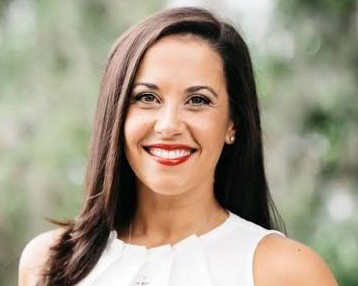
Maria Walls, Republican, 43, has lived in Bluffton since 2007 and has served as Beaufort County treasurer since 2015 after serving as deputy treasurer from 2011 to 2015. Walls graduated cum laude from Rider University with a bachelor’s degree in accounting and a Master of Accountancy with a minor in international business. She is a licensed certified public accountant and a Society for Human Resource Management Senior Certified Professional. Before joining the Treasurer’s Office, Walls worked as an accountant and auditor.
Beaufort County treasurer candidate Q&A
The Island News asked the two candidates for Beaufort County treasurer the same 10 questions ahead of the Nov. 3 general election. The questionnaire covered safeguarding public money, property tax collections, customer service, delinquent taxes and tax sales, technology, cybersecurity, transparency and the independence of the Treasurer’s Office.
The candidates’ complete responses appear below. Responses have been edited only for spelling, punctuation, grammar and AP style where necessary. The substance and intent of each candidate’s answers have been preserved.
1. What do you believe are the most significant challenges currently facing the Beaufort County Treasurer’s Office, and what would you do to address them?
Songer: Beaufort County is growing quickly, and the Treasurer’s Office must keep pace without weakening service or financial safeguards. The biggest challenges are increasing transaction volume, rising cyber and fraud risks, coordination across county offices, and maintaining public confidence in how money is collected, protected, invested and reported.
I would begin with a 90-day operational review covering controls, technology, staffing, customer service, banking relationships and unresolved audit findings. From that review, I would publish a practical improvement plan with clear owners and deadlines. I would also establish a quarterly, plain-language public report on collections, investments, service performance and key risks.
The core duty is straightforward: protect taxpayer dollars and provide reliable service. I would also review whether qualified local financial institutions are receiving a fair opportunity to compete for county business, while keeping safety, liquidity, return and state law as the controlling standards.
Walls: The most significant challenges facing the Treasurer’s Office are a growing population and talent acquisition and retention. Additionally, each of these challenges makes the other more difficult to address than if they were stand-alone challenges.
As treasurer, I have and will continue to take proactive steps to mitigate them so that our customers continue enjoying high-quality services from their Treasurer’s Office.
Talent acquisition and retention — When seeking employment opportunities, government is not the first place most candidates consider. Typically lower in pay than the private sector, less agile, and with a tendency to dehumanize its employees in exchange for bureaucratic consistency, attracting qualified candidates has become a challenge for every government. To further illustrate this challenge, millennials and Generation X currently make up 69% of the workforce and their average tenure is 2.5 and five years, respectively.
To address this challenge, I first focused on the nonmonetary improvements: team culture.
We began with culture surveys to gauge employee engagement, implementing their suggestions and addressing their challenges. We instituted consistent, intentional touchpoints through morning huddles and individual check-ins to increase employee engagement, effective communication and team unity. Lastly, we established a team culture statement that we operate under: Team First: Caring with purpose to set each other up for success.
As a result, our average tenure exceeds the national average and team engagement surveys demonstrate true buy-in and job satisfaction.
Next, in this past term, we completed a significant goal by creating a virtual operating manual where every process performed in our office has a documented procedure with tracked training metrics.
By intentionally focusing on culture and work environment, we have increased retention, and through the creation of our virtual operating manual, we have made onboarding and training more efficient and thorough.
Growing population — Operating in a highly desirable county with a growing population means additional customer volume, which has increased exponentially post-COVID.
Because of my preparation, our customers were the first in South Carolina to have e-billing available to them and the most convenient payment platform through myBeaufortCounty.
Serving a growing customer base successfully means balancing the adoption of new technologies and employee investment.
In the upcoming term, for the customers who enjoy virtual services, we will continue leveraging technology, such as upgrades to myBeaufortCounty and our customer service management platform, enabling us to serve more customers faster. For customers who enjoy in-person services, they will have the opportunity to give in-the-moment feedback on our team, ensuring we live out our commitment to a “team-first” culture that serves people, not transactions.
2. The Treasurer is responsible for collecting and safeguarding large amounts of public money. What internal controls, auditing practices and other safeguards do you believe are necessary to protect taxpayer funds and ensure errors, fraud or misuse are quickly identified?
Songer: The office needs controls that prevent problems and make them visible quickly. No single employee should be able to initiate, approve, record and reconcile the same transaction. Cash receipts, bank accounts, investments, refunds, wire transfers, vendor changes and access permissions should all have documented approval limits and independent review.
I would require daily balancing of collections, timely bank reconciliations, dual authorization for movement of funds, multifactor authentication, least-privilege system access, automated exception reports and a complete audit trail. Staff should receive recurring fraud and cybersecurity training, and sensitive duties should be cross-trained and periodically rotated.
Independent audits matter, and so does follow-through. Every finding should have a named owner, a deadline and public status reporting until it is resolved. The office should also maintain tested incident-response, backup and continuity plans so that a cyberattack or natural disaster does not interrupt collections or put public money at risk.
Walls: The Treasurer’s role is similar to a chief banking officer.
Prior to my joining the Treasurer’s Office, a significant fraud had been identified after many years of internal control comments being documented in Beaufort County’s Annual Comprehensive Financial Report by the external auditor.
Having previously been an auditor, I understand the significance of those comments as well as the importance of strong internal controls and auditing practices.
Within a year of joining the team, I had updated and resolved all of the internal control comments to such a degree that the external auditors were able to retest and remove those comments from the next ACFR.
Since then, internal controls and auditing have been ingrained into every process in the Treasurer’s Office. This includes, but is not limited to, multiple levels of review for any transaction, regular reconciliations and almost constant validation of our work. Our leadership also undergoes internal control and ethics training annually to ensure our practices are kept current.
In addition to strong internal controls and auditing practices, maintaining a clear separation of duties between the Treasurer’s Office and the Beaufort County Finance Department is key to protecting taxpayer funds and ensuring errors, fraud or misuse are detected.
In layman’s terms, the office responsible for receiving and safeguarding the cash is separate from the department responsible for spending it. This balance creates a system of checks and balances where no single person or office controls a dollar from start to finish, making errors easier to identify and misuse of funds harder to do.
This is most evident in the bank reconciliation process. Our team takes in funds, deposits them to the bank and records them to the general ledger. The Finance Department performs the bank reconciliation, reviewing our transactions and journal entries to confirm that they are accurate and the cash balances align with what is reported in the general ledger.
In contrast, the Finance Department must request dollars from the Treasurer’s Office prior to them being expensed.
What your readers may not know is that outside of certain requirements specified in South Carolina state law, the treasurer does not have the authority to audit or deny the spending decisions of Beaufort County government or any other government entity.
As long as the funding request submitted to our office is approved by an authorized member of Beaufort County government, I cannot withhold funding or inspect their expenses. A treasurer has no control over how or where Beaufort County government spends tax dollars.
It is the responsibility of the Beaufort County administrator and, indirectly, Beaufort County Council to ensure that their procurement and financial operations are sufficient to identify mistakes and deter fraud and misuse.
While the treasurer’s control or authority is limited in this area, my voters know that I am outspoken in their defense. It has prompted certain public comments and statements I’ve made over the years, shedding sunlight on otherwise unaddressed or unrecognized issues.
3. Property taxation involves the Assessor, Auditor and Treasurer, but taxpayers often experience it as a single system. What should the Treasurer’s Office do to improve coordination among those offices and prevent residents from being repeatedly redirected when trying to resolve a tax problem?
Songer: A taxpayer should not have to understand the county organization chart to solve a tax problem. The Assessor, Auditor and Treasurer have different legal responsibilities, but they should operate as one service system from the resident’s point of view.
I would work with the other offices to establish a shared intake and referral process, common service standards and a single case number that follows an issue until it is closed. A resident who contacts the wrong office should receive a warm handoff to a named person, not another phone number and a new explanation from the beginning.
The offices should maintain a shared knowledge base explaining who owns each type of problem, meet regularly to review recurring issues and track cases that cross office boundaries. Aggregate results should be published so the public can see response times, resolution rates and where the process is breaking down.
Walls: The Treasurer’s Office communicates almost constantly with both the Assessor’s and Auditor’s offices in service to our taxpayers.
The most significant improvement this past term was supporting the Auditor’s Office adoption and transition to the same customer service management platform that we use in the Treasurer’s Office. Our platform has allowed us to seamlessly handle over 850 customer interactions per day on average, with shorter response times and increased bandwidth to handle our growing customer base.
One of the most important customer-service metrics we monitor is our one-touch rate. Our one-touch rate is 95.3%, which means that 95.3% of our customers only needed to contact our office one time to get their matter resolved and did not need to contact us multiple times or be redirected repeatedly to another team.
It is my desire in the next term to support other Beaufort County departments, including the Assessor’s Office, that adopt this same technology.
4. The Treasurer’s Office has increasingly encouraged residents to manage and pay tax bills electronically, including through myBeaufortCounty.com. What additional technology or online services would you pursue, and how would you ensure residents who prefer or need in-person assistance continue to receive adequate service?
Songer: I would improve the online experience around the tasks residents actually need to complete: view a bill, understand why it changed, pay securely, receive a receipt, update contact information, request help and track the status of a problem. I would pursue opt-in email and text reminders, online appointment scheduling, clearer mobile access, accessible forms and plain-language explanations of fees and deadlines. Any new system should meet strong accessibility, privacy and cybersecurity standards before launch.
Technology should shorten lines, not close doors. The office must retain well-staffed in-person and telephone service, paper options and accommodations for residents with disabilities or limited internet access. During peak collection periods, I would use appointments, extended hours when warranted and cross-trained staff to reduce wait times. We should measure both digital performance and the quality of in-person service.
Walls: This is such an exciting question. As I mentioned above, to overcome the challenges associated with a growing population and employee recruitment, we invest in both our people and our technology.
Our vision statement is: People serving people, not transactions.
Because our vision focus is people, one improvement is never at the expense of another.
Our vision means adopting new technologies that improve virtual services, such as myBeaufortCounty, South Carolina’s first e-billing and payment platform for property taxes, and maintaining high-quality in-person services.
In my last term, we adopted a new customer service management platform that significantly improved the customer experience and drastically decreased wait times. It also included a customer satisfaction function through which customers can leave a review and satisfaction score directly in the platform. In addition to many other helpful metrics, giving taxpayers the opportunity to rate the government serving them is unheard of in public service and reflects my genuine desire to serve our customers well. I’m proud to share that our customer satisfaction rating is 96.4%.
In my next term, we will be implementing a similar customer satisfaction tool for in-person services and upgrading our customer service platform. This upgrade is being offered without additional cost or additional staffing requirements and will allow a more robust Help Center as well as faster customer response times, both being important tools in addressing our growing customer base.
5. When property taxes become delinquent, the consequences can ultimately include the sale of a taxpayer’s property. How should the Treasurer’s Office balance its legal responsibility to collect delinquent taxes with making sure property owners receive adequate notice and reasonable opportunities to resolve their debts before a property is sold?
Songer: A tax sale should be the end of a thoughtful, documented process, not the first time an owner understands the seriousness of the problem. People first. Not process first. The office must follow every notice and timing requirement in state law, preserve proof that each step occurred and make every lawful opportunity to pay or redeem easy to understand.
I would supplement required notices with plain-language letters, opt-in phone, email and text reminders, address verification and clear online information showing the amount due, the next deadline and where to get free help. Outreach should begin early, with special attention to heirs’ property, older homeowners, people with disabilities and families facing a temporary hardship. Partnerships with legal aid, housing and land-preservation organizations can help residents understand their options without changing the Treasurer’s legal obligations.
Collection must be consistent and fair. It can also be humane, transparent and focused on preventing avoidable loss of a home or family property. The sale of a taxpayer’s property should be the very last option.
Walls: The majority of our operations are dictated by South Carolina state law, none more than the pursuit of delinquent property taxes. Following the law is not optional.
When considering this question, something I often tell our team comes to mind: Oftentimes, what we do matters just as much as how we do it.
We must comply with the requirements of state law, such as physically posting a sign on a delinquent property at risk of being auctioned or ensuring that every required delinquent notice is sent to a delinquent property owner. Things like the dates penalties are applied, the notification timing and requirements, who is entitled to an overage, and how long a property owner has to resolve their debt or redeem their property from auction are not matters at the discretion of the treasurer. They are all dictated by state law. We are the administrator of the process.
Where we can offer “balance” or a “people serving people” approach is not what we do, because we must comply with state law, but how we fulfill the responsibilities state law assigns to us.
The two most important aspects of this balance are maintaining public trust and seeking every opportunity for communication.
Maintaining public trust — Maintaining public trust is more than positive media coverage or the avoidance of negative media coverage. For us, it is the trust at the individual level, that each customer who experiences the delinquency process can be assured and trust that their matter is being handled equitably and consistently with other customers in their same position.
For example, if an error occurs in the taxation or delinquent processes for a property auctioned at the tax sale, I have the authority to void the sale. Prior to my joining the Treasurer’s Office, there were over 250 voids per year due to deficient processes and procedures. This generated a significant level of distrust year after year, particularly in our heirs’ property communities.
I implemented validation and review mechanisms in all of our delinquent processes to ensure we are 100% accurate, and I have spent countless hours in the community, meeting and presenting information on how to navigate the delinquent process. It’s important to me that our citizens know that administering the process does not mean we are against them, that we will do anything to help.
Today, we have not had more than one void per year, with the associated errors occurring outside the Treasurer’s Office, and customers are able to trust our work and services.
Communication is key — In Beaufort County, the majority of unpaid balances are not due to an inability to pay but a communication breakdown.
South Carolina requires all delinquent notifications to be sent through the United States Postal Service, an increasingly unreliable service. Only in recent years were we permitted by state law to offer an e-billing option for the initial bills, which I am proud to have helped author along with Sen. Chip Campsen.
Customers utilizing e-billing become delinquent at a much lower rate. An account is more likely to go unpaid when the taxpayer is receiving their bill through USPS.
The USPS is a separate entity and no other government entity, including the Treasurer’s Office, can accept responsibility for the USPS’ functions.
What we can and have done is take proactive steps to mitigate the effects on our customers’ experience:
- For customers who select it, e-billing and push notifications offer electronic delivery of bills as well as regular reminders when the balance remains outstanding.
- USPS tracking bar codes on remittance envelopes so we can track your mailed payment if it gets lost.
- Certified affidavits that every tax bill was provided to the USPS for delivery.
- Physically posting every delinquent property in the event the mailed notice was not received successfully.
- Proactive public service announcements and social media announcements about important dates, billing events and reminders to update mailing addresses so they are kept current.
In my next term, we will be adding an additional billing between the annual tax bill mailing in November and the delinquent bill mailed in April so our customers will have another reminder to pay before additional penalties accumulate.
6. When property sold at a delinquent tax sale brings more than the taxes, penalties and costs owed, the remaining money may belong to the former owner or another eligible claimant. What should the Treasurer’s Office do to identify and notify people who may be entitled to those funds, process legitimate claims promptly and protect property owners from fraud or exploitation by third parties?
Songer: South Carolina law requires written notice of excess proceeds after a tax deed is issued. I would treat that requirement as the starting point. The office should maintain a searchable list of unclaimed overages, send clear direct notices, repeat outreach before the five-year deadline and make the claim form easy to find. It should also use phone, email or text outreach when reliable contact information is available.
Claims should have a published checklist, tracking number, service target and secure verification of identity, ownership, assignments and competing claims. The office should report outstanding overages, average processing time and amounts paid.
The county should warn residents that official help is free and urge owners to call before signing an assignment or paying a fee.
Walls: This is another area dictated by South Carolina state law and not determined by the Treasurer’s Office.
The funds you are referring to are called “overage money.” State laws require that those entitled to these funds be notified and issued the funds once the claimant requests them.
By law, we cannot resolve ownership matters, such as heirs’ property matters, or issue the money without the claimant first requesting it.
To ensure this happens smoothly and successfully, we contact the eligible property owner to explain the steps required to claim the funds and that there is no cost to claim their funds.
Exploitation from “money finding” third parties is a risk to any property owner with overage money. The Treasurer’s Office will not issue overage money to these entities without the express consent of the property owner via a signed agreement, and the check issued will be in both the name of the property owner and the third party, never just in the name of the third party.
While the Treasurer’s Office has reported many of these third-party entities to law enforcement, thus far, none have appeared to violate state law. Unfortunately, once a property owner signs a contract with one of these entities, there is nothing our team can do to intervene.
The most effective way to safeguard our residents is through proactive education. Our primary defense has been a relentless focus on public service announcements and transparent outreach, utilizing countless public meetings, social media and community newsletters to ensure our taxpayers are informed, alert and fully protected.
7. Beaufort County continues to grow, increasing both the number of taxpayers the office serves and the amount of public money it handles. How should the Treasurer’s Office prepare for that growth in terms of staffing, technology, cybersecurity and financial controls?
Songer: Growth should be planned for with data. I would build a multiyear capacity plan based on parcel count, payment volume, call volume, delinquency workload, peak-season demand and system risk. That plan would identify where the office needs more staff, where cross-training or temporary peak support makes more sense, and where technology can remove repetitive work without reducing personal service.
Technology upgrades should be phased, tested and built around reliable interfaces with the Assessor, Auditor, Finance Department, banks and payment providers. Cybersecurity should include multifactor authentication, least-privilege access, endpoint monitoring, encrypted backups, vendor-risk reviews, penetration testing and practiced incident-response plans. Financial controls must scale with volume, including automated exception reporting, dual approvals, reconciliations and independent review.
Walls: To continue my response to Question 1, we will:
- Continue investing in the resiliency of our team and operations. This means using technology to replace processes and tasks that do not require a human touch while keeping the personal touch and “people serving people” vision that our team is known for.
- Through our innovation team and technology upgrades in this next term, continue identifying areas our processes and services can evolve. This may mean eliminating redundant or no longer needed steps, or leveraging technology to perform a manual task faster or more efficiently.
- Maintain strong cybersecurity standards. Cybersecurity generally falls under the Beaufort County Information and Technology Department, not the Treasurer’s Office. However, where we influence this area is through regular staff training on financial scams and negotiating strong contractual standards that our vendors must comply with.
- Continue safeguarding Beaufort County’s tax dollars. With the implementation of new tax software in my next term, along with growing funds under management, financial controls will remain at the forefront of our decisions. Beyond this, there will be additional transparency tools that will be available on demand to the public as a result of this transition.
8. What information should the Treasurer’s Office routinely make available to the public about tax collections, delinquent taxes, investments, office performance and the public funds under its control?
Songer: The public should receive a quarterly report that is understandable without an accounting background. It should show amounts billed and collected, collection rates, delinquent balances and trends, tax-sale and redemption activity, and unclaimed overages, while protecting taxpayer privacy.
Investment reporting should include balances by institution and investment category, maturities, liquidity, yield, interest earned, performance against an appropriate benchmark and compliance with the adopted investment policy. The office should never publish account numbers or security details that create risk.
Operational reporting should include call response, office wait times, case-resolution time, payment system availability, refunds, errors, audit findings and progress on corrective actions. I would also hold monthly public office hours so residents and small-business owners can ask questions and identify problems that may not appear in a spreadsheet.
Walls: Every single dollar under our control, including tax collections, delinquent properties, county investments and our own office performance metrics, belongs to the public and is readily accessible throughout the year.
Over the last 15 years, we have completely modernized how we deliver this data based on the needs of our customers. Historically, our office posted a static monthly update on a website. Today, with our site drawing over 30,000 visits a month, we have shifted to a multichannel approach. We routinely publish our investment yields and fund balances through comprehensive county reports, push out real-time collections and investments data via targeted social media campaigns, and maintain up-to-date performance metrics.
In my upcoming term, my goal is to keep expanding these proactive transparency tools with more on-demand data as a result of our upcoming tax software transition.
9. The Treasurer is independently elected but must work closely with County Council, county administration and other elected officials. How would you maintain the independence of the Treasurer’s Office while still working effectively with the rest of county government, particularly when disagreements arise over finances, staffing or policy?
Songer: The Treasurer’s independence is a safeguard for taxpayers, but independence does not mean isolation. I would maintain regular working meetings with County Council, administration, the Assessor, the Auditor and Finance so that issues are identified early and responsibilities are clear.
When disagreements arise, I would start with the law, written policy, verified financial data and the office’s duty to safeguard public funds. I would document the issue, the available options, the risks and my recommendation. If necessary, I would seek formal legal, audit or outside professional guidance. I would not allow political pressure to override controls or fiduciary duties.
My approach would be direct and professional: work toward a solution, avoid surprises and explain the decision publicly when the public’s money or service is affected. Collaboration is essential, but the Treasurer must be willing to say no when a proposal is unlawful, unsafe or financially unsound.
Walls: South Carolina state law intentionally establishes a balance of power between the county and the independently elected officials.
My taxpayers are my boss. They are who I am accountable to and work for.
While I am collaborative, communicate professionally and share transparently with County Council and county administration, my ultimate duty is to serve my taxpayers and protect public funds. This independence creates checks and balances that protect the public and their tax dollars.
When the actions or interests of the county diverge from or actively compromise the statutory duty of your elected office, it is their responsibility to stand firm, especially in an environment that has had the extreme turnover in leadership Beaufort County government has experienced for the past decade.
Maintaining professional working relationships in the midst of disagreement ensures that we operate productively while fiercely upholding the separation of powers that protects our taxpayers and citizens.
This was illustrated best when the Treasurer’s Office recently ensured a missed payroll would still be processed timely for Beaufort County’s employees.
10. What distinguishes you from the other candidate seeking this office and why should Beaufort County voters choose you to serve as County Treasurer?
Songer: I bring a different kind of experience to this office. For more than 25 years, I have built and advised financial technology and payments companies, managed capital, worked with banks, built controls and created jobs. I also serve Beaufort County through an appointed board, my church and the Interfaith Alliance of South Carolina.
I respect the work already being done in the Treasurer’s Office. I am running because I believe the office can be more transparent, connected to residents and intentional about keeping Beaufort County dollars working here at home. Within state law and sound fiduciary practice, I would give qualified local institutions a fair opportunity to compete and use the office’s convening power to advance the proposed Stronger Beaufort Fund for essential-worker housing and small-business capital. That requires partnership with County Council, financial institutions and community organizations; the Treasurer cannot create it alone.
Voters should choose me if they want an independent, experienced builder who will protect our residents first, measure performance transparently, speak plainly and make public money serve the public.
Walls: Experience and proven results.
I have a deep understanding of public finance laws, policies and procedures surrounding the Treasurer’s Office and have had an active hand in crafting and administering them for 15 years in a manner that puts customers first.
This understanding can’t be obtained overnight.
The biggest difference between myself and an unproven alternative comes down to measurable results.
Beaufort County voters already know my work and the successes I’ve delivered for Beaufort County. They do not have to guess what kind of treasurer I will be.
My track record speaks for itself. I took an office mired in scandal, void of public trust, and transformed it into an award-winning team that receives a 96.4% satisfaction rating from the taxpayers and voters we serve.
I ask for your continued vote and support to keep protecting your tax dollars and serving our community.
Delayna Earley, who joined The Island News in 2022, formerly worked as a photojournalist for The Island Packet/The Beaufort Gazette, as well as newspapers in Indiana and Virginia. She can be reached at delayna.theislandnews@gmail.com.