
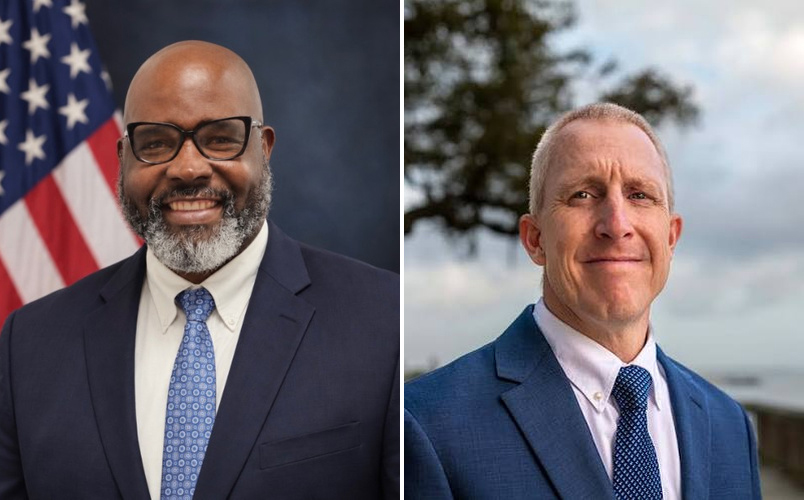
Candidates differ on immigration enforcement, the agency’s next chapter while finding common ground on violent crime, transparency, community trust
By Delayna Earley
The Island News
Beaufort County voters will choose a new sheriff in November for the first time in nearly three decades, and the two candidates seeking the job are offering different approaches to what should come next for the Beaufort County Sheriff’s Office.
Republican Doug Seifert and Democrat Alphonso Small Jr. responded to a questionnaire from The Island News addressing violent crime, staffing, immigration enforcement, surveillance technology, community trust, spending and transparency.
Their responses reveal some significant policy differences, particularly over federal immigration enforcement, but also areas where their proposed approaches are similar.
Violent crime and prevention
Both candidates said the Sheriff’s Office needs to do more to identify potential violence before it happens.
Seifert identified growth and traffic, violent crime and staffing as the county’s three most significant public safety challenges. He proposed regularly analyzing repeat locations, violent offenders, illegal firearms and recurring disputes to identify patterns that could warrant intervention.
Small identified violent crime and unresolved cases, keeping resources aligned with population growth, and building community trust as his top concerns. He said he would strengthen intelligence gathering and information sharing while focusing enforcement on violent offenders and illegally possessed firearms.
Following major incidents such as the October 2025 mass shooting at Willie’s Bar and Grill on St. Helena Island and the July 4 shooting at Coligny Beach, both candidates said they would conduct after-action reviews and improve the way information about threats and recurring conflicts is shared.
Seifert proposed a regular violence-review process involving patrol, investigators, crime analysts and partner agencies. Small similarly called for stronger information sharing among deputies, investigators, municipal departments, SLED, federal agencies and community organizations.
A divide over 287(g)
One of the clearest differences between the candidates is the Sheriff’s Office’s participation in U.S. Immigration and Customs Enforcement’s 287(g) program.
Seifert said he supports continuing the agreement, subject to a review of its training, costs, oversight and results.
He said federal immigration enforcement should remain primarily a federal responsibility and cautioned that participation should not interfere with local policing or result in witnesses or victims being treated differently because of their perceived immigration status.
Small said he would end the agency’s voluntary participation in the current 287(g) Task Force Model “to the fullest extent permitted by law.”
Small said BCSO should continue cooperating with federal agencies on criminal warrants, violent offenders, human trafficking, drug trafficking and other criminal investigations, but argued local deputies should not voluntarily take on broader federal immigration enforcement duties.
Technology, privacy, transparency
The candidates were closer in their approaches to automated license plate readers.
Both support continuing to use the technology for legitimate investigations while requiring documented reasons for searches, audits of how the systems are used and limits on how long information is retained.
Seifert said searches should be logged and access restricted based on an employee’s role, while Small said every search should create an audit record and supervisors should regularly review use of the system. Both said the public should receive more information about policies governing the technology.
They also offered similar views on transparency following shootings, deaths, uses of force and other major incidents.
Seifert said the public should receive verified information quickly, including an explanation of what cannot yet be released and why. Small said “silence should not be the default,” calling for initial factual statements, continuing updates and explanations when information must legally remain confidential.
Community trust and Heritage Days
Both candidates also said cultural and community events should be evaluated using consistent, written standards.
Seifert said Heritage Days at Penn Center should receive the same advance planning and professional communication as major events elsewhere in Beaufort County. He also proposed a Community Engagement Team and said he would examine the need for a St. Helena-area substation or another way to increase BCSO’s presence north of the Broad River.
Small proposed assigning BCSO liaisons to major recurring events and establishing written criteria based on attendance, traffic, security, emergency access and staffing. He also said senior leadership should maintain relationships with communities throughout the year, rather than appearing only during emergencies.
What comes next
The candidates’ backgrounds help frame perhaps their biggest difference in how they would approach taking over the agency.
Seifert said his 20 years inside BCSO give him an understanding of the employees, systems and partnerships the next sheriff will inherit. He said he would preserve the agency’s accreditation, forensic laboratory, victim advocacy, emergency management capabilities and interagency partnerships while reviewing staffing, workload, technology and policies during his first 100 days.
Small described his experience across several law enforcement agencies as providing an outside perspective. He said his first 100 days would include a comprehensive review of staffing, overtime, command structure, finances, contracts, equipment, training and policies, along with the creation of a Citizens Advisory Committee and regular community meetings.
The Nov. 3 election will determine who succeeds Sheriff P.J. Tanner, who announced earlier this year that he would not seek another term after serving as sheriff since 1999.
Complete responses from both candidates are below.
Beaufort County Sheriff candidates
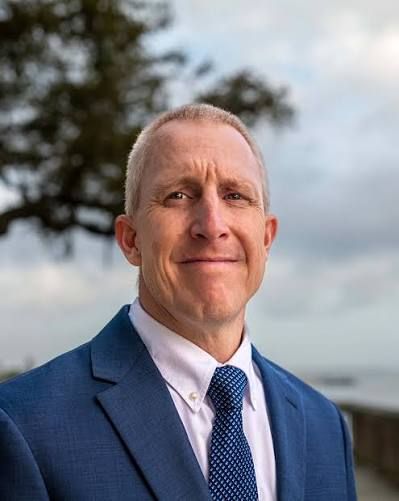
Doug Seifert, Republican, is a former law enforcement officer who spent more than 30 years with the Beaufort County Sheriff’s Office. He began his career with the Sheriff’s Office in 1991 and retired in 2022 as a captain. During his career, Seifert served in patrol, investigations and supervisory and command positions. He earned a bachelor’s degree in criminal justice from the University of South Carolina Beaufort and is a graduate of the FBI National Academy.
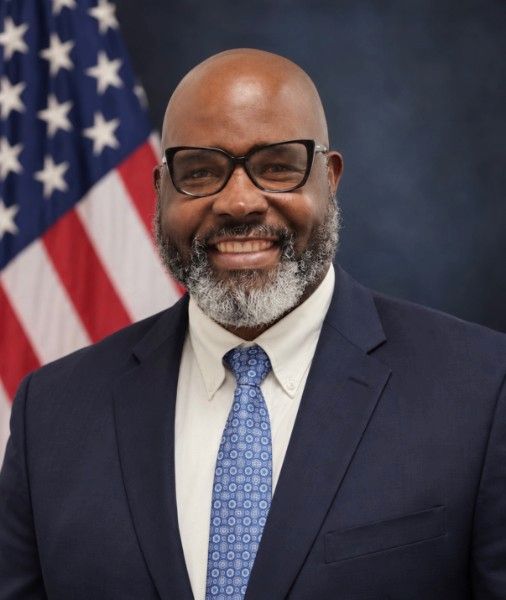
Alphonso Small Jr., Democrat, 53, is a Beaufort County native and retired law enforcement officer with more than three decades of experience. Small spent much of his career with the Beaufort County Sheriff’s Office and also served as police chief for the Town of Yemassee. He has held positions in patrol, investigations and command and has experience overseeing law enforcement operations and personnel.
Beaufort County sheriff candidate Q&A
The Island News asked the two candidates for Beaufort County sheriff the same 10 questions ahead of the Nov. 3 general election. The questionnaire covered violent crime, staffing and retention, immigration enforcement, surveillance technology, community trust, transparency, Heritage Days and the future direction of the Beaufort County Sheriff’s Office.
The candidates’ complete responses appear below. Responses have been edited only for spelling, punctuation, grammar and Associated Press style where necessary. The substance and intent of each candidate’s answers have been preserved.
1. Beaufort County has experienced several high-profile violent crimes in recent years, including shootings and homicides in both northern and southern Beaufort County. What would be your strategy for reducing violent crime, particularly gun violence, and what changes, if any, would you make to the Sheriff’s Office’s current approach?
Seifert: Reducing violent crime requires a focused, intelligence-led strategy that combines proactive enforcement with strong community partnerships. My approach would prioritize identifying the small number of individuals and groups responsible for the majority of violent crime and using every lawful investigative tool available to disrupt their activity.
I would strengthen coordination between patrol, investigations, narcotics and intelligence so information moves quickly and officers are working from the same picture. I would also expand partnerships with municipal police departments, state agencies and federal partners when cases cross jurisdictions or involve organized criminal activity.
Gun violence cannot be addressed by simply making more traffic stops or increasing arrests across the board. We need to focus resources on repeat violent offenders, illegal firearms, gang-related activity and individuals who are driving violence in our communities.
I would also place a strong emphasis on solving violent crimes. A high clearance rate is one of the most effective deterrents because offenders need to know that if they commit a violent crime in Beaufort County, they are likely to be identified and held accountable.
At the same time, law enforcement cannot solve violent crime alone. Building relationships with neighborhoods, churches, schools, businesses and community organizations is essential. Residents are more likely to provide information and cooperate with investigators when they trust the agency and the deputies serving their community.
My goal would be a Sheriff’s Office that is proactive, intelligence-driven and highly visible while maintaining strong relationships with the people we serve.
Small: My strategy for reducing violent crime would focus on prevention, intelligence, accountability and community partnerships. We have to identify the individuals who are driving violent crime and focus our resources on them instead of relying on broad enforcement strategies that can damage trust with the community.
I would strengthen our intelligence capabilities and improve communication between patrol, investigators and specialized units so deputies have the information they need before violence occurs. I would also work closely with municipal police departments and state and federal agencies because criminals do not recognize jurisdictional boundaries.
Gun violence requires particular attention. We need to focus on illegal firearms, stolen weapons, repeat violent offenders and individuals using firearms in the commission of crimes. We also need to address modified firearms and devices that make weapons more dangerous.
At the same time, prevention has to be part of the strategy. That means working with schools, churches, youth organizations and community leaders to reach young people before they become involved in violent activity.
The Sheriff’s Office must also maintain strong relationships with residents. People have to trust law enforcement enough to call us, talk to investigators and provide information. Community trust is not separate from crime fighting. It is one of the most important tools we have.
2. Recruiting and retaining qualified deputies has become a challenge for law enforcement agencies across the country. What would you do to improve recruitment, retention, morale and staffing within the Beaufort County Sheriff’s Office?
Seifert: Recruitment and retention begin with creating an organization where people want to work and stay. Competitive compensation is important, but pay alone will not solve the problem.
Employees need to know they are valued, supported and given opportunities to grow. I would review the agency’s promotional process, training opportunities, specialty assignments and leadership development to make sure employees see a future for themselves within the Sheriff’s Office.
I also believe supervisors play a major role in retention. Employees do not usually leave organizations; they leave poor leadership. We need to make sure supervisors are properly trained, held accountable and capable of leading people, not simply managing schedules.
Recruitment should also become more proactive. The Sheriff’s Office should build stronger relationships with local schools, colleges, military installations and community organizations to identify potential employees early. Beaufort County has a tremendous military population, and transitioning service members represent an excellent recruitment opportunity.
We also need to look at workloads, schedules, equipment and administrative burdens that contribute to burnout. If we want to retain experienced deputies, dispatchers, detention officers and civilian employees, we have to listen to them and address the issues affecting their daily work.
My goal would be to make the Beaufort County Sheriff’s Office an agency where qualified people actively want to build a career.
Small: Recruitment and retention are among the most important challenges facing law enforcement today. We cannot provide the level of service our residents expect if we cannot recruit and keep qualified employees.
Compensation has to remain competitive, but employees also need to feel respected and supported. I would create an environment where employees know their leadership listens to them and where decisions are made fairly and consistently.
I would review promotional opportunities, specialty assignments and training to make sure employees have a clear path for advancement. We should be developing leaders from within the organization instead of waiting until positions become vacant.
Recruitment also needs to be broader and more creative. We should work with local high schools, technical colleges, universities and military installations to introduce people to careers in law enforcement. Beaufort County’s military community gives us a tremendous pool of disciplined, experienced people who may be interested in continuing public service after leaving the military.
Morale comes from leadership. Employees need to know their sheriff will support them when they do their jobs correctly and hold them accountable when they do not. I would lead by being visible, accessible and willing to listen to employees at every level of the organization.
3. Immigration enforcement has become an increasingly prominent issue for local law enforcement agencies. What role, if any, should the Beaufort County Sheriff’s Office play in enforcing federal immigration law, and under what circumstances should the agency cooperate with federal immigration authorities?
Seifert: The primary responsibility of the Beaufort County Sheriff’s Office is enforcing South Carolina law and protecting the people of Beaufort County. Immigration law is primarily a federal responsibility.
The Sheriff’s Office should cooperate with federal agencies when there is a lawful request, warrant or investigation involving someone who presents a public safety threat. If an individual is involved in violent crime, drug trafficking, human trafficking or other serious criminal activity, we should work with our federal partners just as we would in any other criminal investigation.
At the same time, local deputies should not be acting as immigration agents during routine calls for service or traffic stops. Victims and witnesses need to feel comfortable contacting law enforcement regardless of their immigration status. If people are afraid that calling the Sheriff’s Office will result in immigration consequences, crimes will go unreported and offenders will benefit.
My focus would be public safety. We will cooperate with federal authorities when appropriate and lawful, but the Sheriff’s Office’s resources should remain focused on protecting Beaufort County residents and enforcing state and local laws.
Small: Immigration enforcement is primarily the responsibility of the federal government. The Beaufort County Sheriff’s Office should focus on enforcing state law and protecting everyone who lives in or visits our county.
I would cooperate with federal immigration authorities when required by law, when there is a valid warrant or when an individual presents a serious public safety threat. If someone is involved in violent crime, human trafficking, drug trafficking or other serious criminal activity, we should work with our federal partners.
However, I do not believe deputies should be stopping people simply to determine their immigration status. That is not the role of local law enforcement, and it can damage the trust we need from immigrant communities.
Victims of domestic violence, witnesses to crimes and people who need emergency assistance must feel safe calling the Sheriff’s Office. If they believe contacting law enforcement could result in deportation for themselves or a family member, they may remain silent, and that makes the entire community less safe.
My policy would be based on public safety, the law and common sense.
4. The Beaufort County Sheriff’s Office uses technology such as Flock Safety license plate reader cameras as an investigative tool. What limits or safeguards should be in place when the Sheriff’s Office uses surveillance technology, and how would you balance its usefulness in solving crimes with residents’ privacy concerns?
Seifert: Technology such as automated license plate readers can be a valuable investigative tool when used properly. They can help locate stolen vehicles, identify vehicles connected to serious crimes and provide investigators with information that may otherwise take days or weeks to develop.
But technology must be used within clear policies and with appropriate oversight.
Access to the system should be limited to authorized personnel for legitimate law enforcement purposes. Every search should be logged and subject to supervisory review. Data should only be retained for a reasonable period consistent with law enforcement needs, and the agency should have clear rules governing when information can be shared with other agencies.
The public should also know what technology the Sheriff’s Office is using and generally how it is being used. Operational details that would compromise investigations should remain protected, but residents should not have to discover after the fact that new surveillance tools have been deployed in their community.
I support using technology to make deputies more effective, but technology should never replace constitutional protections or accountability.
Small: Technology can make law enforcement more effective, but it must be used responsibly and transparently.
Flock cameras and other license plate reader systems can help solve crimes, locate stolen vehicles and identify suspects. They are useful tools, but residents have legitimate concerns about how much information is collected, how long it is stored and who can access it.
I would require clear written policies governing the use of surveillance technology. Access should be limited to trained and authorized employees, searches should be connected to legitimate law enforcement purposes, and there should be an audit trail showing who accessed the system and why.
Data should not be retained indefinitely. The Sheriff’s Office should establish reasonable retention periods and ensure information is not shared outside legitimate law enforcement purposes.
I also believe the Sheriff’s Office should be transparent with the public about the technologies it uses. People should understand what these systems do and what safeguards are in place.
Technology should help us solve crimes, not create unnecessary surveillance of law-abiding residents.
5. Community trust is essential to effective law enforcement, but different communities within Beaufort County can have very different relationships with the Sheriff’s Office. What would you do to strengthen trust between deputies and the communities they serve, particularly communities that may historically have been distrustful of law enforcement?
Seifert: Trust is built through consistent actions, not slogans or occasional community events.
Deputies need to be visible in neighborhoods when something is not wrong. That means attending community meetings, visiting schools, talking with business owners and getting to know residents outside of enforcement situations.
I would encourage deputies to take ownership of the communities they serve. When possible, deputies should work consistent geographic areas so residents know who their deputies are and deputies understand the neighborhoods, businesses and people they serve.
Leadership also needs to be visible. As sheriff, I would regularly attend community meetings throughout Beaufort County and create opportunities for residents to speak directly with me and members of the command staff.
Trust also requires accountability. When employees make mistakes, the Sheriff’s Office needs to address them honestly. When allegations against deputies are unfounded, the agency should also be willing to explain the facts.
The standard has to be the same throughout Beaufort County. Every resident should receive professional and respectful treatment regardless of where they live, their background or their relationship with law enforcement.
Small: Community trust is built through relationships, consistency and respect.
Law enforcement cannot only appear in a neighborhood when something bad happens. Deputies need to be present at community meetings, schools, churches, youth events and neighborhood gatherings. People need opportunities to know the deputies who serve them as individuals, not just as uniforms arriving during a crisis.
I would strengthen community policing and encourage deputies to work consistently in the same areas when possible. That allows them to learn the community and allows residents to become familiar with them.
As sheriff, I would also make myself accessible. I would attend community meetings throughout Beaufort County and listen directly to residents about their concerns.
Accountability is another part of trust. When a deputy does something wrong, the public needs to know that the matter will be investigated fairly. At the same time, deputies who do their jobs properly deserve the support of their leadership.
I have spent my career working with people from every part of Beaufort County. I understand that trust has to be earned, and it can be lost very quickly. My administration would make building and maintaining that trust a priority every day.
6. Transparency and accountability are recurring concerns for law enforcement agencies. What information should the Sheriff’s Office proactively make available to the public, and how would your administration handle complaints, use-of-force incidents and allegations of misconduct involving deputies?
Seifert: Transparency strengthens public confidence when it is balanced with the need to protect active investigations, victims and employee rights.
The Sheriff’s Office should proactively publish information such as crime statistics, annual reports, use-of-force data, complaint statistics, agency policies where appropriate and information about significant incidents once releasing that information will not compromise an investigation.
Complaints against employees should be documented and investigated consistently regardless of the employee’s rank or assignment. Residents need a clear and accessible process for filing complaints, and employees need to know investigations will be fair and based on evidence.
Serious use-of-force incidents and allegations involving criminal conduct should be reviewed independently when appropriate. There are situations where SLED or another outside agency should conduct the investigation to avoid even the appearance of a conflict of interest.
Body-worn cameras are also an important accountability tool, but footage must be handled in accordance with state law and with consideration for victims and ongoing investigations.
My standard would be simple: Protect legitimate confidential information, but do not use confidentiality as an excuse to avoid accountability.
Small: The public has a right to know how its Sheriff’s Office operates and how deputies are held accountable.
I would make crime statistics, use-of-force information, complaint data, annual reports and appropriate agency policies easily available to the public. When major incidents occur, the Sheriff’s Office should provide accurate information as quickly as possible without compromising an investigation or the rights of those involved.
Complaints against deputies should be taken seriously and investigated consistently. The process should be easy for residents to understand and access. No employee should receive special treatment because of rank, position or personal relationships.
When an incident involves a deputy’s use of deadly force or allegations of criminal misconduct, I believe an independent agency should investigate whenever appropriate. That protects both the public and the deputy by ensuring the investigation is viewed as impartial.
Body cameras are also important. They protect citizens, protect deputies and provide evidence when accounts of an incident differ.
Transparency does not mean releasing information that could harm a victim or compromise an investigation. It means being as open as the law and circumstances allow and explaining when information cannot yet be released.
7. The Sheriff’s Office has faced questions about its presence and relationships at community events, including Heritage Days on St. Helena Island. What role should the Sheriff’s Office play at major cultural and community events, and how would you ensure law enforcement support is provided fairly and consistently across Beaufort County?
Seifert: The Sheriff’s Office has a responsibility to provide public safety support throughout Beaufort County, including at major cultural and community events.
The level of support should be based on objective factors such as expected attendance, traffic needs, previous incidents, security concerns and requests from event organizers. Decisions should not be based on politics, personalities or which part of the county is hosting the event.
Heritage Days is an important cultural event on St. Helena Island that draws large crowds and visitors from throughout the region. The Sheriff’s Office should work with organizers in advance to identify traffic, security and emergency-response needs just as it would for other large events.
I would establish clear criteria for determining when and how the agency provides event support so organizers understand what assistance is available and why.
Community events are also an opportunity for deputies to build relationships with residents outside of enforcement situations. When staffing allows, I want deputies participating in these events, meeting people and becoming part of the communities they serve.
Fairness means applying the same standards throughout Beaufort County and making decisions based on public safety needs.
Small: The Sheriff’s Office serves all of Beaufort County, and its support for community events should reflect that.
Events such as Heritage Days are important not only because of the number of people they attract but because of their cultural significance to the communities that host them. The Sheriff’s Office should work with organizers before major events to determine what assistance is needed for traffic, security and emergency response.
Those decisions should be made consistently. The agency should have clear criteria based on attendance, public safety needs, traffic impact and other objective factors rather than personal or political considerations.
I also believe deputies should participate in community events when possible. Those events provide an opportunity for residents to interact with law enforcement in a positive environment and help build relationships that can benefit both the community and the Sheriff’s Office later.
Every community in Beaufort County should know that the Sheriff’s Office is there to serve it.
8. Beaufort County includes multiple municipal police departments as well as military, state and federal law enforcement agencies. How would you approach cooperation and information-sharing with those agencies, and are there areas where you believe coordination should improve?
Seifert: Criminal activity does not stop at jurisdictional boundaries, so cooperation between agencies is essential.
I have spent my career working with municipal, state, federal and military law enforcement partners, and I would make those relationships a priority as sheriff.
We should have strong information-sharing systems and regular communication between agency leaders, investigators and specialized units. When agencies are investigating related crimes or the same individuals, they should know it quickly.
Joint training is another area where we can improve coordination. Agencies that may respond together to critical incidents should train together before those incidents happen. That includes active threats, major disasters, pursuits, mass-casualty events and other situations requiring a coordinated response.
We also need to avoid unnecessary duplication. Specialized equipment, training and personnel are expensive. When appropriate, agencies should share resources rather than every department trying to build the same capability independently.
The Sheriff’s Office should be a reliable partner and a leader in regional cooperation.
Small: Cooperation between law enforcement agencies is critical in Beaufort County.
We have municipal police departments, state agencies, federal agencies and military law enforcement operating within or near the county. Criminals move between jurisdictions, and information needs to move just as quickly.
As sheriff, I would maintain regular communication with the chiefs of our municipal departments and with state, federal and military partners. Investigators and intelligence personnel should have strong working relationships so information about suspects, crime patterns and emerging threats is shared quickly.
I also support joint training and exercises. When agencies are going to respond together during a major incident, they should already understand each other’s procedures and capabilities.
We should also look for opportunities to share specialized resources and equipment rather than unnecessarily duplicating expensive capabilities.
The sheriff has an important role in bringing agencies together. Personal relationships between leaders matter, and I would make regional cooperation a priority.
9. The sheriff is both the leader of a large law enforcement agency and an elected official. How would you ensure operational decisions are based on public safety and professional law enforcement standards rather than politics, personal relationships or outside pressure?
Seifert: The sheriff has to remember that the authority of the office belongs to the public, not to the person holding it.
Operational decisions should be based on law, policy, evidence and public safety. Hiring, promotions, assignments, investigations and enforcement decisions should not depend on political support, personal relationships or campaign activity.
I would establish clear expectations for the command staff and supervisors and hold them accountable for applying policies consistently.
I also believe the sheriff has to be willing to say no, including to political allies, influential individuals or organizations, when a request is inappropriate or would interfere with the professional operation of the agency.
Transparency helps protect against political influence. When policies are clear, processes are documented and decisions can be explained, it becomes more difficult for favoritism to take hold.
I have spent more than three decades in law enforcement, and I understand that credibility can take years to build and only one poor decision to damage. My responsibility as sheriff would be to the law and to the people of Beaufort County.
Small: The sheriff must serve everyone in Beaufort County, not a political party, campaign supporters or a particular group.
Operational decisions should be based on the law, public safety, agency policy and professional standards. Politics should never determine who is investigated, who is arrested, who is promoted or how resources are assigned.
I would establish clear policies and make sure they are applied consistently. Hiring and promotions should be based on qualifications, performance and experience.
The sheriff also has to be willing to resist outside pressure. There will always be people who believe their position, relationship or political support should give them special access or influence. It is the sheriff’s responsibility to protect the integrity of the office.
I have served in leadership positions where difficult decisions had to be made, and I understand the importance of treating people fairly even when that decision is unpopular.
The badge does not belong to a political party. It represents the entire community.
10. What do you believe distinguishes you from your opponent, and what should Beaufort County voters know about the kind of sheriff you would be and the direction you would take the Sheriff’s Office over the next four years?
Seifert: What distinguishes me is the breadth of my experience within the Beaufort County Sheriff’s Office and my understanding of the organization from the ground up.
I spent more than 30 years with the agency, serving in patrol, investigations, specialized assignments, supervision and command. I understand what deputies experience on the road, what investigators need to solve cases and what supervisors need to effectively lead people.
I also know the communities of Beaufort County and the challenges that come with serving a county that is growing rapidly while remaining geographically and culturally diverse.
As sheriff, I would focus on violent crime, employee recruitment and retention, strong supervision, accountability and rebuilding relationships where trust has been damaged.
I would be visible both inside the agency and throughout the community. Employees should know their sheriff, and residents should be able to speak directly with the person they elected.
I am not running to maintain the status quo simply because something has always been done a certain way. I am running because I believe my experience gives me the ability to identify what works, recognize what needs to change and lead the agency through its next chapter.
My goal is a professional, accountable and community-focused Sheriff’s Office that employees are proud to work for and residents trust to protect them.
Small: What distinguishes me is my combination of law enforcement experience, leadership experience and connection to the community.
I am a Beaufort County native, and I have spent more than three decades in law enforcement. I have served as a deputy, investigator, supervisor and police chief. I understand both the daily work of law enforcement and the responsibility that comes with leading an agency.
As police chief, I had to manage personnel, budgets, policy, community relationships and partnerships with other agencies. That experience taught me that leadership is not simply giving orders. It is listening, making decisions, accepting responsibility and setting an example for the people you lead.
If elected sheriff, my priorities would be reducing violent crime, strengthening recruitment and retention, improving community relationships and making sure the Sheriff’s Office operates with transparency and accountability.
I would be a sheriff who is visible and accessible. I would listen to employees, residents, community leaders and other law enforcement agencies.
The Sheriff’s Office belongs to the people of Beaufort County. My goal would be to lead it in a way that earns their trust every day.
Delayna Earley, who joined The Island News in 2022, formerly worked as a photojournalist for The Island Packet/The Beaufort Gazette, as well as newspapers in Indiana and Virginia. She can be reached at delayna.theislandnews@gmail.com.