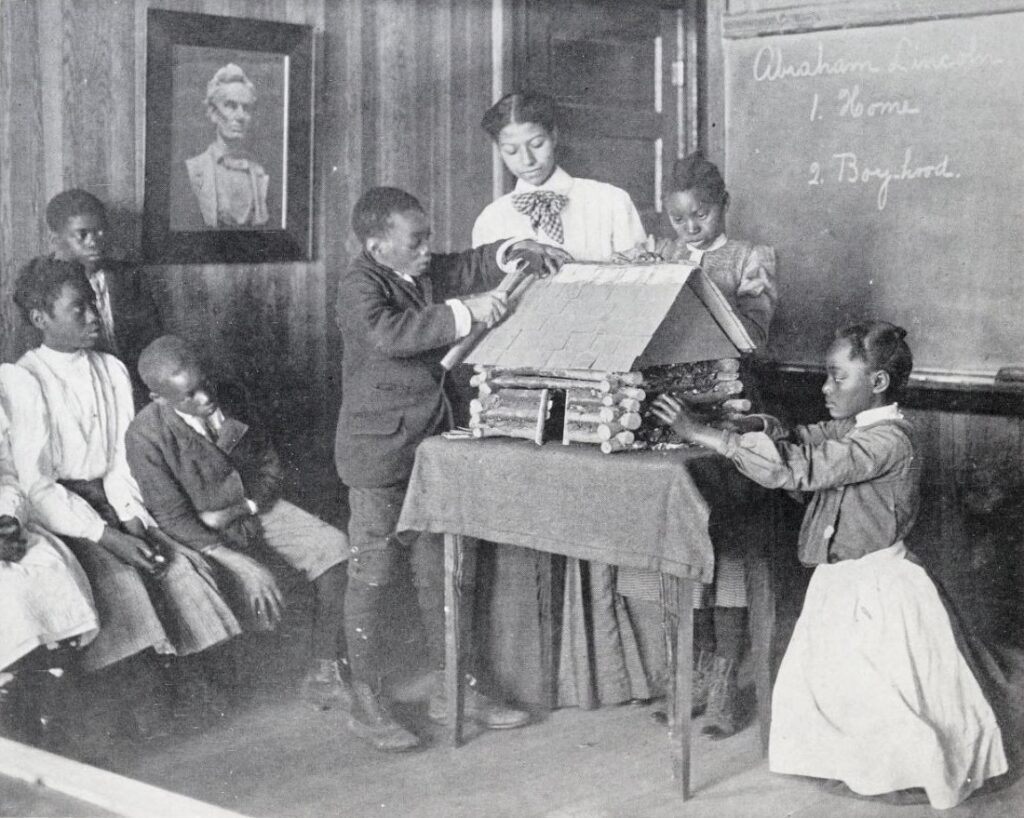
Moving Penn Center forward while keeping its spirit alive proves a struggle
By Scott Graber
The Island News
It is Friday morning and it is early — 5 a.m. Susan and I have been sitting on our deck drinking coffee and eating brownies — brownies re-gifted by our friend Lynn Strange, who just had a hip replacement and has been inundated with cookies, blueberry muffins and brownies.
We’re reflecting on the future and the past.
Last night, Susan and I drove out to St. Helena Island and met with 75 largely unhappy residents at the Faith Memorial Church on Martin Luther King Jr. Drive, once known as the Land’s End Road.
I went as a journalist — I do have press credentials from The Island News — but it was actually more of a homecoming for the both of us.
At one time, from 1973 until 1976, I worked at Penn Center as a lawyer who tried to unscramble convoluted land titles and otherwise address the “heirs property” pathogen that afflicted an estimated one-third of all Black-owned real estate in the South.
About the same time, Susan taught math at the all-Black middle school just across the marsh from my office.
When we walked into the Sunday School room at Faith Memorial Church that night, I realized that we knew these people. Well, it would be more accurate to say that once, 40 years ago, we knew most of these people.
We were greeted with hugs and comments like, “it’s so good to see you back. … What took you so long?”
But this crowd was unhappy, concerned about the future of this 161-year-old institution and its dedication to the promotion of Gullah history.
They were concerned, about various changes happening their community, none less troubling than the mass shooting of three local individuals in October 2025 at Willie’s Bar and Grill, right down MLK Drive from the Penn Campus.
But their concern, that night, was directed at their beloved Penn Center, in particular the annual Heritage Days Festival, a three-day event which will celebrate its 42nd anniversary on the second weekend in November.
With general concerns about spending practices at the center, a major sticking point was the Saturday festival parade, which for the past two years has been restricted to just one lane of U.S. 21. (Traditionally, the parade closed the road, taking up both lanes.)
Per agreement with the Beaufort County Sheriff’s Office and the S.C. Department of Transportation, which wanted to completely prohibit any closure of U.S. 21 — the only road leading on and off the sea islands including Dataw, Fripp and Hunting Island — the parade for the past two years is allowed to use part of the state highway, but only that one lane.
This is not new information. The New York Times wrote about the route change in 2025 with a headline that said “For a distinctive Black culture, a rerouted parade feels like erasure.”
But the concerns are still there.
Gardenia Simmons-White, age 93, was one of the first speakers at the community meeting. The St. Helena native reminded those present she was educated at Penn Center school before going north to work in New York City for 40 years.
But as a former member of the Heritage Days Festival Committee, she considered changes to the parade, “hurtful.” Hurtful because the present committee working with the Penn Center administration had suggested, in a letter, while her dedication was appreciated, it might be time for her to resign.
Simmons-White was followed by Ernestine Atkins, 80, who had been chairman of the Heritage Days Festival, prefaced her remarks about changes to the Festival with memories about her childhood picking cotton and raising cucumbers and sweet potatoes on the sea island.
The thrust of the remarks were directed at Penn Center’s Board of Trustees, a group of 11 board-selected individuals who include locals such as Port Royal Town Councilman Daryl Owens and Dr. Vashti Washington-Kimbrough, who serves as chairwoman of the Beaufort-Jasper Comprehensive Health board of directors.
But the elders are concerned about the number of board members who don’t live in the area such as Board Chairman David Yoakley Mitchell, a native of Rome, Ga., who also serves as Executive Director of the Atlanta Preservation Center and took over the board leadership in January.
The critics are concerned the majority of the board has no appreciation of what Penn Center is and was and why it is essential to celebrate its legacy. They feel their efforts to express concerns about the changes to the board are not being heard.
Responding to these concerns, Lolita Huckaby and I sat down with Penn Center’s current Executive Director Robert Adams, who was hired by the board in 2023 to replace interim director Bernie Wright.
The former interim Chief Operating Officer at the Martin Luther King Jr. Center for Nonviolent Social Change in Atlanta was hired by the nonprofit board to not just continue the Penn legacy, but build its financial base.
Our mission that morning was to discuss some of those community concerns and the future of this historic landmark.
Our conversation was partially promoted by the recent news that the International African American Museum in Charleston which opened to great fanfare in 2023, is temporarily furloughing employees because of funding issues, a problem that has plagued Penn Center for much of its history.
When we raised the subject of the Heritage Days parade, and the concerns of those who had been involved with the organization for years, Adams reminded us he met Sheriff P.J. Tanner multiple times trying to work out a compromise route.
He acknowledged that some critics consider that a compromise was a capitulation.
Adams does not apologize for what he worked out but expressed disappointment that some see this as defeat. The former “military brat” stressed he was well aware criticism comes with this job.
“But I love a challenge, … and I believe in doing the right thing,” he said.
Board Chairman Mitchell, who joined us for the discussion, was less circumspect and suggested a focus, instead, on the Board’s obligations to maintain the 50-acre campus.
For example, he noted he’s often asked about the future of the former Gullah House motel and Bella Luna restaurant buildings situated on Sea Island Parkway, now vacant buildings which are owned by the Center.
Under Adams administration, a survey of property assets has been compiled and the future of those buildings, like other properties, are part of a developing large-range plan.
“We’ve got a lot of issues we’ve asked Dr. Adams to tackle,” Mitchell stressed.
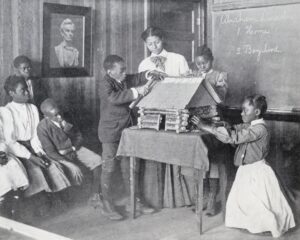
In addition to those realities, he said the board and Adams have to focus on finding a meaningful purpose in a world that had profoundly changed since Penn Center’s founding by northern missionaries as a school for freed slaves in 1862.
Mitchell talked about the fact that Penn Center started out as a primary educational facility then made a course correction into trades. Between 1963 and 67, the campus was used as a retreat for Martin Luther King Jr. and planning platform for his famous March on Washington.
He stressed Penn Center has a history of changing course when a change was required. As an example, the center’s collaboration with the Peace Corps in the 1960’s as a training center and more recently with the U.S. National Park Service as part of Beaufort County’s Reconstruction Era National Park, illustrate the efforts to preserve and present the Gullah Geechee culture.
He noted molding a mission that recognizes change is occurring, with Penn Center representatives working with county planners in the 1990s on the idea of a cultural overlay district to protect the rural St. Helena Island.
Penn Center staged workshops that helped document the five-acre tomato farms, praise houses, cemeteries and cultural assets that made St. Helena distinctive and worthy of a planning designation where these assets would be protected.
When the possibility of the development of neighboring Pine Island as a gated, golf-course community entered the county conversation, Penn Center’s interests in protecting the culture were represented by Adams at meeting after meeting.
Indeed, Penn Center joined the Coastal Conservation League and Gullah/Geechee Sea Island Coalition to intervene in the lawsuit supporting Beaufort County as its zoning for the island is being challenged in federal court.
Adams, you can tell, likes to talk about the various new projects being undertaken at the center.
Students from several colleges have participated in the Penn Scholar Research residency where they learn the challenges of preserving building.
The list of collaborations is impressive. A partnership with the University of Georgia’s Wilson Center for Humanities and the Arts is being funded by the Mellon Foundation.
A program to focus on farming has been funded by a partnership with the Nina Simone Project.
Adams has also been working with the county Economic Development Corporation to develop a Geechee Cultural Center and entrepreneurial market, which has already received a $1 million grant from the state for purchase of property.
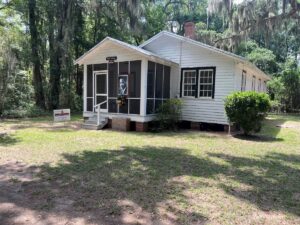
His staff, in addition to running a museum and guided walking tours of the campus, have also organized a summer music concert series, community sings, a summer youth camp and workshops on issues such as the importance of wills.
While Adams and his board of trustees work to steer Penn Center’s future into a national and international example of unique cultures dealing with change, it seems the loyalty and devotion of those who kept the Penn Center spirit alive over the years has to be recognized as part of that direction.
Lolita Huckaby contributed to this report.
Scott Graber is a lawyer, novelist, veteran columnist and longtime resident of Port Royal. He can be reached at cscottgraber@gmail.com.
Lolita Huckaby Watson is a community volunteer and newspaper columnist. In her former role as a reporter with The Beaufort Gazette, The Savannah Morning News, Bluffton Today and Beaufort Today, she prided herself in trying to stay neutral and unbiased. As a columnist, these are her opinions. Her goal is to be factual but opinionated, based on her own observations. Feel free to contact her at bftbay@gmail.com.