
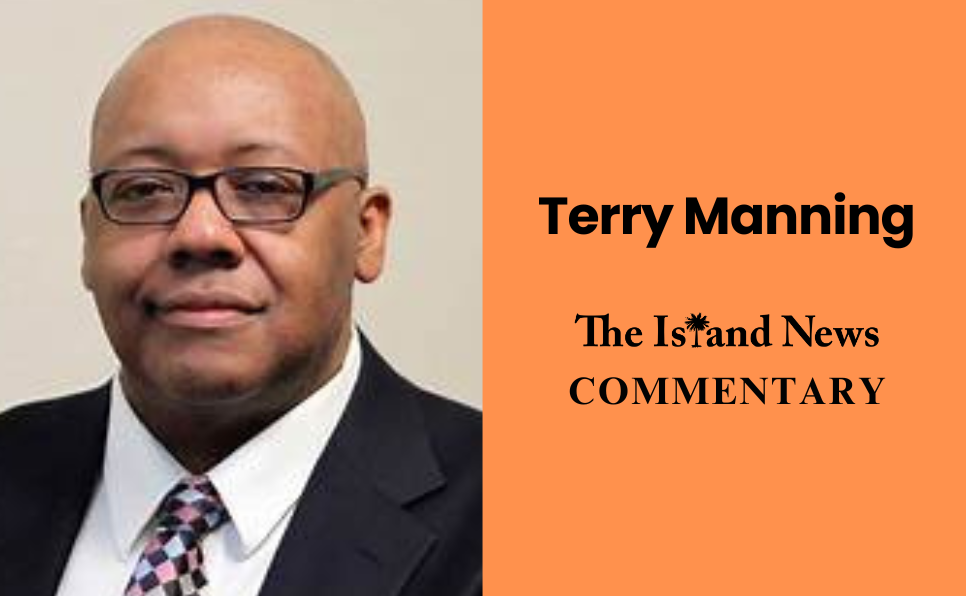
By Terry Manning
First, I don’t hate artificial intelligence.
I have to remind myself and others of that from time to time. A look at my social media posts would imply otherwise.
Across platforms, I share articles and short videos of people describing how A.I. is ruining our ability to think and evaluate, cheating us of the discoveries we can make while trying to create things, and generally making our brains as flabby as the rest of too many of our bodies.
But no, I don’t hate artificial intelligence. I use it too often to reject it entirely.
Everything I write is the product of a drawn-out process, the speed of which is dictated by my inability to type worth a darn. Hunt-and-peck is a generous description for the labored way I type, type, type, pause, review, delete, re-type and repeat until I finish or get tired of trying.
In high school, typing class was on a track that conflicted with AP English (ironic, isn’t it?), so I never learned. I was despondent about it until I found out a former boss of mine, Corinne Holt Sawyer, was able to earn her Ph.D. and become a successful crime novelist without ever learning how to type conventionally.
My thoughts, words, and the ways I construct them to share with others are all mine, though I use A.I. to catch and correct errors. I like Grammarly because, unlike some other software, it points out my mistakes without suggesting wholesale rewrites of what I am trying to communicate.
I use artificial intelligence when editing photos I take on my digital cameras. I generally adhere to the stance of not doing anything in Adobe Photoshop that I couldn’t have done in the darkroom days (crop, exposure adjustments, dodge-and-burn). I can still manually select a texture from one part of a photo to cover up an unwanted intrusion in another, but it is a lot quicker to let A.I. tools do some of that for me.
I warn subjects I am not in the business of making everyone who sits in front of my lens look like a beauty pageant contestant, but the “Enhance Portrait” preset in Lightroom establishes a good starting point for retouching photos. It does, though, have an annoying habit of making people with pretty teeth look like they are wearing dentures they bought from Temu.
This is why human intervention is needed, and intervene I do.
I use A.I. as a shortcut to getting definitions or for pulling bits of trivia. Alexa is a whiz at telling me WNBA player Satou Sabally played college basketball at the University of Oregon before I can even remember how to spell her name or type it into Google on my phone or laptop. It also can tell me she shaved her head as a gesture of solidarity with a loved one undergoing cancer treatments, which is pretty noble.
I think Siri was behind the door, as my mother likes to say, when they were giving out advanced skills at virtual assistant school, but she’s trying hard. At the very least, she’s good for a timer here or there, and a quick set of directions, though she’s no Waze.
Beginning with the previous paragraph, I am using artificial intelligence to finish this column. I really do type that slowly, and using voice recognition on my laptop will help me get to the finish line. I still have to review everything, but that one little assist can make a big difference between finishing now or having to come back after I do my laundry.
So no, I don’t hate artificial intelligence for what it is.
I hate how it’s being sold to us, as if making caricatures of ourselves on Facebook doesn’t have the same environmental impact as scientists trying to battle HIV or world hunger.
I hate how big data centers are being forced on communities populated mostly by minorities and poor white people.
I hate how billionaires try to convince us it is a replacement for human productivity, so it’s OK for the billionaires to lay off hundreds of thousands of real people from real jobs they really need.
I hate how young people are giving up embracing the discipline it takes to read and learn and create and share their unique perspectives on the world.
I hate how its supporters have told everyone homogeneity is fine.
I hate we are told all this is inevitable, and there is no going back. Nothing is inevitable in life except death, which is a terrible association to make for something you want people to like.
Maybe they should ask A.I. for a better sales pitch.
p.s. Grammarly found only one mistake. Gold star for Terry!
Terry E. Manning is a Clemson graduate and worked for 20 years as a journalist. He can be reached at teemanning@gmail.com.