
VA service-connected disability claims and asbestos trust claims for asbestos exposure-caused diseases, injuries
By Larry Dandridge
I wrote a series of three articles for The Island News in January of 2025 (dated Jan. 8, 15, and 22) about why veterans should file service-connected disability claims for asbestos exposure caused cancer and non-cancer injuries and disease with the VA and Asbestos Trusts. You can read those articles at:
Those 2025 articles recalled my quest to find a law firm that would handle filing claims for my asbestos exposure caused “non-cancer” injuries/disease with multiple asbestos trusts (there are over70 asbestos trusts). They also pointed out that:
- Veterans (and non-veterans) are missing out on millions of dollars in asbestos trust claim awards.
- VA service-connection claims are separate from asbestos trust claims.
- Veterans should file for compensation from the VA and asbestos trusts.
Asbestos was used everywhere (Especially in the military)
Asbestos was used everywhere from the 1930s until the 1980s. The U.S. military led the way in using asbestos especially in shipbuilding; ship and submarine boiler and engine insultation; streamlines on ships and in barracks/building, ship bulk heads and deck panels; flooring, construction, insulation, roofing, dry wall, cement sheets, pipes, clutch facings, brake linings, all military service’s weapon systems; asbestos cement panels and fire proofing; clutch facings, brake linings for military vehicles; aircraft brakes; wiring, gaskets, vehicle brake and clutch systems; barracks, mess halls, hangars, and housing units; heating and air conditioning systems (HVAC); and hundreds of other applications. Learn more at the VA webpage “How Veterans May Have Been Exposed to Asbestos” at https://www.publichealth.va.gov/exposures/asbestos/index.asp.
Material safety data sheets not required until 1983
From a U.S. regulatory standpoint, the first requirements for Material Safety Data Sheets (MSDSs) were adopted in the late 1960s for maritime manufacturing employees only. OSHA did not require MSDSs in the manufacturing industry until 1983; in 1987, the requirement was expanded to cover all employers. Learn more in J. R. McDonald Laboratory’s “History of the MSDS,” at https://jrm.phys.ksu.edu/Safety/kaplan.html, and OSHA Standard Number 1910.1200, James Roberts letter of Oct. 6, 1995, at www.osha.gov/laws-regs/standardinterpretations/1995-10-06-0.
The first time the military was legally required to maintain and provide MSDSs was May 26, 1986, when the final OSHA rule became effective for all manufacturing employers. This date also marked the point when the requirement was expanded to cover all industries, including the military, in 1987. Learn more by reading “A history of the MSDS,” by Samuel Aaron Kaplan, at https://jrm.phys.ksu.edu/Safety/kaplan.html and OSHA Letter of Oct. 6, 1995, from Ruth McCully, OSHA, Director of Office of Health Compliance, https://www.osha.gov/laws-regs/standardinterpretations/1995-10-06-0.
Companies hid deadly facts about asbestos
This means that the asbestos mining companies and all of the companies that used asbestos in their products were able to not only hide the hazards and risks (Carcinogen, May cause Cancer, Causes damage to organs, etc.) associated with asbestos but they also did not tell workers (Military Members, Civil Servants, or Civilians) how to safely handle, store, and dispose of asbestos and products containing asbestos.
Those companies knew the deadly hazards associated with asbestos, but they purposely did not tell people who handled their products. Asbestos is still imported and used throughout the U.S. — yet Americans have little way to know where they may encounter this deadly substance. Learn more at Asbestos Nation at https://www.asbestosnation.org/.
Elderly high risk for asbestos exposure, disease
I continue to be highly motivated to help my fellow elderly veterans (Korean War, Vietnam War, Desert Storm, and veterans between 55 and 90 years old) and ex-enlisted men who did the hands-on, dirty, work and who are in the highest risk group for asbestos exposure caused asbestos injuries. These seniors served when asbestos was most frequently used by the military. Learn more at the VA’s “Veterans Health Library” at www.veteranshealthlibrary.va.gov/DiseasesConditions/VeteransHealth/142,41771_VA.
Vietnam veterans asbestos injuries/disease symptoms just now appearing
Since I am an elderly veteran, a Vietnam War Wounded warrior and a 100% service-connected disabled veteran with asbestos “non-cancer injuries,” and like most victims of asbestos, most of my symptoms have been hard to diagnose until recently, because they mimic the flu, bronchitis, and other respiratory viruses. It is our generations of Vietnam War veterans who are coming down with the severe and life-threatening symptoms and diseases of past asbestos exposure in the 1950s, 1960s and 1970s. Learn more about what the CDC says about “Health Effects of Asbestos*” at https://www.atsdr.cdc.gov/asbestos/health-effects/index.html.
Enlisted veterans at higher risk
Our enlisted veterans did the hands-on, lung-exposed, dust and asbestos particles filled, unprotected, Personal Protective Equipment (PPE)-less, Material Systems Data Sheet (MSDS)-less, and dirty work of receiving, unpacking, handling, installing, repairing, sanding, grinding, painting, removing, ingesting, firefighting, and disposing of asbestos made materials such as insultation; paints; caulking; furnaces and ovens; HVAC housings; firewalls; brake shoes, drums, and rotors; refractory materials; and hundreds of other products throughout U.S. Military history. Because of this hands-on use of enlisted military members to do the dirty work, they are the ones who have suffered most of the exposure to asbestos. Learn more at “Veterans Health Library” (Veterans Exposure to Asbestos-Who’s at risk?), https://www.veteranshealthlibrary.va.gov/Search/142,41771_VA.
Continued next week.
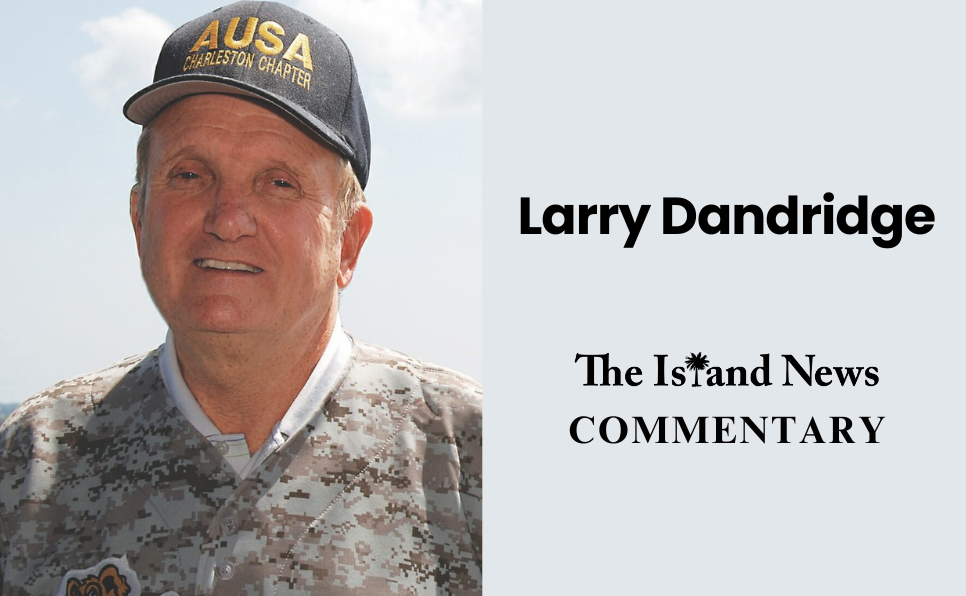
Larry Dandridge is a Vietnam War wounded warrior, a combat and 100% service-connected disabled veteran, an ex-Enlisted Infantryman, an ex-Warrant Officer Pilot, and a retired Lt. Colonel. He is a former Veterans Service Officer, a Patient Adviser at the RHJ VA and Durham VA Medical Centers, a Fisher House Charleston Goodwill Ambassador, and the Veteran Benefits Advisor for the AUSA Coastal Carolina Chapter, MOPH Chapter, MOAA Triangle Chapter, and VFW Post 7383. Larry is also the author of the award-winning Blades of Thunder (Book One) and a contributing freelance writer with the Island News. Contact him at LDandridge@earthlink.net or 843-276-7164.