

Republican Jenny Costa Honeycutt, Democrat Nancy Lacore, independent Bill Reeside outline competing approaches to affordability, immigration, coastal protection and the role of government
By Delayna Earley
The Island News
Voters in South Carolina’s 1st Congressional District will choose a new representative Nov. 3, with three candidates offering different approaches to federal spending, health care, immigration and the challenges facing the growing Lowcountry.
Republican Jenny Costa Honeycutt, Democrat Nancy Lacore and independent Bill Reeside responded to a questionnaire from The Island News addressing 10 issues, including the cost of living, infrastructure, military operations in Iran, coastal flooding, artificial intelligence and government accountability.
Although all three candidates expressed concerns about federal spending, rising household expenses and the need for better infrastructure, their proposals reflect substantially different views about the federal government’s responsibilities and how Congress should address those challenges.
Honeycutt emphasized reducing taxes and regulations, balancing the federal budget and strengthening local control. Lacore focused on lowering household costs, protecting federal benefits and investing in infrastructure and public services. Reeside advocated a more extensive reduction in federal spending and government authority, including eliminating entire federal departments and shifting responsibilities to states and private businesses.
Background and qualifications
Honeycutt, 46, is an attorney, small-business owner and Charleston County Council member who has served in local government since 2019. A longtime James Island resident, she earned a bachelor’s degree from Meredith College and a law degree from the University of South Carolina.
Honeycutt said her experience managing a business, working with local governments and overseeing county budgets would inform her decisions in Congress.
Lacore is a retired Navy vice admiral who served 35 years, rising from helicopter pilot to chief of the Navy Reserve, where she was responsible for nearly 60,000 sailors. She cited her experience managing military installations, personnel and budgets and working with Congress as qualifications for the office.
Reeside is a retired nuclear engineer with more than 40 years of experience in engineering and research, including work managing contracts in the nuclear power industry. He previously ran unsuccessfully for office twice, including a campaign for the Charleston County School Board in the 1990s.
Reeside described himself as a fiscal conservative and said his independence from the major political parties would allow him to provide oversight without pressure from party leadership.
Cost of living and federal spending
All three candidates identified federal spending as a concern, but they proposed different solutions.
Honeycutt supports temporarily suspending the federal gasoline tax and encouraging South Carolina to suspend its state gasoline tax. She also supports expanding domestic energy production, excluding drilling off South Carolina’s coast, and reducing regulations she believes increase costs.
On tariffs, Honeycutt said some could protect American manufacturers, while others have raised prices and created uncertainty for local businesses.
Lacore supports rolling back tariffs that increase consumer prices, lowering prescription drug costs, strengthening competition and addressing utility expenses. She also advocates expanding affordable housing and supporting higher-paying jobs.
Reeside identified inflation and federal overspending as the primary causes of affordability problems. He supports reducing regulations on energy production, including nuclear power, eliminating tariffs and withdrawing the United States from the World Trade Organization.
He also proposed repealing all federal health and income taxes and returning taxing authority to state governments.
On the national debt, Honeycutt supports a constitutional balanced budget amendment and eliminating waste, fraud and unnecessary federal programs.
Lacore supports stronger oversight, reducing waste and ensuring wealthy individuals and large corporations pay taxes owed. She opposes reducing Social Security, Medicare and other essential services to balance the budget.
Reeside proposed withholding his congressional pay until the national debt declines, refusing to vote for deficit budgets, and requiring federal agencies to reduce spending. He also supports zero-based budgeting and a constitutional amendment addressing deficits.
All three expressed opposition to government shutdowns or the spending practices that contribute to them, although their approaches to budget negotiations differ.
Transportation and infrastructure
The candidates agreed that infrastructure improvements are necessary as the Lowcountry continues growing.
Honeycutt specifically identified improvements to the U.S. 278 bridge serving Hilton Head Island, the Berlin G. Myers Parkway connection in Dorchester County, evacuation routes, drainage systems and the Port of Charleston.
She supports pursuing federal infrastructure funding through partnerships with state and local governments, with transparent bidding and oversight.
Lacore identified congestion along Interstate 26, Interstate 526 and U.S. 17 as priorities. She also supports investments in roads, bridges, ports, broadband, clean water and flood-resistant infrastructure.
Reeside supports shifting more responsibility for infrastructure funding to state and local governments. He argued that public transportation systems should be funded locally rather than by the federal government and that broadband expansion should rely on state and local funding with federal standards.
Iran, the military and war powers
The candidates offered differing assessments of the 2026 U.S. military campaign against Iran, although all three expressed support for congressional authority over military operations.
Honeycutt disagreed with describing the campaign as a war of choice, citing concerns about a nuclear-armed Iran. She said the United States should complete its military objectives and bring troops home.
She supports requiring congressional authorization for sustained or expanded hostilities while allowing presidents to respond to imminent threats.
Lacore opposed launching military operations without congressional authorization. Drawing on her military experience, she said the campaign lacked a clear mission and exit strategy.
She supports maintaining the ceasefire, preventing Iran from obtaining nuclear weapons and pursuing diplomacy.
Reeside opposed the military action and called for preventing further escalation. He supports legislation requiring congressional authorization for military operations and said U.S. missions should be narrowly defined.
All three candidates pledged support for military installations and personnel in the district, including Marine Corps Recruit Depot Parris Island and Marine Corps Air Station Beaufort.
Honeycutt proposed a six-point veterans initiative that includes expanding VA Community Care and improving the transition from military to civilian employment.
Lacore emphasized protecting military installations, health care and veterans benefits.
Reeside proposed expanding veterans’ access to health care outside the Department of Veterans Affairs and reducing unnecessary military spending.
Flooding, storms and insurance
Coastal flooding, hurricanes and rising insurance costs were among the issues addressed by all three candidates, with differences over how protective measures should be funded.
Honeycutt supports continued federal investment in beach renourishment, seawalls, drainage improvements and disaster mitigation. She opposes increasing property taxes to finance beach renourishment and supports greater transparency in National Flood Insurance Program rates.
Lacore supports strengthening the National Flood Insurance Program, improving access to disaster assistance and investing in coastal resilience.
She also emphasized protecting marshes, wetlands and waterways, which she described as natural defenses against flooding.
Reeside supports shifting more disaster recovery and coastal protection responsibilities to state and local governments.
He said federal disaster assistance should supplement local resources rather than serve as the primary source of funding. He also supports making flood insurance more market-driven and privatizing the U.S. Army Corps of Engineers.
Healthcare
The candidates’ healthcare proposals reflect some of their most significant policy differences.
Honeycutt supports protecting Medicare, reducing administrative costs, expanding telehealth and increasing competition and price transparency. She supports Medicaid as a safety net for eligible residents and advocates directing federal rural health funding toward underserved communities.
Lacore supports extending enhanced Affordable Care Act premium tax credits, expanding Medicare prescription drug negotiations and increasing oversight of insurance companies.
She also supports Medicaid expansion in South Carolina, strengthening rural hospitals and expanding access to mental health services.
Reeside advocates transitioning Medicare into a health savings account model and moving Medicaid responsibilities to individual states, eventually eliminating federal funding for the program.
He also supports abolishing the Affordable Care Act and replacing federal health care programs with a system emphasizing individual accounts, community-supported care and market competition.
Immigration and workforce
All three candidates support border security, but their positions differ on enforcement, asylum and legal immigration.
Honeycutt supports physical border barriers, additional surveillance technology, more enforcement personnel and cooperation between local law enforcement and federal immigration authorities.
She specifically supports partnerships under the federal 287(g) program, which allows certain local law enforcement agencies to perform designated immigration enforcement functions.
Lacore supports increasing border security personnel and technology while expanding the number of immigration judges and asylum officers to address case backlogs.
She also supports a permanent legislative solution for Dreamers and reforms addressing workforce shortages in agriculture, hospitality and construction.
Reeside supports border enforcement while significantly expanding legal work and student visa opportunities.
He proposed placing asylum and temporary protected status programs under a moratorium and moving toward what he called a “next closest safe place” model, under which displaced people would seek refuge in countries closer to their home nations.
He also supports moving Dreamers toward citizenship, subject to background checks and other requirements.
Artificial intelligence and data centers
All three candidates expressed concerns about artificial intelligence, privacy and the infrastructure demands of large data centers.
Honeycutt supports requiring data centers to pay for their own infrastructure and electricity costs and use closed-loop cooling systems to protect water resources.
She also supports allowing local governments to determine whether data centers can operate in their communities.
Lacore supports federal safeguards addressing privacy, cybersecurity, discrimination, deepfakes and election integrity.
She also supports stronger environmental protections, transparency concerning data center resource consumption and preventing their infrastructure costs from being passed to residential utility customers.
Reeside supports federal action addressing online contracts, deepfake exploitation, election integrity and intellectual property rights.
He said data center development and related environmental concerns should be handled primarily by state and local governments, with federal environmental standards providing a baseline.
Representation and accountability
The candidates also described different approaches to constituent services and congressional accountability.
Honeycutt said she would prioritize a responsive constituent services office and work across party lines when doing so benefits the district.
Lacore pledged to hold regular town halls, maintain accessible offices and prioritize services for veterans, seniors and families dealing with federal agencies.
She also supports banning individual stock trading by members of Congress and reducing the influence of money in politics.
Reeside supports holding regular in-person constituent meetings, establishing response-time standards for congressional staff and opposing federal programs that he believes create unnecessary complexity for constituents.
He also pledged to resist campaign finance practices he considers inappropriate and support a ban on individual stock ownership by members of Congress.
Reeside said he signed the U.S. Term Limits pledge and would serve no more than three two-year terms.
Looking ahead
For the next two years, Honeycutt identified affordability, federal spending and infrastructure as her primary priorities. She emphasized her experience in local government and her commitment to representing communities throughout the district.
Lacore said she would focus on lowering costs, improving health care affordability, protecting natural resources, supporting military families and veterans, and strengthening government accountability.
Reeside identified reducing federal spending and restoring congressional oversight of the executive branch as central priorities. He argued that his engineering background and independence from the two major political parties would allow him to approach problems differently.
Although the candidates share concerns about affordability, infrastructure and government accountability, their responses reveal substantially different approaches to the role of Congress, the financing of public services and the balance of federal, state and local authority.
South Carolina U.S. House District 1 candidates

Jenny Costa Honeycutt, Republican, 46, is an attorney, small-business owner and Charleston County Council member who has served in local government since 2019. A longtime James Island resident, she earned a bachelor’s degree from Meredith College and a law degree from the University of South Carolina.
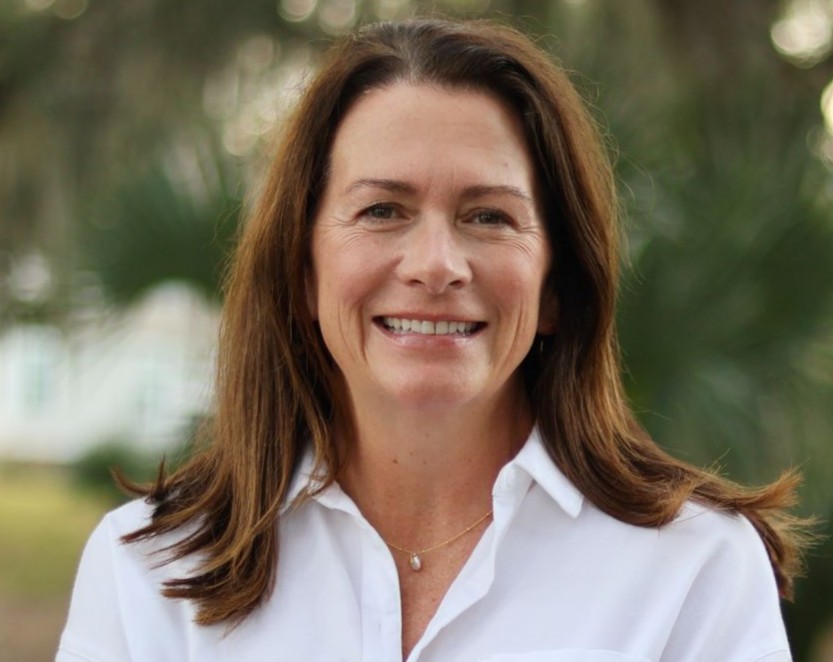
Nancy Lacore, Democrat, is a retired Navy vice admiral who served 35 years, rising from helicopter pilot to chief of the Navy Reserve, where she was responsible for nearly 60,000 sailors. Her military career included aviation, installation management and senior leadership positions.

Bill Reeside, Independent, is a retired nuclear engineer with more than 40 years of experience in engineering and research, including contract oversight in the nuclear power industry. He previously ran unsuccessfully for public office, including a Charleston County School Board campaign in the 1990s.
Candidate questionnaire responses
The Island News sent identical questionnaires to the candidates for South Carolina’s 1st Congressional District. Responses are presented alphabetically by candidate surname. Candidate statements and opinions are their own and have not necessarily been independently verified.
1. Lowcountry residents continue to feel pressure from the cost of groceries, gasoline, housing, insurance and utilities. What actions within Congress’ authority would you support to make those costs more affordable? Please address energy policy, competition, taxes, federal spending, trade and tariffs, and explain how your proposals would affect wages, jobs and local businesses.
Honeycutt: Affordability is one of the greatest challenges facing Lowcountry families. As a wife, mother and small-business owner, I understand how rising costs affect household budgets, employees and local businesses.
My approach is straightforward: spend less, grow our economy and help Americans keep more of what they earn.
My opponent’s “solution” to any issue is raising taxes. Raising taxes doesn’t align with our Lowcountry values, and raising taxes won’t provide relief for Lowcountry families.
To provide immediate relief at the pump, I support temporarily suspending the federal gas tax and encouraging South Carolina’s leaders to temporarily suspend the state gas tax as well. I also support expanding domestic energy production (NOT off South Carolina’s coast), allowing greater use of red-dyed diesel where appropriate and eliminating unnecessary regulations that increase energy costs.
I support eliminating waste, fraud and unnecessary federal spending, pursuing a balanced federal budget and reducing the tax burden on working families and small businesses.
Competition is equally important. In health care, I support greater price transparency, more choices for patients and reducing administrative waste. Congress should also examine federal barriers that unnecessarily increase housing construction costs and limit competition in markets affecting household expenses.
Trade policy must protect American jobs without unnecessarily raising prices. While some strategic tariffs can help defend domestic manufacturers, including important Lowcountry industries like Century Aluminum, other tariffs have created uncertainty for local businesses and cost increases. In Congress, I will evaluate the tariff issue like I will all other issues: what is best for the Lowcountry.
Lacore: The cost of living is the number one concern I hear from Lowcountry families, and we need to take action that provides relief now, not years down the road.
In Congress, I’ll prioritize immediate steps to lower costs, including rolling back tariffs that raise prices on everyday goods, lowering prescription drug costs and addressing rising energy and utility bills. We also need to crack down on price gouging, increase competition and make sure taxpayer dollars are being spent responsibly.
Longer term, I’ll fight to expand housing access and affordability, support good-paying jobs and invest in reliable, affordable energy. Families and small businesses need relief today, and they deserve a government that’s focused on making their lives more affordable.
Reeside: The root cause of inflation is overspending at the federal level.
Energy policy — end the war in Iran. Reduce regulation of nuclear power to allow it to be economically competitive.
Competition — do not let the Executive Branch negotiate tariff-free relations with the world.
Taxes — repeal all federal health and income taxes. Replace the current double ceiling and floor burden. It is down over the next decade. [Verify wording against handwriting.]
Reduce student loan barriers to private industry. This will bring down the costs of education.
2. What changes would you support in federal spending, taxes or revenue to reduce long-term deficits and debt? How would you approach appropriations deadlines and a possible government shutdown when district priorities are at stake?
Honeycutt: In Congress, I will be guided by one principle: what is best for the Lowcountry.
As it relates to taxes and spending, that means protecting taxpayers, restoring fiscal responsibility in Washington and ensuring our communities receive the resources and services they need.
Washington cannot continue spending money it does not have and passing the bill to our children and grandchildren. As a mother, small-business owner and fiscal conservative, I believe we have a responsibility to live within our means.
I support a balanced budget amendment to the Constitution. I will work to eliminate waste, fraud, abuse and unnecessary bureaucracy, review federal programs for effectiveness and hold agencies accountable for how taxpayer dollars are spent.
My approach is simple: Spend less. Grow our economy. Allow Americans to keep more of what they earn.
My opponent wants to raise taxes on working families, on seniors, on job creators. I know that government cannot tax its way out of Washington’s spending problem. We need fiscal discipline alongside policies that encourage private investment, job creation and economic growth.
Congress also needs to do its job. That means passing appropriations bills responsibly and on time, rather than governing through last-minute political standoffs and massive spending packages that receive inadequate scrutiny.
I do not believe government shutdowns are an effective substitute for responsible budgeting. They create unnecessary uncertainty for military families, federal employees, small businesses and communities throughout the Lowcountry.
I would work to prevent shutdowns while insisting on meaningful spending reforms, transparency and accountability. Protecting our district’s priorities and protecting taxpayers are not competing responsibilities. Congress must do both.
Lacore: I spent 35 years in the Navy managing people, resources and budgets. I understand the responsibility that comes with spending taxpayer dollars.
We need to reduce waste, strengthen oversight and make sure wealthy individuals and large corporations pay what they owe. But we cannot balance the budget by cutting Social Security, Medicare or essential services that Americans depend on.
I believe government shutdowns are a failure of leadership. I’ll work across party lines to pass responsible budgets on time and protect federal workers, military families and the communities that depend on government services. I would also support moving some parts of the federal budget to a multiyear funding cycle so Congress does not have to renegotiate every program’s funding every year. That could streamline the budget process, give agencies more certainty and help Congress meet funding deadlines while maintaining oversight of taxpayer dollars.
Reeside: I will only vote to increase the debt ceiling if Congress has declared war. I will never vote for a deficit budget. The federal government is officially insolvent. If it needs the pressure of a shutdown to decrease spending, so be it. I will only consider zero-based budget requests from all Cabinet agencies. I will not vote for a continuing resolution if they increase the deficit.
3. What are the most important federal transportation and infrastructure needs in District 1? How would you pursue funding for roads, bridges, ports, transit, water and broadband while ensuring projects are selected and managed transparently?
Honeycutt: There are major needs in every corner of the district. From necessary improvements to the U.S. 278 bridge in Hilton Head, to completing the connection between Berlin G. Myers Parkway and I-26 in Dorchester County, seawalls, drainage improvements, greater storm resilience, traffic improvements throughout the Lowcountry, I am ready to get to work on day one.
I have earned the trust and support of over 100 local officials, as they appreciate not only my knowledge of each community’s needs but also my proven experience working collaboratively to get results. They know, as I do, that we cannot afford to have a member of Congress that needs to learn the district while on the job.
I am from the Lowcountry and will always be guided by what is best for the Lowcountry.
As a mom, businesswoman and proven local elected official, I understand how inadequate infrastructure affects our daily lives. Whether it’s sitting in traffic trying to get our children to practice, worrying about flooding during hurricane season or struggling with deteriorating roads and bridges, our infrastructure challenges affect our families, businesses and quality of life.
We must also strengthen evacuation routes, support the Port of Charleston and its transportation connections, improve water and wastewater infrastructure, expand broadband access and ensure our growing communities have the infrastructure necessary to support good-paying jobs and economic development.
I have worked across party lines to help bring significant federal infrastructure investments to the Lowcountry. In Congress, I would continue partnering with local, state and federal officials to identify critical projects and pursue available federal funding. And I would work to ensure projects are selected and resources are allocated based on demonstrated needs, economic benefits, public safety and responsible use of taxpayer dollars, with transparent bidding, measurable benchmarks and oversight.
Service begins at home. My commitment is to ensure the Lowcountry receives appropriate federal support for its critical infrastructure needs while protecting the character and quality of life of the communities we love.
Lacore: The Lowcountry is growing rapidly, and our infrastructure hasn’t kept up. We need to address congestion on major roads such as Highway 526, I-26 and Highway 17, improve roads and bridges, support our ports and invest in drainage and flood-resistant infrastructure. We need to do a better job planning for the growth we know will continue for years to come.
I’ll pursue federal funding for transportation improvements, reliable broadband, clean water infrastructure and projects that help our communities manage growth responsibly.
Having managed several Navy bases, the supporting infrastructure and budgets in the Navy, I know the importance of accountability. Federal investments should be based on demonstrated needs, transparent decisions and measurable results for taxpayers.
Reeside: Top priority is maintaining federal roads and bridges.
Public transit (CARTA, for example) should be 100% funded locally, not by the federal government.
Federal waterways can be maintained with money from the federal government. Onshore facilities must be funded locally.
Broadband must be funded by state and local governments, with federal standards and regulations.
4. Following the 2026 U.S. military campaign against Iran and the subsequent ceasefire, do you believe the military action was justified? What should U.S. policy toward Iran be now, and when should the president be required to obtain congressional authorization for additional hostilities? Please also explain how you would protect service members and support the military installations, families and veterans in District 1, including Marine Corps Recruit Depot Parris Island and Marine Corps Air Station Beaufort.
Honeycutt: My opponent has characterized the military campaign as a “war of choice.” I disagree with that characterization, as a nuclear-armed Iran is not an acceptable outcome for the United States or the world.
That said, we must finish the job and bring our troops home. I also believe Congress must reclaim its constitutional responsibility over decisions involving war. The president must have the ability to respond to imminent threats, but sustained or expanded military hostilities should require congressional authorization. Our military deserves clear objectives, appropriate resources and accountability from elected leaders.
Here in the Lowcountry, military service is woven into the fabric of our communities. From Marine Corps Recruit Depot Parris Island and Marine Corps Air Station Beaufort to our Coast Guard installations and military families throughout the district, I would work to protect mission readiness, strengthen our installations and support the people who serve.
I am truly humbled and honored to have the support of Medal of Honor recipient and longtime Lowcountry resident Maj. Gen. James Livingston, USMC (Ret.), and to have an incredible Lowcountry military advisory council. With their insight, I have introduced “I’ve Got Your 6,” my six-point plan in Congress to support Lowcountry veterans.
My plan includes expanding VA Community Care so veterans can receive health care closer to home, automatically transferring military records to the VA, recognizing military experience in federal employment, improving access to housing and education benefits, and helping service members transition successfully into civilian careers.
I would also establish a dedicated congressional constituent-service operation for veterans, military families, retirees and service members, with a commitment to acknowledge veteran constituent-service matters within 24 hours and measure results.
Our military deserves clear missions and the resources to succeed. Our veterans deserve the benefits they have earned. And our military families deserve a representative who understands that service does not end when the uniform comes off.
Lacore: I opposed launching a war against Iran without congressional authorization. Having sent American sailors into harm’s way myself, I know that doing this requires a clear mission, a sound strategy and a plan for what comes next. We did not get that when entering into this war, and now I don’t see a clear exit strategy.
Our priority now should be maintaining the ceasefire, preventing Iran from obtaining a nuclear weapon, protecting our service members and pursuing diplomacy. Congress must exercise its constitutional authority over decisions to enter additional hostilities, except when immediate action is necessary to defend Americans.
I’ll also fight to protect Parris Island, Marine Corps Air Station Beaufort and our other military installations, while ensuring service members, military families and veterans have the resources, health care and benefits they’ve earned. Throughout my career I’ve overseen numerous military bases and I will absolutely do everything in my power to provide for our local military installations as a member of Congress.
Reeside: I oppose the military excursion in Iran. We should immediately stop the bombing of Venezuela.
I oppose the impending excursion into Cuba.
I will vote to repeal all congressional authorizations being used by the current administration.
I will expand zero-based budgets from the Pentagon to force them to reveal plans for future invasions.
I will legislate for a strong military, and ensure the military needs of District 1 must be evaluated regularly against U.S. missions. They will be reviewed against changing needs.
5. What federal action is needed to address flooding, hurricanes, sea-level rise and other coastal risks? Please discuss the National Flood Insurance Program, disaster aid, mitigation, beach nourishment and the affordability and availability of property insurance.
Honeycutt: My opponent has stated repeatedly her desire for coastal homeowners to pay higher property taxes to fund beach renourishment. I strongly disagree.
Lowcountry families are already struggling with rising property taxes, homeowners insurance, flood insurance and the overall cost of living. Asking them to shoulder an even greater financial burden is not the answer.
Beach renourishment is not simply about protecting beachfront property. Our beaches support tourism, small businesses, jobs and the broader Lowcountry economy. Federal investments should reflect those benefits while being subject to transparent project selection and responsible oversight.
Protecting our coastline is a shared responsibility, and we must pursue responsible federal, state and local partnerships rather than raising taxes on homeowners, like my opponent desires.
Raised on South Carolina’s coast, I know firsthand the threats posed by hurricanes, flooding, erosion and rising sea levels. These are not abstract issues. They affect our homes, businesses, property values and quality of life.
As a local elected official, I understand that we cannot simply respond to disasters after they happen. We must be proactive in protecting our communities.
In Congress, I would work to strengthen seawalls, improve drainage systems, protect evacuation routes, support beach renourishment and invest in infrastructure that makes our coastal communities more resilient.
The National Flood Insurance Program must provide reliable coverage while remaining financially sustainable. I support greater transparency in how flood insurance premiums are calculated, accurate flood mapping and ensuring homeowners receive appropriate recognition for improvements that meet enhanced construction standards that reduce their flood risks.
Federal disaster assistance must also be timely, accessible and accountable. Families and small businesses recovering from hurricanes should not face unnecessary bureaucratic delays. Investing in mitigation before disasters occur can also reduce future damage and save taxpayer dollars.
My approach is simple: protect our homes, strengthen our communities, preserve our coastline and protect taxpayers. My opponent’s approach: raise your taxes.
Lacore: Protecting the Lowcountry’s natural resources isn’t just an environmental issue. It’s about protecting our homes, our economy and our way of life. I’m proud to have earned the endorsement of the League of Conservation Voters because I’ve made protecting our coast and addressing the growing costs of flooding and insurance a priority in this race.
In Congress, I’ll fight for federal investments in flood mitigation, drainage improvements, stormwater infrastructure and coastal resilience. I’ll work to strengthen the National Flood Insurance Program, keep coverage accessible and affordable, and ensure communities can get federal disaster assistance when they need it. I also support responsible beach renourishment and restoring federal funding for projects that protect our coastline.
Our marshes, wetlands and waterways are some of our strongest natural defenses against flooding. We need to protect them from unchecked development while making sure federal policies support local conservation efforts.
Lowcountry families shouldn’t have to choose between protecting their homes and being able to afford to live in them.
Reeside: Federal disaster aid should only supplement local aid. It should not be the first and only source of aid.
The National Flood Insurance Program must be more market-driven.
Beach nourishment must move to local and state funding. The Army Corps of Engineers should be privatized.
6. What would you do to make health insurance, medical care and prescription drugs more affordable and accessible? Please address Medicare, Medicaid, the Affordable Care Act, mental health and access in rural or underserved communities.
Honeycutt: Health care affordability is a significant challenge facing Lowcountry families. As a wife, mother and small-business owner, I understand how rising insurance premiums, medical bills and prescription drug costs affect household budgets and local businesses alike.
My opponent’s plan to health care would raise costs on Lowcountry families by $2,500.
My approach is straightforward: lower costs, expand access to quality care and put patients and doctors ahead of insurance companies and Washington bureaucrats.
We must protect Medicare for our seniors and ensure they can continue receiving the care and benefits they have earned. I support reducing unnecessary administrative burdens, improving access to physicians and lowering prescription drug costs through greater competition, price transparency and accountability.
Medicaid must remain a reliable safety net for eligible low-income families, children, seniors and individuals with disabilities. We must also eliminate waste, fraud and abuse so taxpayer resources reach those who need assistance.
Access to health care is especially important in rural and underserved communities, where residents may travel significant distances for basic medical care.
My opponent and her allies have spent millions of dollars attacking me and the Working Families Tax Cuts that established a $50 billion Rural Health Transformation Program to strengthen rural health care nationwide.
I support ensuring those resources reach the communities and health care providers that need them. I would also work to strengthen rural hospitals and community health centers, expand appropriate telehealth services, improve access to health care professionals and encourage preventive care that improves quality of life while reducing long-term costs.
In Congress, I will be guided by what is best for the Lowcountry: making health care more affordable, protecting access to quality care and ensuring taxpayer dollars are used responsibly. Lowcountry families deserve health care solutions that lower their costs, not simply shift those costs somewhere else.
Lacore: Health care is too expensive, and too many Lowcountry families are paying more every year while getting less in return. People are struggling with rising premiums, prescription drug costs and insurance companies that collect their payments but deny them care when they need it most. That needs to change.
I believe there is a lot Congress can do to quickly provide relief to families, such as extending the Affordable Care Act’s enhanced premium tax credits, allowing Medicare to negotiate more prescription drug prices and holding insurance companies accountable for denying medically necessary treatment. I’ll also protect Medicare and work to expand coverage for dental, vision and hearing care.
South Carolina’s refusal to expand Medicaid has left working families without coverage and put additional pressure on rural hospitals. I support Medicaid expansion, stronger rural health care services and greater access to mental health care, particularly for veterans and young people. Health care should be about patients getting the care they need, not insurance companies protecting their profits.
Reeside: Medicare: Transition it to a Health Savings Account model. Instead of employer/employee contributions going to the government, they should go to individual accounts.
Medicaid: Return total spending to 2019 levels. Transition the program and 100% of funding to the states. Should not be a federal responsibility.
ACA: Abolish it immediately.
By returning health care and services to a community model, mental health and rural health care access will be solved by the market.
7. What changes would you support in border security, asylum, legal immigration and enforcement inside the country? How should federal policy address Dreamers and the labor needs of agriculture, hospitality, construction and other Lowcountry employers?
Honeycutt: We are a nation of laws. Anyone who desires to come to the United States must respect and follow our laws.
We also have both the right and the responsibility to secure our borders, enforce our immigration laws and protect the American people.
I support strong border security, including appropriate physical barriers, modern surveillance technology, additional personnel and the resources necessary to stop illegal crossings, human trafficking and drug smuggling.
I am honored to have earned the endorsement of all six sheriffs in South Carolina’s 1st Congressional District. Our local sheriffs understand that keeping our communities safe requires cooperation among local, state and federal law enforcement.
While my opponent has been critical of federal law enforcement, our local sheriffs’ participation in federal 287(g) immigration enforcement partnerships demonstrates how that cooperation can work in practice to keep our community safe.
I support responsible cooperation between local law enforcement and federal immigration authorities, particularly when identifying and removing dangerous criminals who pose threats to our communities.
My approach in Congress will be guided by what is best for the Lowcountry: secure our borders, uphold the rule of law, protect American workers and ensure our businesses have access to lawful employment opportunities.
We can welcome those who come to America legally while maintaining secure borders and enforcing our laws.
Lacore: Throughout my career I oversaw both military and civilian law enforcement and security operations. My daughter is a police officer. I understand what it takes to enforce the law, secure our borders and keep Americans safe. I also know that effective security requires competent leadership, adequate resources and a clear strategy.
We need to secure our border while fixing a broken immigration system. That means investing in border security personnel and technology, increasing the number of immigration judges and asylum officers to address the backlog and ensuring that people who enter our country follow a fair, orderly legal process. We can enforce our immigration laws firmly while respecting constitutional rights and holding federal agents accountable.
We also need practical reforms to legal immigration that address workforce shortages in industries important to the Lowcountry, including agriculture, hospitality and construction, without undermining American workers’ wages. I support finding a permanent legislative solution for Dreamers who have grown up in this country.
Border security and immigration reform shouldn’t be partisan talking points. Congress needs to do its job and deliver solutions that protect our communities, uphold the law and strengthen our economy.
Reeside: Nations must have borders, both physical and administrative.
Work visas, with potential paths to citizenship, must be unlimited, with minimal administrative costs.
Student visas, with potential paths to citizenship, must be limited only by schools’ capacities.
Asylum and Temporary Protected Status visas must be immediately put under moratorium. We must move to a “next closest safe place” model.
Examples: Haiti to Dominican Republic, not U.S. Venezuela to Brazil or Argentina, not U.S.
Dreamers should immediately move to front of citizenship line, pending evaluation of criminal, work, education history.
8. What federal rules should govern the development and use of artificial intelligence? Please address privacy, cybersecurity, deepfakes and election content, discrimination, intellectual property and effects on workers and small businesses. Data centers supporting AI require substantial electricity, water and infrastructure. What should Congress do to ensure their costs are not shifted to Lowcountry utility customers or taxpayers while protecting grid reliability, water resources, the environment and state and local authority over siting and land use?
Honeycutt: My opponent and her allies have spent millions of dollars lying about my position on data centers. Let me be clear about where I stand.
Data centers must pay their own way. They must pay for the infrastructure necessary to establish their operations, cover the electricity costs they create and use closed-loop cooling systems to protect our water resources. Lowcountry families and small businesses should not be forced to subsidize these developments through higher utility bills or taxes.
I also believe strongly in local communities deciding if they want data centers or not.
My opponent wants to take away local control on the issue, by implementing a statewide moratorium on data centers. She would rather Beijing than Berkeley County be in control.
I am proud of the leadership demonstrated in Colleton County, where local officials opposed a proposed data center in the ACE Basin and instead established a framework identifying where future developments may be permitted and the environmental safeguards they must meet. That is local government working to protect its community, its natural resources and its future.
Congress must protect Americans’ sensitive information, strengthen cybersecurity and prevent foreign adversaries, including China, from gaining unauthorized access to critical data and technology. Congress should establish clear protections for personal privacy, address AI-enabled fraud and deceptive deepfakes, and protect election integrity while respecting the First Amendment. AI systems must comply with existing civil rights laws and respect intellectual property rights.
In Congress, I will be guided by what is best for the Lowcountry: protecting our families, keeping costs affordable, defending our natural resources, preserving local control and ensuring technological innovation benefits the communities we serve.
Lacore: Artificial intelligence offers real opportunities, but we need safeguards to protect privacy, cybersecurity, workers, intellectual property and the integrity of our elections. Congress should establish clear rules addressing discrimination, deceptive deepfakes and the misuse of personal information.
I’m also deeply concerned about the expansion of large data centers in the Lowcountry. These facilities consume enormous amounts of electricity and water, and residents should not be stuck paying for the infrastructure they require. The Big Beautiful Bill, which my opponent supports, has given $80 billion in tax breaks to data center developers at the expense of health care for our citizens.
I support stronger environmental protections, transparency about resource consumption, protections against higher utility costs and local control over land-use decisions. Economic development should benefit our communities, not the ultra-wealthy.
Reeside: The U.S. has “laws” every technology race and we must win this one. A close partnership between regulators and private industry is essential. [Verify opening sentence against handwriting.]
Regulation at the federal level is necessary to enforce contracts, protect children under 18 at all costs, maintain election integrity and intellectual property.
Data/electricity/transmission issues are local and state responsibilities.
Environmental protection should be covered at the federal level with federal standards.
9. How would you keep residents informed, provide constituent services and remain accessible across the district? What standards would guide your votes, work across party lines, campaign finance practices and response to potential conflicts of interest?
Honeycutt: My approach to public service has always been simple: listen, respond, work collaboratively, follow through and deliver results. It is the same approach serving the Lowcountry in local office, and it is how I will serve our neighbors in Congress.
I have consistently stated that one of the most important and immediate goals is to build and maintain the best constituent service office in Congress. I will hold our office to the highest standards to ensure proactive communication with constituents and, even more importantly, quick and effective responses to the needs brought to the office. My goal for the office is to be responsive, accessible and accountable.
My votes will be guided by one simple and strong question: what is best for the Lowcountry. My voting record will reflect constitutionally sound, fiscally responsible, common-sense solutions that are in the best interests of the people I serve.
In local office, I have demonstrated my willingness to work across party lines to deliver meaningful results for the Lowcountry. In Congress, I will work with anyone, Republican or Democrat, to benefit the Lowcountry.
I am beholden only to the Lowcountry, not campaign contributors. It is worth noting that, unlike my opponent who has received 80% of her donations from folks in California, New York and other states, over 90% of my donors are from South Carolina.
That said, I will continue to comply with all campaign finance and financial disclosure requirements. Public office is a public trust, and the people of the Lowcountry deserve transparency, integrity and accountability from their representative. That is the leadership I will provide.
Lacore: In the Navy, I worked with people from every political background to accomplish our mission. That’s the approach I’ll bring to Congress.
I’ll maintain an accessible office, hold regular town halls throughout the district and prioritize constituent services, especially for veterans, seniors and families navigating federal agencies. Throughout my time at the Pentagon I held my staff to similar standards. My offices’ phones will never go unanswered.
I also support stronger ethics rules. I don’t own stocks and support banning individual stock trading by members of Congress and reducing the influence of money in politics. My decisions will be guided by the Constitution and what’s best for the Lowcountry, not partisan politics or special interests.
Reeside: I will work to streamline all federal programs, reducing complexity for constituents. I will hold numerous in-person meetings throughout the district, with special focus on folks who did not vote for me. I will set response time standards for staff. As an independent, I will caucus with the 40-member Problem Solvers Caucus, a group of R + D House members. I will support (and practice) banning individual stock ownership by congressional members. I will legislate for and practice full transparency in my campaign finance practices.
10. What do you believe you would bring to Congress, and what should voters know about your priorities for District 1 and the country during the next two years?
Honeycutt: I will utilize the Lowcountry values I was raised on, that my husband and I have raised our family on, that I have built my business with and that I have served our community with in local office.
These values have shaped my desire to serve and will be my guiding principles in Congress. In Congress, my decisions will be made based on the question: what is best for the Lowcountry?
This includes tackling the important decisions before us: making life more affordable, restoring fiscal responsibility in Washington and addressing the infrastructure needs of our growing coastal communities. I will work to reduce wasteful federal spending, pursue a balanced federal budget, support responsible energy policies and improve coordination among federal, state and local governments on roads and infrastructure.
Above all, I believe representing District 1 in Congress means just that. I understand the issues and needs of each community across the district, will continue to listen to the people who live here, deliver results for them and remain accountable to them.
Lacore: I served our country for 35 years, rising from a Navy helicopter pilot to a three-star admiral and chief of Navy Reserve, responsible for nearly 60,000 sailors. I’ve led complex organizations, managed budgets, worked with Congress and delivered results. Throughout my entire career, I had to work with people of all different backgrounds, beliefs and political ideologies. I am able to put politics aside to deliver for the people I represent.
My priorities are lowering costs, making health care more affordable, protecting our natural resources, supporting military families and veterans, and restoring accountability in Washington.
I’m not a career politician. I’m an independent thinker who knows how to bring people together, solve problems and get things done. That’s the leadership I’ll bring to the Lowcountry.
Reeside: My opponents are a lawyer and a defense contractor. I am a nuclear engineer. No drama, instant credibility, user of data to identify and solve problems. As an independent, I am not beholden to party leaders. I can’t be primaried if I don’t toe the “party line.” I can provide oversight of the Executive Branch, unlike my Republican opponent, who has taken endorsements and money from the current president. All 750,000 men/women/children in District 1 are being crippled by federal overspending. I am the only fiscal conservative in this race. I am the only candidate willing to speak truth to power. I signed the U.S. Term Limits pledge. I will serve only three two-year terms.
Delayna Earley, who joined The Island News in 2022, formerly worked as a photojournalist for The Island Packet/The Beaufort Gazette, as well as newspapers in Indiana and Virginia. She can be reached at delayna.theislandnews@gmail.com.