
Beaufort Academy grad receives inaugural Next Generation Leader award for work that began during county’s 2022 book challenges
By Delayna Earley
The Island News
Sitting among some of the country’s most recognizable civil rights advocates, scholars and public figures, Elizabeth Foster was having a hard time believing she belonged there.
Bruce Springsteen and Colin Kaepernick were among those being honored, along with former U.S. Associate Attorney General Vanita Gupta and constitutional law scholar Erwin Chemerinsky.
And then there was Elizabeth, 21, whose path to the same stage began nearly four years earlier in Beaufort County, S.C., when she was a high school senior fighting the removal of 97 books from school library shelves.
“It was a really, really crazy surreal feeling to be sitting alongside them,” Elizabeth said.
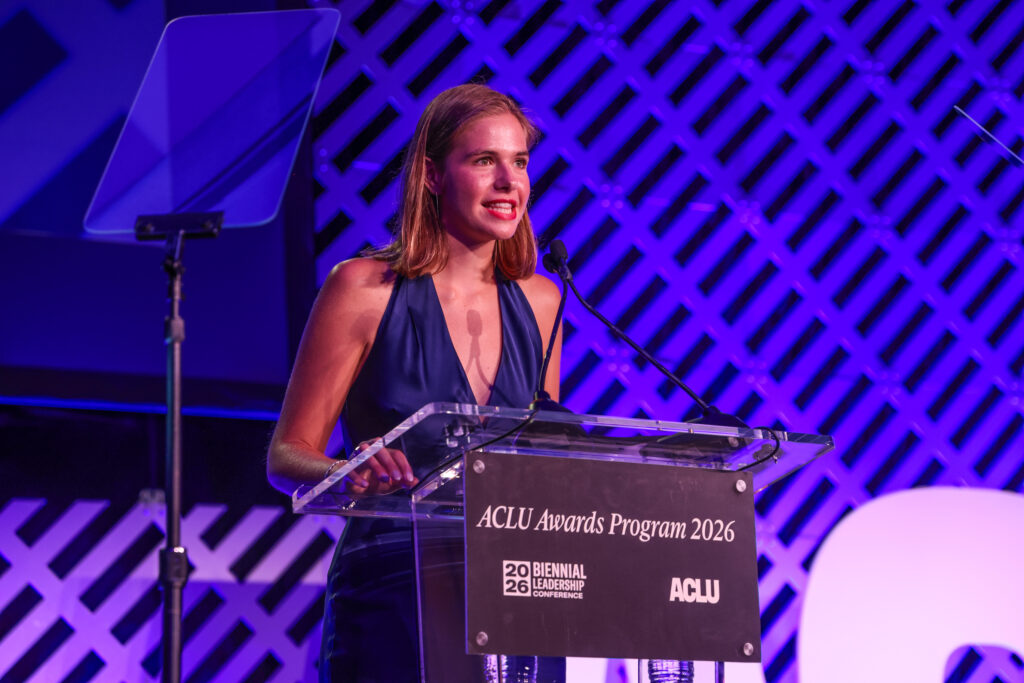
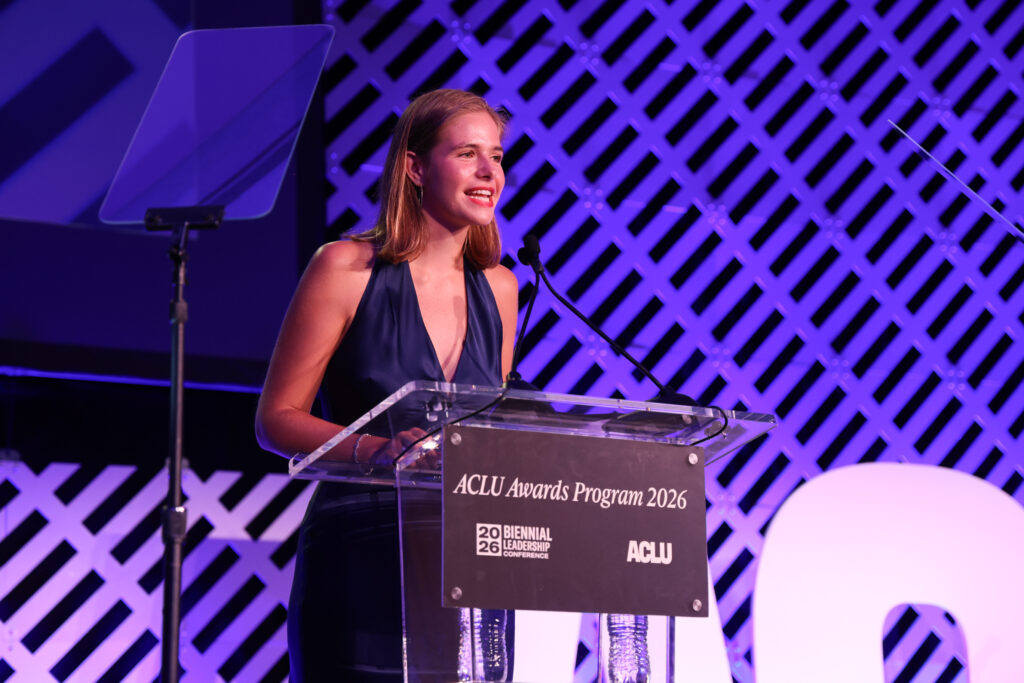
The American Civil Liberties Union named Elizabeth its inaugural Next Generation Leader in Civil Rights and Civil Liberties during its biennial awards ceremony July 24 in Washington D.C. The ACLU credited her with gaining national recognition for defending the freedom to read in South Carolina, helping restore challenged books and mobilizing students around free speech and other civil liberties issues.
Elizabeth did not even know who the other honorees were until they were announced about a week before the ceremony.
“I saw that headline with Bruce Springsteen and Colin Kaepernick … and I was just completely blown away,” she said.
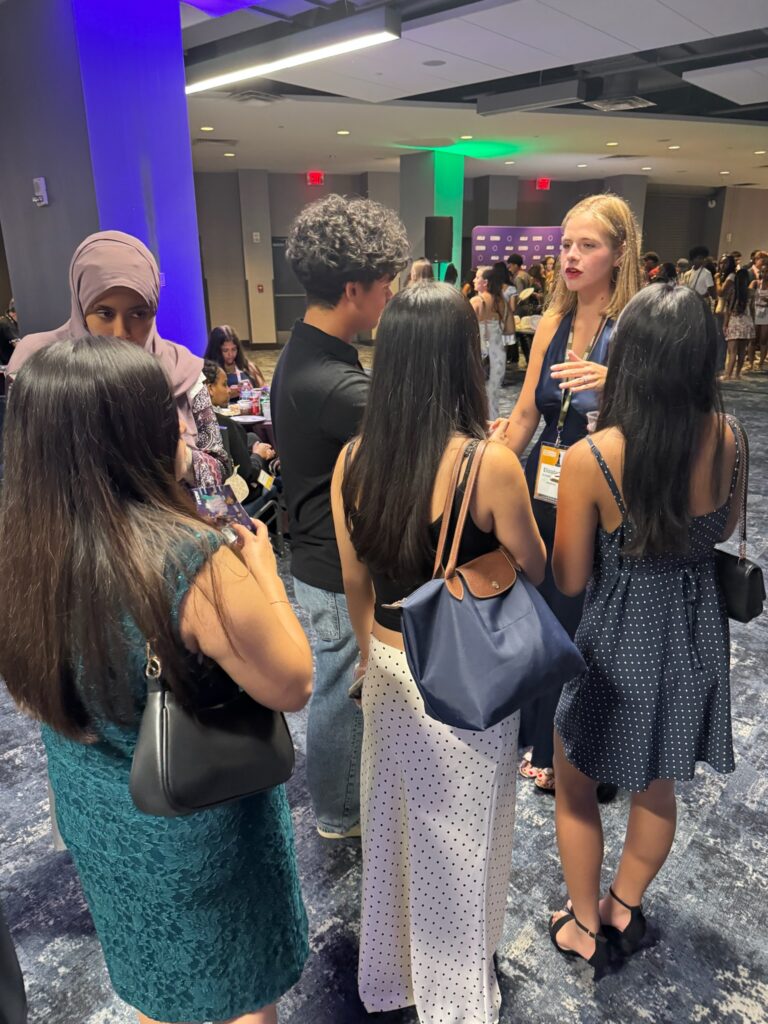
But one of the moments that stayed with her came later, when high school students attending the ACLU’s National Advocacy Institute began lining up to meet her.
They hugged her, asked for photographs and told her she had inspired them.
Elizabeth found herself trying to convince them there was not much separating her from them.
“I’m literally like three years older than you,” she remembered telling them. “I promise this isn’t, there’s no great divide between us. You guys have great things ahead of you. I’m just a kid.”
The irony was not lost on her. Nearly four years earlier, Elizabeth had been the high school student trying to convince adults that young people’s voices belonged in the conversation. Now, other teenage advocates were looking to her as an example of what their own voices could accomplish.
It started with 97 books
Elizabeth was a senior at Beaufort Academy in fall 2022 when 97 books were initially removed from Beaufort County School District library shelves pending review.
She had helped establish Beaufort Academy’s chapter of DAYLO, the Diversity Awareness Youth Literacy Organization, a student-led group centered on diverse literature, empathy and different perspectives.
For Elizabeth, the decision to get involved came almost immediately.
“It wasn’t about the content of the list so much as the principle,” she said.
She was particularly troubled that the books had been removed before undergoing the district’s review process.
“I don’t believe that this is what our country is about,” she said. “I don’t believe that this is how education should function.”
Elizabeth and her brother created a spreadsheet examining the themes, characters and identities represented in the challenged books, looking for patterns in whose stories were being targeted.
For Elizabeth, access to those stories was about more than the books themselves. Literature, she said, gives students an opportunity to see themselves represented while also allowing them to understand lives and experiences different from their own.
Soon, students from Beaufort Academy, Beaufort High School and Battery Creek High School were appearing before the Beaufort County Board of Education. Their advocacy eventually took them to Columbia to testify at the Statehouse.
Elizabeth hoped people would pay attention. She hoped the issue might cross political and partisan lines.
She did not expect what came next.
By the spring of her senior year, a documentary crew had begun following Elizabeth and other student advocates as the controversy unfolded.
“I never would have imagined that,” she said.
BCSD eventually completed its review of the challenged titles. Five received decisions restricting them from district libraries for five years: “The Haters” by Jesse Andrews, “Nineteen Minutes” by Jodi Picoult, “It Ends with Us” by Colleen Hoover, “Forever for a Year” by B.T. Gottfred and “Beautiful” by Amy Reed. All but one of the books underwent the review process put forth by the school district, which cost over $7,000 and took just over a year. The one book not reviewed was “Breathless” by Jennifer Niven, as it was determined not to be in the district’s library inventory.
The remaining challenged books were returned to school library shelves.
By then, however, the debate over access to books had moved beyond Beaufort County.
A parallel fight
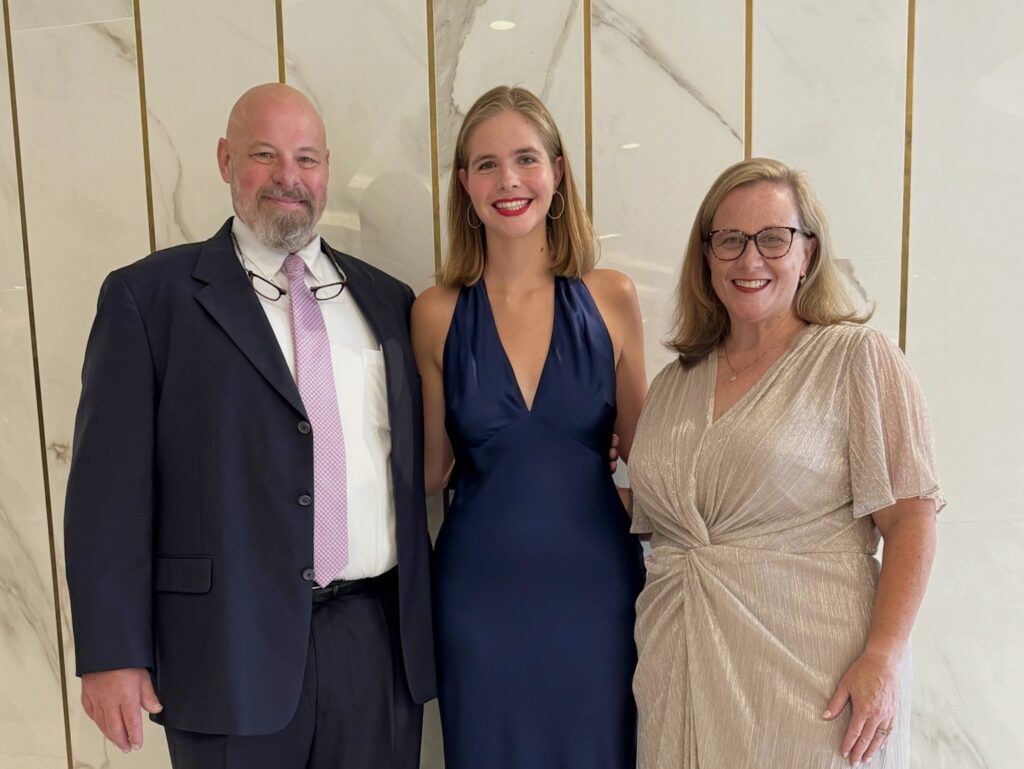
As Elizabeth and her classmates organized students, her mother, Mary Likis Foster, an active member of the Families Against Book Bans board, was becoming involved from the adult side of the issue.
Mary joined what was then a small Facebook group after attending a community panel about the challenges in December 2022. There were just 12 members when she joined.
The group eventually developed into Families Against Book Bans, or FABB, and grew to between 600 and 700 members.
Mary became a regular voice against removing books from school libraries, advocating at both Beaufort County Board of Education and South Carolina State Board of Education meetings. She argued that restricting what students can read affects more than those who might choose a particular book. It also limits opportunities for students to encounter perspectives, experiences and lives different from their own.
FABB worked to inform adults, support student advocates and mobilize community members as the debate moved to the state level. The organization also distributed hundreds of books throughout the community.
At home, the issue became part of the Foster family’s everyday life.
Elizabeth’s father cut out the list of challenged books and put it on the refrigerator, and the family talked about which ones they had read.
At first, Mary said, they assumed the challenges would not stand.
Then they realized assuming was not enough.
“It became clear very quickly that the only way for this not to continue happening was to stand up and fight it,” Mary said. “And so that’s what we did in every capacity that we had.”
When advocacy became personal
The work came with a cost.
Elizabeth and Mary both remember one Beaufort County school board meeting when, after public comment had ended, a woman who supported the book challenges began yelling at students.
For Mary, watching an adult berate teenagers who had come to exercise their right to address their school board was one of the most difficult moments of the experience.
For Elizabeth, it became overwhelming.
In her ACLU acceptance speech, she described being “mid-panic attack in the bathroom at a school board meeting after being yelled at by a combative proponent of book bans.” She also spoke about friends being harassed and threatened online by people three times their age.
After the confrontation, the adults supporting the students developed a safety plan and placed volunteers around them at subsequent meetings so they could be escorted from the building if another confrontation occurred.
“It just didn’t occur to me that we were going to need to have an exit strategy for students,” Mary said.
Despite the confrontation, Mary said she has tried to understand the motivations of people on the other side of the debate.
She believes many genuinely think they are protecting children, even though she strongly disagrees that restricting access to books accomplishes that.
“It is not that simple,” Mary said. “They do really, I think that they really do believe that they’re protecting children from something that they believe is really dangerous.”
For Elizabeth, there were also the ordinary demands of being a high school senior. College applications, extracurricular activities, schoolwork and prom continued alongside meetings, research and public comments.
Still, she said she never seriously considered walking away.
“I don’t think it ever occurred to me to just stop it,” Elizabeth said.
A text, a jazz club and a very big surprise
Nearly four years later, Elizabeth was in Santiago, Chile, with one of her best friends during spring break when Mary sent her a text.
Do you have a minute to call?
Elizabeth was at a jazz club when the message came through. She stepped outside.
Her parents and Nick Mercer of the ACLU of South Carolina were on the phone.
Mercer had nominated Elizabeth for a new national ACLU award without her knowledge. He told her to check her email.
A message from ACLU President Deborah Archer was waiting.
Elizabeth had won.
She had not known she was nominated. She did not even know the award existed.
“I was completely caught off guard and also, like, so honored,” Elizabeth said.
Mercer later sent her the nomination he had written.
“It was just so kind,” she said. “It was just such a beautiful gesture and recognition for a lot of the work that I had done in South Carolina.”
Mary had known about the nomination but kept it from her daughter. With ACLU affiliates around the country able to submit nominees, she said she never assumed Elizabeth would be selected.
Then, months later, she watched her daughter take the stage in Washington.
‘The most powerful people in this room’
Elizabeth used much of her acceptance speech to turn attention away from herself and toward the students attending the ACLU’s National Advocacy Institute.
“Looking at all of you tonight, I see so many powerful advocates,” she said. “Organizers, lawyers, educators, musicians, and athletes, all with immense influence and impact. But the most powerful people that I see in this room tonight are the students with the ACLU National Advocacy Institute.”
She told them being a young advocate could sometimes feel like a “cheat code,” opening doors that might otherwise remain closed.
But she also reminded them that advocacy is hard work.
She talked about the librarian willing to stay late to read drafts of school board comments, the mother who found a substitute for her preschool class so she could drive students to the Statehouse, the father who told her she was a “rock star” and the brother whose enthusiasm for fictional characters reinforced her belief that everyone deserves an opportunity to see themselves represented in books.
“Wherever you are and whoever you may have around you, there is a community of potential advocates surrounding you, ready to come out of the woodwork as soon as you speak up,” Elizabeth told them.
She encouraged the students to “walk confidently through every door you can jam your foot into,” while also telling them to use their power thoughtfully, responsibly and sustainably.
For Mary, the ceremony represented years of Beaufort school board meetings, trips to Columbia and work behind the scenes.
She and her husband spent much of the ceremony holding hands and crying.
“We were obnoxiously and wildly proud,” Mary said.
For Elizabeth, having her mother there made the recognition feel less individual.
“I really and truly don’t know how I would have been able to do any of this without my family or without my mom,” Elizabeth said. “I think we learned so much from each other through this work. … It does feel like receiving it kind of together.”
Elizabeth said the recognition also belongs, in part, to the larger Beaufort community that mobilized around the students.
“It wasn’t just, you know, a couple of high schoolers,” she said. “It’s like the high schoolers and their teachers and their parents and their mentors.”
What comes next
Elizabeth is entering her senior year at Georgetown University, where she studies American studies and statistics.
She has not decided exactly what will come after graduation, but she is interested in education and education policy and is considering applying to Teach For America.
Elizabeth said the ACLU recognition came as she was already trying to determine what kind of work she wants to pursue. Being surrounded by people who had built vastly different careers while remaining committed to causes they believed in allowed her to see the different ways advocacy could fit into her own future.
She described the experience as “recentering” and “very grounding.”
Years from now, however, Elizabeth hopes the impact of the work will be bigger than whether any particular book remains on a library shelf.
She wants more students to recognize their own ability to participate and to have adults around them who provide resources and support without taking control of their voices.
“I hope that there is just more opportunity for that in the future and that students feel more empowered and able to get involved,” she said.
Nearly four years after Elizabeth first walked into a Beaufort County school board meeting believing students deserved a voice in decisions that affected them, she stood before another group of young advocates in Washington with essentially the same message.
Their voices matter. They just have to use them.
Delayna Earley, who joined The Island News in 2022, formerly worked as a photojournalist for The Island Packet/The Beaufort Gazette, as well as newspapers in Indiana and Virginia. She can be reached at delayna.theislandnews@gmail.com.