By Mike McCombs
The Island News
About 150 members of the community members attended a Waterfront Park Design Concept Information Meeting on Wednesday evening, April 22, at the pavilion at Henry C. Chambers Waterfront Park in downtown Beaufort to get a closer look at the proposed options for repairs to the park.
And those in attendance made their preferences known – there is a clear favorite.
The meeting was an opportunity for community members to review the proposed design concepts; ask questions of those in attendance from McSweeney Engineers, Davis & Floyd, and City staff; and share their feedback.
Four options were presented to the public – A simple (or not so simple) repair and three structural options, with the third being really a hybrid of the first two
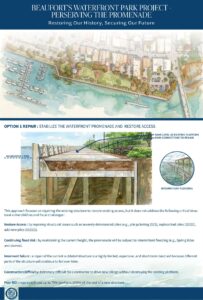
Option 1 – Repair and stabilize the waterfront promenade and restore access
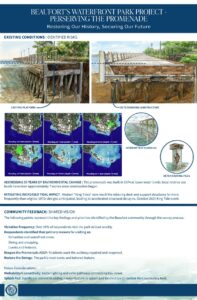
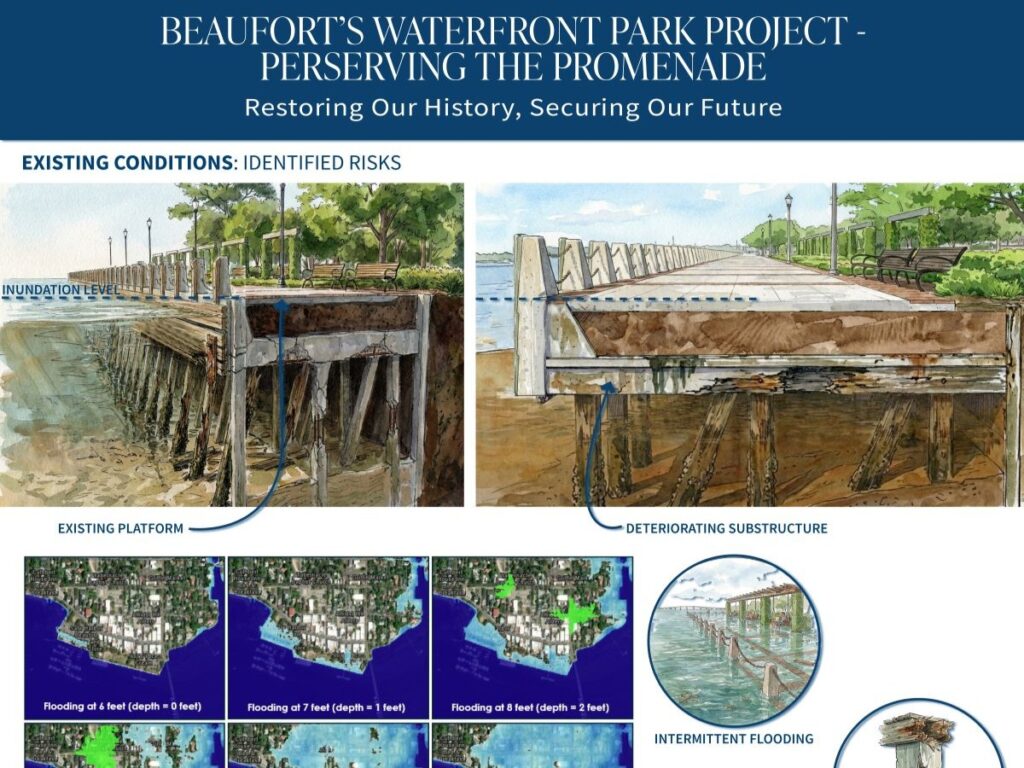
The simplest approach would be to repair the existing structure’s deteriorating substructure and pilings and restore access. This option, however, would leave the City with critical structural vulnerabilities and fiscal challenges.
Structural issues would be repaired by replacing severely deteriorated piles, jacketing damaged but salvageable piles and adding new piles. All are expensive options and unknowns.
This option also would not mitigate any flood risk by maintaining the current height of the promenade. The promenade and park are prone to flooding since the sea level is 7 inches higher than it was when the park was designed in 1974. That also means the park is vulnerable to king tides.
A repair of the current outdated structure would be expensive and a “short-term band aid” because different parts of the structure will continue to fail over time. It would also be extremely difficult and expensive to drive new pilings without destroying the existing platform.
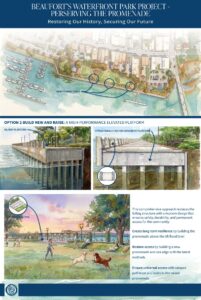
Option 2 – Build new and raise high: A high-performance elevated platform
This is the structural option most favored by the community members in attendance, at least according to the colored stickers they were asked by City staff to place on the design renderings to provide feedback on the three options. City Manager Scott Marshall called this option “the clear frontrunner,” and “basically what we have right now,” except higher.
According to the engineers, this comprehensive approach replaces the failing structure with a modern design and modern materials that “ensure safety, durability, and permanent access.”
The design would create long-term resilience by building the promenade above the 8-foot flood level, raising the promenade above the level of the park itself. There would be ramped pathways and stairs to the raised promenade.
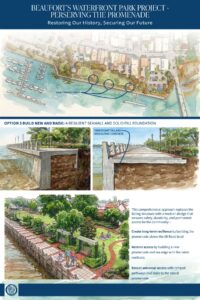
Option 3 – Build new and raise: A resilient seawall and solid fill foundation
This option would mean an actual seawall, as the Downtown Marina has.
This approach replaces the failing structure with a modern design – building a seawall and backfilling — that ensures safety, durability, and permanent access for the community. The seawall would create long-term resilience by building the promenade above the 8-foot flood level.
The design builds a new promenade and sea edge with the latest methods. Once again, there would be ramped pathways and stairs to a raised promenade.
Marshall said this is and has always been a popular option. It is also the most durable design.
However, backfilling would be far more “problematic” today that it would have when the park was built in the mid-1970s.
“Technically, you’d be filling in wetlands,” Marshall said, “and from a regulatory standpont, that’s a longshot.”
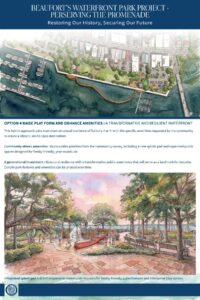
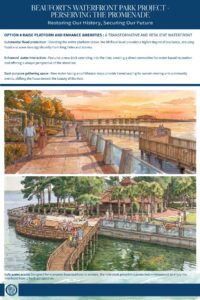
Option 4: Raise platform and enhance amenities: A transformative and resilient waterfront
This option is a hybrid approach that pairs the maximum structural resilience of Options 2 or 3 with specific amenities requested by the community to create a vibrant, world-class destination, such as a new splash pad and expanded public spaces designed for family-friendly, year-round use.
This option is a direct response to community requests for family-friendly water features and interactive play spaces, according to the renderings.
Once again, this option would elevate the entire platform above the 8-foot flood level and provide a higher degree of resilience, reducing flood and wave risks significantly from King Tides and storms. This option could also features a new dock extending into the river, creating a direct connection for water-based recreation and offering a unique perspective of the shoreline, and possibly a new water-facing amphitheater, providing tiered seating for sunset viewing and shifting focus toward the river.
Option 4 is created by incorporating the proposed amenities into the designs of Option 2 or Option 3.
Moving forward
“I saw a lot of interest from the public at each station,” Marshall said. “The community was asking questions, and they were definitely engaged.”
Going forward, the next step, or the most immediate step, is a the Waterfront Advisory Board meeting set for Monday, May 4.
“The committee will talk about the feedback and will discuss a way forward in terms of a recommendation to City Council [from among today’s options] or whether they need more time to decide,” Marshall said.
He said the next step, once a design is decided upon, would to begin the permitting process, though its too early to speculate on an accurate timetable or a price tag.
“As soon as we know the type of design, there is a part of the permitting process we can begin,” Marshall said.
For those who could or did not attend the meeting, the City of Beaufort has created a web page dedicated to the waterfront project. At https://bit.ly/3QB7FYG, community members can review the design options and send feedback to city officials.
Mike McCombs is the Editor of The Island News and can be reached at TheIslandNews@gmail.com.