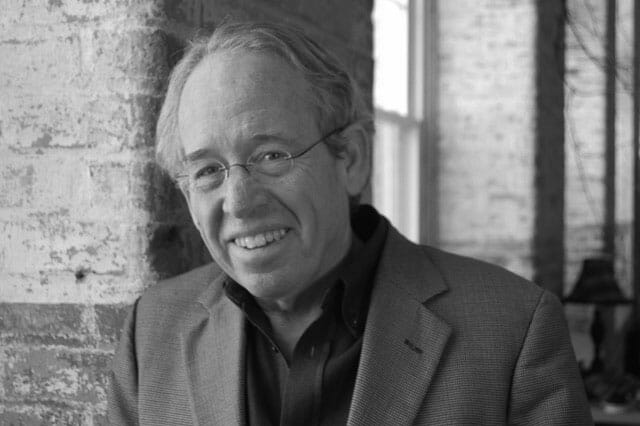
By Scott Graber
It is Friday, early, and frigid. This morning I’m sitting in my gray-painted library; a fire in my small hearth; Eight O’Clock Hazel Nut coffee in a small mug.
This morning I also have The Post and Courier, digital version, and the Jan. 12 New Yorker Magazine, cellulose version. The New Yorker gives us a profile on Leo XIV a/k/a “The American Pope.”
Robert Prevost came of age in the suburbs of Chicago, a fan of the Chicago White Sox and thin-crust pizza. Apparently he remains faithful to the White Sox, and to thin crust pizza, and regularly completes the Times’ Wordle puzzle every morning.
When Prevost was young, Chicago had a huge immigrant population and most of those immigrants were Catholic. The New Yorker also tells us that the Polish, Hungarian, Irish and Italian immigrants had their own churches that provided for the religious, educational and recreational needs for their own people. And for most of these folks getting their son into a seminary — or a daughter into a convent — was akin to winning the lottery.
In Prevost’s case, it was an Augustinian seminary at a time when the order was focused on Peru with the goal of getting “Peruvians into the order at a time when few young American men were joining in.”
“If you’re a true missionary you want to put yourself out of a job,” said Father William Lego in The New Yorker. “You are helping the Church reproduce.”
In fact, there was a growing diaspora of young men and women away from Catholicism in the United States and in Western Europe.
It may have been the vow of chastity, the prospect of lifelong denial, or perhaps it was the fact that drinking and recreational drug-taking were sweeping through the high schools in America in the 70s and 80s.
Or, perhaps, it was a growing, widespread skepticism about the rules, regulations and theology of Catholicism itself.
When the newly-ordained Prevost went down to Peru in 1983, these and other issues were unsettled; and the future clouded with regard to the Third World; and there were revolutionaries like a Western-trained Peruvian priest named Gustavo Gutierrez who called upon the Catholic Church to join in the fight to liberate the oppressed and their exploited land throughout Latin America.
This call to action excited many young priests, but it did not excite the moneyed elites who ran the banks and the business interests in Peru — they saw Gutierrez as a threat to themselves and to capitalism. Some other priests also saw this as a Marxist threat to Catholicism and they gravitated into the ranks of Opus Dei.
Opus Dei founded by a Spanish priest in 1928 put all of it’s well-funded energy on reinforcing the ancient catechism and “rightest doctrine” of Cardinal Joseph Ratzinger who, himself, would become Pope Benedict XVI in 2005.
Beginning with Pope John Paul in 1978 and then stretching through Pope Benedict’s Papacy “progressive” bishops throughout the world were systematically replaced by more conservative men. Eventually all but one of the seven archdioceses in Peru would fall into conservative, Opus Dei hands.
But when Jorge Bergoglio, a/k/a Pope Francis, got his mitre and his slippers in 2013, he changed the Vatican’s focus back to the poor — appointing like-minded Cardinals and, parenthetically, electors — thus setting the scene for Robert Prevost’s transformation into Pope Leo in 2025.
“The Catholic right in the US had set itself against Pope Francis throughout his pontificate, seeing him soft on doctrine, hostile to capitalism and anti-American,” says Paul Elie in his New Yorker piece. Vice President J. D. Vance, a Catholic convert, went after Catholic bishops saying they operated “charitable-works programs in order to make money via federal aid.” (Thereafter this accusation was disproved).
But if there was a flashpoint it was the current Administration’s mass deportation policy.
So far, all early indications paint Leo as being determined to complete Pope Francis’ work of giving preferential treatment to the poor and Leo himself urging his American bishops to “speak out” on the subject of deportation.
This refocus on the world’s desperate, migrating poor may just get the Catholic Church past the horror of pedophilia; its obsession with male-only priests; and dusty doctrine formulated 1,300 years before the enlightenment.
It may give young men and women — perhaps American men and women—the motivation to back into the seminary and spend their lives doing good things in Congo, Sudan and Nicaragua.
Or maybe not.
Scott Graber is a lawyer, novelist, veteran columnist and longtime resident of Port Royal. He can be reached at cscottgraber@gmail.com.