By Jessica Holdman
SCDailyGazette.com
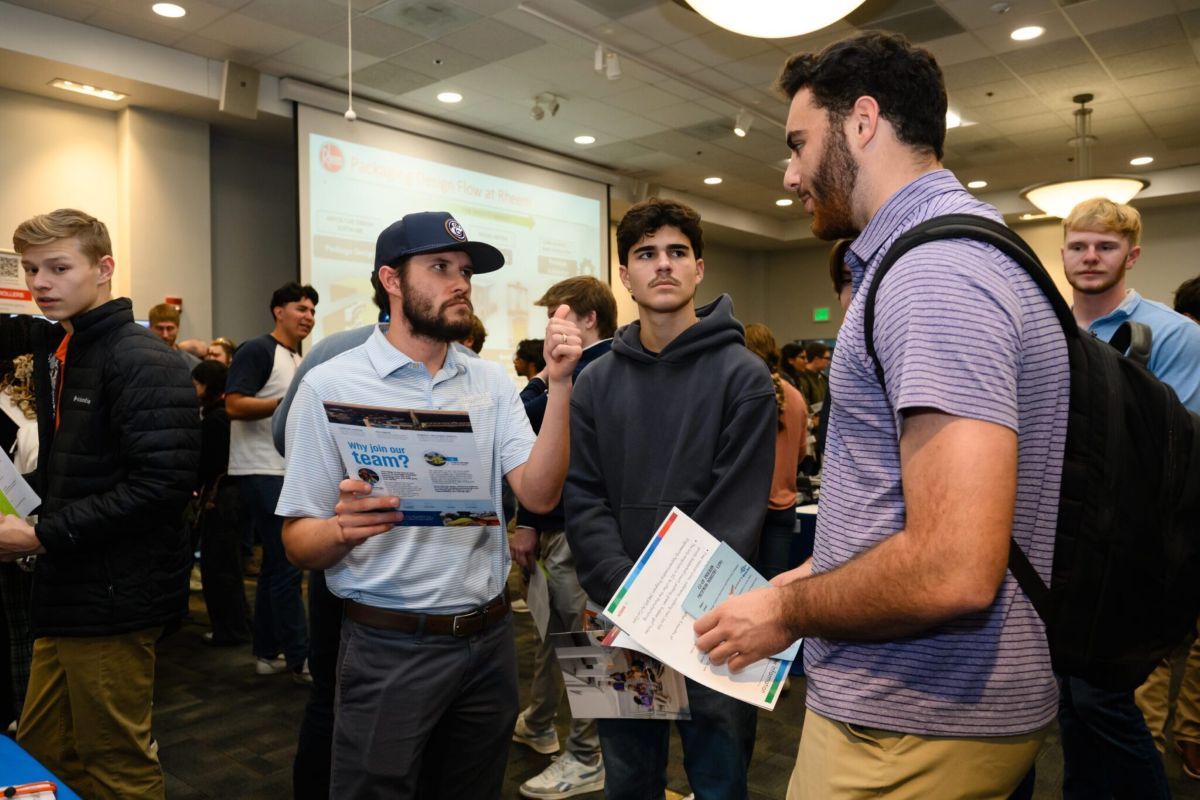
Two more South Carolina public colleges are seeking to add state-funded internship programs following success at Clemson University and the University of South Carolina.
Coastal Carolina University is asking state legislators to set aside $390,000 annually in the state budget to start the Teal Works Program at the Horry County college. And Lander University in Greenwood is asking for $500,000 to add stipends to its existing internship program.
“Teal Works removes financial barriers and equips students with the skills and experiences necessary to thrive in the workforce,” Coastal wrote in its budget request. “The program will strengthen the talent pipeline, support local and regional economic development, and increase CCU’s visibility as a leader in preparing students for South Carolina’s workforce needs.”
Coastal plans to start out with $3,000 stipends for 75 students to cover a 10- to 12-week summer internship. Students who go to work in rural or underserved areas of the state can apply for an additional $1,000, according to the school’s budget ask.
The aid is not a loan. Students don’t pay it back. And it’s on top of what the companies hiring the students as interns might be paying.
By year five, the school hopes to get to 250 students, supported through a combination of state, federal and private funds.
Coastal will focus on placing students in high-demand industries, such as health care, education, information technology, manufacturing, agribusiness and hospitality.
The “Experience Your Education” Program has been operating at Lander for about 15 years, according to the university’s website.
Historically, participating students have received academic credits. Those who earn 120 credit hours can graduate with the Golden EYE Award. But now the school hopes to pay students who participate to help cover travel, meals and other summer living expenses.
“Internships provide invaluable educational experiences for college students, and satisfy course credit,” spokesman Graham Duncan said. “Yet, without financial support, many students often feel that these experiences are out of reach.”
Duncan also touted Lander’s record of students staying in South Carolina to work after graduation — 82% of the school’s alumni call the Palmetto State home.
“At Lander, we take seriously our responsibility to educate today’s students for tomorrow’s workforce,” Duncan said. “We believe this is a sound investment for South Carolina.”
Lander’s proposal did not give a dollar amount for its stipends or specify how many it plans to offer.
At Clemson University, the career center had been helping about 30 students each summer find internships. But in summer 2024, with an influx of state funding, that number jumped to more than 400 students, Neil Burton, the executive director of Clemson’s Center for Career and Professional Development previously told the S.C. Daily Gazette.
“The challenge for a lot of students is there’s an upfront cost they think they can’t afford,” Britton said. “Paying the upfront deposit on an apartment while you’re buying a suit and trying to figure out how to get a car to go there may seem like minor things for a lot of folks. But for a lot of students, it’s prohibitive.”
USC also offers $3,000 to students who participate in internships within high-demand industries in the state, such as aerospace, automotive, energy, financial services, healthcare, insurance and manufacturing.
More than 1,750 students across the USC college system have participated, according to a statement from the university. The school awarded more than $5.2 million in stipends.
Updated numbers were not immediately available from Clemson. But as of last January, the Upstate school had given out a little less than $2 million to 1,151 students, according to a previous report from the university.
Until this year, the programs at USC and Clemson were funded with surplus proceeds from the state lottery.
For the state budget that started in July, legislators approved $2 million for USC and $4 million for Clemson from state tax collections. Those recurring dollars will continue in future budgets indefinitely.
USC is now asking for an additional $2.5 million annually to bring the program back up to previous funding levels.
Jessica Holdman writes about the economy, workforce and higher education. Before joining the SC Daily Gazette, she was a business reporter for The Post and Courier. S.C. Daily Gazette is part of States Newsroom, the nation’s largest state-focused nonprofit news organization.