By Louise Mathews
The movie “A Christmas Story” contains a scene in which young Ralphie eagerly holds the hubcap while his father removes lug nuts to change a flat tire. The hubcap falls out of Ralphie’s hands, and the bolts fall into the snow.
Ralphie exclaims, “Oh, … fudge” and then notes he didn’t say, “fudge.” He said the worst of the worst cuss words, which he had heard his father say innumerable times. When his dad told Ralphie’s mom, she washed Ralphie’s mouth out with soap.
When asked where he had heard that word, Ralphie lied and said, “Schwartz.” Mom called Mrs. Schwartz, and through the telephone, we can hear screaming, then a slap, then more screaming, “Ma, whaddiii do?
I never tasted Palmolive for using that word; however, other words did warrant a soapcycle. I relate to Schwartz as on an idyllic summer day, on a tiny beach on 4th Lake in the Adirondacks, I innocently asked my mother, “Mom, what does f*** mean?”
WHAAPP! I can still feel the slap on my left cheek. “But Chuck and Jane (brother and cousin) are singing ‘the name game,’ using Chuck’s name, and they’re laughing,” I sputtered through tears. My mother retorted, “Your little brothers are on the beach, and little pitchers have big ears!”
Later, in private, my mother told me the meaning. She did not explain an acronym for fornication under consent of the king, but she did say fornication and other formal terms. Mom said I should never under any circumstances use that word.
Once I went to college, there were circumstances when I used that word. That was in the early 1970s, when common usage often called for the word “mother” in front of it with an “er” on the end. We seemed to like to use it a lot for President Nixon. During protest marches, it was expected along with “pigs!” There was a certain satisfaction in making the sound. We thought we were so cool and adult.
Even in college and after, none of us used any swear word at home. My father once stated that if we needed to describe anything using vulgar language, particularly as adjectives, we were just showing how ignorant we were because we could not think of a precise descriptor.
My father had spent almost four years in the Army Air Corps in World War II, and I am sure he had heard every profanity in the English-speaking world. He never used them and would not tolerate his children using them either.
From 1960 until the late seventies, Dad was elected Town Supervisor, or mayor, and later a County Legislator in Monroe County, New York. He was a Democrat with a family background in unions. Dad was always my model on how an elected official should behave: honest, appropriately dressed for every occasion, well-spoken, and always polite to everyone.
I am not now and never have been a Disney princess, but I find the use of gratuitous cussing offensive, particularly when it comes from people who put “Honorable” in front of their names. Certainly, the explosion of the “F-bomb” by so-called public servants from the President to the Minneapolis mayor underscores how coarse and crass our culture has become. It also tells me that folks just don’t know enough of the 250,000 commonly used words in the English language to make better choices.
When a word that once had a specific meaning now shows up in almost every context, does it have any meaning at all? Is it supposed to indicate how angry or serious the speaker is?
The chief public official, President Trump, made headlines in June when he used it during a press conference. Allegedly, this week he said it twice to a heckler. Many other politicians have used it as well. Rep. Maxine Dexter (D-Ore.) stated during a rally, “I don’t swear in public very well, but we have to f*** Trump,” which I am sure she did not mean literally.
Strangely, people who abhor the President sometimes scream “F*** Trump!” If they thought about the historic meaning of the word, they would shudder and gag.
Professionally printed signs used at anti-ICE demonstrations exclaim that the bearer wants to do the same thing to ICE. What could that possibly mean? Are they planning to do something weird with frozen water or take on the whole cohort?
Many people use FAFO, which treats the big bad word as a verb. However, the action in this acronym could mean anything, as in “just go ahead and do whatever you’re thinking about, and you’ll find out how bad the consequences are.” I understand there is a new AF designation creeping into everyday usage. It comes from that shorthand, texting, and I expect that it, too, could mean almost anything or nothing at all.
In The Hollywood Reporter, James Hibbard wrote, “… there have been countless hand-wringing essays written about ‘the coarsening of our language’ over the past few centuries or so.” He went on to note that in 2024, 116 F-bombs appeared in “Deadpool & Wolverine,” the second highest-grossing movie at the box office; Disney released it. He noted that another Disney movie, Snow White and the Seven Dwarves did not contain the profanity and bombed at the box office.
While I believe other reasons caused Snow White’s failure, I agree that our culture is saturated with the nefarious word. Hibbard penned, “It’s supposed to shock, to titillate, to inflame. Now it’s workmanlike. Boring.”
If the shocking word is meaningless and boring, maybe it’s time to give it a rest. For 2026, we could all start “swear jars” and put a quarter in them every time we slip and use vulgarity. Think of the windfall that could produce for the charities of our choice at the end of the year.
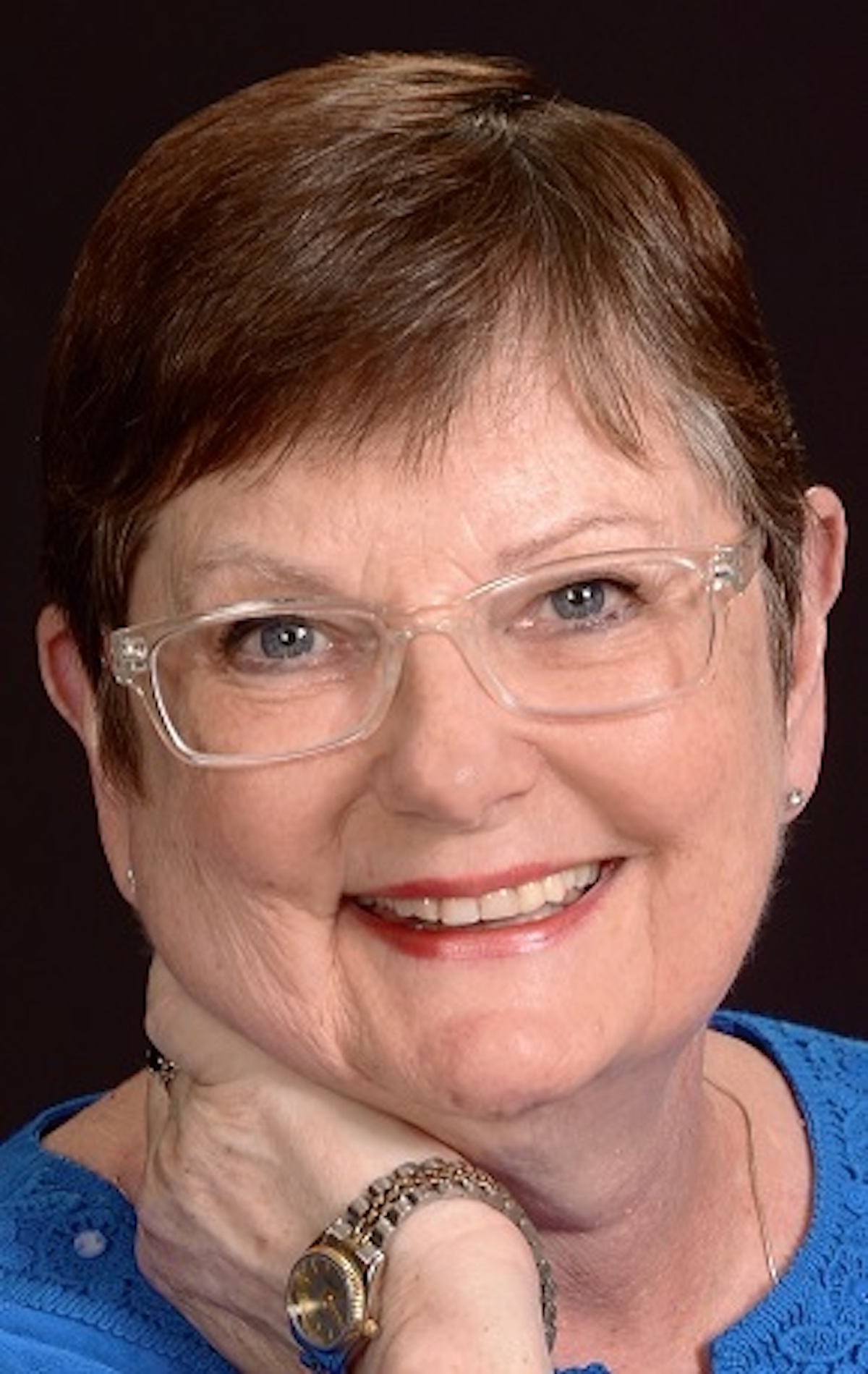
Louise Mathews retired from a career in community colleges and before that, theater. A 13-year come-here in Beaufort, she has been a dingbatter in North Carolina and an upstater from New York.